All posts by Vince Siu

Born and later educated in the US, Vince is now based in Hong Kong as a project manager for a local bank. At night, his interests in Liverpool and the English Premier League take over as he writes opinions, features and analyses for a variety of websites. He covers business and marketing strategy, globalization and technology for Business of Soccer. His other work can be found at http://vincetalksfooty.com, and follow his updates on Twitter @vincetalksfooty.

Why the 2014 FIFA World Cup in Brazil Can Still Be the Best Ever

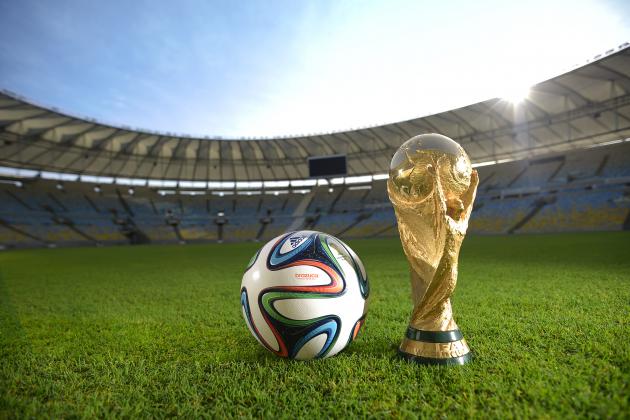
As we enter the final few months of the buildup to the 2014 World Cup, we’ve heard much about the current state of host nation Brazil and how behind it still is in terms of building the necessary infrastructure to successfully host and support a worldwide tournament and festival.

Just last week, FIFA secretary Jerome Valcke told BBC Sport that Brazil may not be “totally ready” for the start of the tournament due to building delays, with two stadiums in Porto Alegre and Sao Paulo still not finished.

And with the current political climate in Europe, amid criticism of Russia’s recent actions following the Winter Olympics in Sochi and Qatar’s human rights record ahead of its own World Cup in 2022, Valcke has even gone as far as to emphasize FIFA’s political neutrality, per Al Jazeera:

FIFA is not the United Nations…We are not there to discuss with political authorities what they should do…We can discuss with them, and again be the platform for them to meet, to exchange and to make sure they are using football as a tool for change…But we cannot tell a country what should be [sic] their foreign policy. That’s not our role.

All of which has thrown a considerable spanner into the Brazilian works, as the country makes frantic last-minute preparations for the global event amid an unsteady domestic political climate.

For Brazil to put on a successful World Cup, 64 years after it was last hosted on home soil, no doubt there are still major hurdles to overcome—not to mention many people to convince.

Yet lost amid all the negative news is the undeniable prospect of a fervent and vibrant tournament, of a famed Brazilian party, of a mouthwatering tournament featuring footballing talent in abundance on the pitch—and the underlying possibility that the 2014 World Cup can still be the best ever.


Leo Correa


A National Legacy

Let’s begin by looking at the positive impact that FIFA can bring with its local programs in conjunction with the tournament itself.

Its recent announcement of a $1 million television production internship program for Brazilian students, allowing them the chance to gain “invaluable work experience at the world’s biggest single-sport event,” is a glimpse at the “legacy” impacts that FIFA has now made a big part of its tournament-hosting packages.

By involving local students and providing technical and professional training in a sure-to-be exciting opportunity for local youth, FIFA has laid the groundwork for a potential boom in interest in the international sports business and the financial workings of a global tournament—quite in contrast to the uneasy local sentiment on show during the Confederations Cup last summer.

Looking at the legacy factor from a macro, country-level perspective, the Brazilian government forecasts, via Fox News Latino, that the World Cup itself will generate around 62.1 billion reais ($27.7 billion) in revenue, three times its income from the Confederations Cup.

The significant economic impact from the boom in tourism has been projected to include a total number of 3.6 million visitors to the country and an increase of 47,900 jobs in the tourist and recreation sectors, which would be a considerable injection of activity and revenue into Brazil’s GDP.

Alongside the inevitable focus on consumption on Brazilian soil, the Brazilian government has also launched advertising drives to highlight its other attractions, including “the Iguassu Falls, eco-holidays in the Amazon, the historic city of Salvador and Brasilia,” according to the BBC, as well as to draw attention to its capacity and capability to host global events and conferences.

Said Marcelo Pedros, the director of international markets for Embratur, the Brazilian Tourist Board:

Everyone knows that Brazil can play football and throw a party, but we want to show just how well we can organize international events. When Germany held the World Cup in 2006 it was the other way round. Everyone knew they would be well organized, but could they hold a party? They did, and it was very successful. We are going to prove the same success with Brazil’s organization skills.

And, of course, there is the small matter of the tournament kicking off on Brazil’s own Lovers’ Day, which, according to the Metro, is already capturing the imagination of many an innovative and entrepreneur.


Dean Mouhtaropoulos/Getty Images


An Unpredictable Contest

We’ve managed to come this far without even mentioning the football due to be on show in Brazil, which is a strong testament to the off-pitch factors that could see Brazil become the biggest and most successful global party yet.

But while the World Cup has arguably evolved from a pure celebration of football into a money-making exercise, at its heart football is still the beautiful game, and we could well be looking at one of the most exciting iterations of the tournament of all time, given the unpredictability of the contest this summer.

As football fans look ahead to the 2014 World Cup, many questions will no doubt pop into their minds. Who will rise to the top this year? Will Neymar confirm his status as the next big thing in football by bringing his country the World Cup at home? Or will Lionel Messi finally deliver a World Cup to secure his place in the pantheon of all-time greats?

Will Spain continue their recent dominance with a fourth successive win in a World Cup or a European Championship tournament? Or will Germany’s youth revolution end its own wait for a world title?

What about the dark horses—will Belgium’s new golden generation fulfill their potential as they look to take the World Cup by storm? Or will Uruguay better their last-four performance in 2010? Is it time for an African team to go all the way? Or will England finally get over their quarterfinal hoodoo and fire their way into the final?

The presence of so many international stars on Brazilian soil—the mythical Zlatan Ibrahimovic excepted, due to Sweden’s playoff loss to Cristiano Ronaldo’s Portgual—will bring unprecedented levels of global coverage (and, of course, incessant marketing and advertising efforts), which will in turn drive up interest in the tournament around the world.

Even the statistic, tactic and formation buffs will be treated to an event of gigantic proportions, as the proliferation of data analysis in football will no doubt boost intelligent debate and substantiated discussion around the contest unfolding on the pitch. The different ideologies and philosophies adopted by different national teams may finally see distinct national “identities” form around the ball.

And we haven’t even gotten to the prospect of a nerve-wracking penalty shootout or a new Zinedine Zidane-esque flashpoint.


Handout/Getty Images


A Glimpse into the Future

All the talk so far has been of the present, but while the World Cup doesn’t involve the next host nation putting on a “teaser trailer” show to close out the current tournament—unlike the Olympics—one eye, as ever, should be kept on the future.

And this World Cup finds itself in a fascinating intersection between the old and the new.

On the pitch, what could be better for Brazil than to have traditional rivals Uruguay resurface as a strong contender? Or a new-look Argentina side to prove its dominance and legacy with Messi at the helm?

The prospect of a new Brazil team headed by Neymar winning on home soil is one that can’t be ignored—and no doubt one that would kick off an unprecedented party—while the recent dominance of Spain may start to make way for teams of the future.

We will get to witness the platform that Belgium may well set for itself in international football, while England is set to usher in a new generation of young talent following what will be a transitional tournament. And as ever, there are plenty of new names we might not have even heard of yet who will catapult themselves into the spotlight over just a few weeks in Brazil.

In the stadiums and on the streets, the local mood may well be poignant, as Brazil recalls hosting its last World Cup 64 years ago and considers the development and turmoil it’s gone through in that time.

From a traditional footballing heyday in 1950 to a global commercial extravaganza, those who have followed the tournament in years gone by may yet witness another chapter in the ongoing evolution of the World Cup as an event.

The fascination of welcoming visitors from around the world and partaking in a joint experience of an international tournament at home may inspire a new generation of Brazilian youngsters to not only embrace the power and potential of the simple game of football but also to serve the greater good of their nation through business and global collaboration.

And finally, Germany 2006 was a return to familiar European territory between two groundbreaking tournaments in Asia (Korea/Japan 2002) and Africa (South Africa 2010), while Brazil 2014 will be the last tournament to be hosted in a region with World Cup experience: The next two World Cups, if all goes according to plan, will be held in new frontiers—Russia (2018) and the Middle East (Qatar 2022).

For FIFA as much as for Brazil—depending on how this year’s event goes—the World Cup will be a key milestone and provide a glimpse into an exciting or murky future.

For if Brazil successfully overcomes its last-minute hurdles and political differences and ends up hosting an excellent tournament, we can all look forward to successfully charting new territory in the years to come.

South Africa did it. Why not Brazil?


This article first appeared on Bleacher Report.

Scouting Reported Liverpool Transfer Target Lazar Markovic

With Champions League football almost secured for next season, Liverpool have set their sights on an outright title challenge. With this newfound status among the upper echelons of the Premier League, the Reds have found themselves linked with a host of transfer targets this summer.

Among the latest names in the rumor mill is Benfica’s Lazar Markovic, who is reportedly the subject of a £20 million bidding war between Liverpool and Chelsea, according to Alan Nixon of the Mirror.

Having seen two high-profile moves for attacking midfielders Mohamed Salah and Yevhen Konoplyanka fall through in January, Brendan Rodgers is still rumored to be in the market for reinforcements up front, and Markovic certainly falls into that category.

Let’s take a look at the pros and cons to Markovic’s potential signing, assess his potential role at Anfield and evaluate whether he’d be a good pickup for Liverpool.


Armando Franca


Pros

With his exciting dribbling and goal-scoring ability from midfield, it’s no surprise that Markovic made his senior debut for Partizan at the tender age of 17.

In fact, so impressive was his first season in Partizan’s colors that he was voted their Player of the Year on the club’s website back in 2011.

An encouraging performance in the Europa League against Internazionale in 2012 prompted then-Nerazzurri boss Andrea Stramaccioni to publicly praise the Serbian, according to Goal.com, saying, “He is a player with exceptional qualities. He possesses a very impressive acceleration and has a bright future ahead of him.”

Besides a quick turn of pace and a bag of tricks in his locker, Markovic is also composed in the finish and has a penchant for the unpredictable, much like a certain Luis Suarez at Anfield.

Having started his career as more of a conventional attacking midfielder, he has often been played in a striking or wing role since moving to Benfica, making use of his speed and dribbling to bamboozle opposition defences.

In that respect, he seems to combine the lightness of feet and quick-thinking creativity of Philippe Coutinho with the confidence and unpredictability of Suarez and would be comfortable playing across the front three.


Cons

Despite having a set of skills that make him a formidable opponent on paper, Markovic has yet to cement a place in Jorge Jesus’ starting XI, suggesting that he hasn’t found the consistency and maturity required to start week in, week out in a top-tier European league.

Standing at 5’9”, Markovic is relatively slight in frame and would only add to a Liverpool team that is not generally known for its physical and aerial dominance—though a low center of gravity compensates for that immeasurably.

A key point to note is the rumor of a release clause put in place by Benfica and Chelsea that suggests that the Stamford Bridge club would be able to sign him for a cheaper £12.5 million fee, according to Jonny Singer of the Daily Mail.


EuroFootball/Getty Images


Potential Role at Liverpool

With his pace, trickery, first touch and finishing, Lazar Markovic seems to have all the tools required to succeed in Brendan Rodgers’ young and dynamic Liverpool team.

Rodgers’ man management skills have been publicly lauded by many of his players this season, and Markovic will only need to look at the impressive development of the likes of Daniel Sturridge, Philippe Coutinho and Jordan Henderson to know that if he does end up at Anfield, his future will be in good hands.

However, he is still a relative novice on the international stage and is very much a raw gem rather than the finished product, which does not necessarily represent the best option for Liverpool at the moment, especially if they head into next season having secured a top-three place and automatic qualification for the Champions League group stage.

And if the rumors of a potential release clause for Chelsea are true—or a first option, as reported by Jack Gaughan of the Daily Mail—the Reds might end up having to pay a fee much larger than £12.5 million, which wouldn’t be ideal for the Anfield club.

Given Markovic’s similarity to Coutinho and Suarez, shelling out for him would have to be a careful consideration—or a huge endorsement of his raw potential.


Conclusion

That Markovic is one of Europe’s hottest attacking talents should be established. His frequent links with both Chelsea and Liverpool are well-deserved given his scintillating displays over the past few years with both Partizan and Benfica.

That he would add to almost any Premier League team is also a given considering his skill set and capabilities on the ball. His playing style would see him slot seamlessly into Liverpool’s enterprising and relentlessly attacking brand of football.

But given what Liverpool need this summer, the amount of money it would cost them to bring him to Anfield and the presence of Coutinho, Suarez and a few other exciting young attacking talents, the transfer funds that would be put to Markovic’s transfer would be better used to address other deficiencies in the Liverpool squad—or toward a signing that would instantly upgrade their first team.

Markovic, for now, should be a luxury option to be targeted only if the rest of the squad has been upgraded.


This article first appeared on Bleacher Report.

West Ham United 1-2 Liverpool: 6 Things We Learned from Reds’ Tense Win

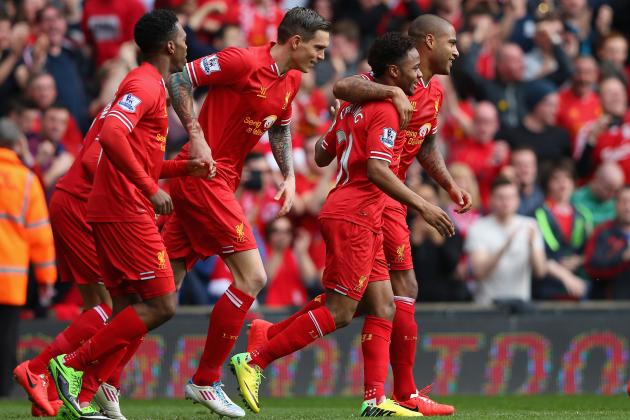
Two Steven Gerrard penalties were enough to give Liverpool a precious win over West Ham United at Upton Park on Sunday, as the Reds climbed back to the top of the Premier League table with five matches to go.

James Tomkins’ handball against Luis Suarez and Hammers goalkeeper Adrian’s foul on Jon Flanagan gave Gerrard the opportunity to notch a brace from the spot, while Liverpool’s goals were sandwiched by a Guy Demel finish as Andy Carroll’s foul on Simon Mignolet went unnoticed.

It was a cagey affair, with Sam Allardyce’s men displaying yet again their infamous physical style of football in a valiant attempt to stifle the creativity and fluidity of Brendan Rodgers’ side. But the visitors did enough to hold on for all three points.

Here are six things we learned from Liverpool’s tense win over West Ham. Let us know your thoughts in the comments below.


A Show of Resilience from the Reds

A Show of Resilience from the Reds

Julian Finney/Getty Images

Not every match this season can be a four-goal demolition like Liverpool’s emphatic win over Tottenham Hotspur just a week ago, but it’s not the first time the Reds have ground out a much-needed win.

Away victories against the likes of Fulham and Stoke City come to mind, and Brendan Rodgers can rightly feel proud of his charges after another battling display at a traditionally difficult ground to visit.

It was far from vintage Liverpool, as West Ham’s closing down and clearing of their lines were enough to stifle the visitors’ attack. But Liverpool’s patience and insistence at finding the right moment and space to break through the Hammers defence yielded the two all-important penalties.

Martin Skrtel and Mamadou Sakho—starting in place of the injured Daniel Agger—put on a show of commanding defending against the expected aerial bombardment of West Ham, and together with substitute Kolo Toure, they held on despite a nervy ending at Upton Park.


Steven Gerrard, the Coolest Customer in Town

Steven Gerrard, the Coolest Customer in Town

Mike Hewitt/Getty Images

After all these years, where, still, would Liverpool be without Steven Gerrard?

His brace from the spot made it double digits for the Reds skipper this season from penalties alone, and they also took him past Kenny Dalglish in the Liverpool all-time scoring charts.

Besides the composure he displayed in dispatching two excellently clinical penalties, Gerrard also showed an ever-increasing ease in his newfound holding midfield role, as he dictated play from deep within the Liverpool half.

It was his sumptuous cross-field pass, of course, that set Luis Suarez on his way to winning the visitors’ first penalty. But it was all down to Gerrard after that to make sure they took their chances.

As usual, he delivered with aplomb.


Contrasting Fortunes for ‘SAS’

Contrasting Fortunes for 'SAS'

Julian Finney/Getty Images

It’s a testament to Luis Suarez’s brilliant form this season that his performance on Sunday could be considered disappointing, despite him winning Liverpool’s first penalty and hitting the crossbar twice.

But by the standards of any Premier League striker, Suarez already put in a blinder of a shift up front for Liverpool on Sunday, and his two audacious efforts—both of which hit the Hammers crossbar—deserved to go in from the sheer brilliance of his improvisation.

By contrast, Daniel Sturridge’s quiet form has continued for a second week running. A subdued performance against Tottenham last weekend was followed by an uninspiring display on Sunday, featuring a few hurried shots that he would normally have buried.

While a fit and firing Suarez should be more than enough for Premier League defences to deal with—especially with a confident and ever-developing Raheem Sterling alongside him—Brendan Rodgers could do with a resurgent Daniel Sturridge for the end-of-season run-in.

Starting with the titular clash against Manchester City next week.


Once Again, the Referee Takes Center Stage

Once Again, the Referee Takes Center Stage

Julian Finney/Getty Images

Not for the first time this season, the match referee has grabbed the spotlight in a Liverpool match.

On this occasion, it was Anthony Taylor, who appeared to have overruled his linesman and awarded Guy Demel’s goal right on the stroke of half-time.

Andy Carroll’s flagrant punch at Simon Mignolet’s head was apparently spotted by the linesman, who seemed to have flagged right away for an infringement of the goalkeeper, but Taylor ruled the goal to be legitimate, much to Liverpool’s chagrin.

Ultimately, it didn’t make too much of a difference to the end result, but it could’ve been a decision to derail the Reds’ title challenge.

And that’s not even mentioning a contentious decision to award Liverpool a penalty after Adrian’s challenge on Jon Flanagan.


West Ham Fans Have Every Right to Expect Better

West Ham Fans Have Every Right to Expect Better

Julian Finney/Getty Images

A couple of weeks ago, Upton Park rang out in boos despite West Ham beating Hull City 2-1, which was met with derision by Sam Allardyce, as reported by BBC Sport.

It was alleged at the time, according to Jacob Steinberg of The Guardian, that the Hammers supporters were fed up with Allardyce’s direct and physical playing style, and on current evidence, perhaps the West Ham faithful have a point.

With the backs-to-the-wall defending that they employed in a home fixture and the rough playing style they adopted against the Liverpool defence, West Ham’s performance certainly didn’t make for any entertaining viewing.

For the self-styled “Academy of Football,” West Ham’s current approach doesn’t seem in line with their history and traditions—but they’ve practically secured their all-important Premier League status for another season.


Liverpool Have Just Enough to Return to the Summit

Liverpool Have Just Enough to Return to the Summit

Alex Livesey/Getty Images

With five matches to go, Liverpool find themselves back at the top of the table after a Premier League weekend that saw both Manchester City and Chelsea notch convincing wins.

Liverpool are currently on 74 points—two ahead of second-placed Chelsea—and on a nine-match winning run, which makes next Sunday’s match against Manchester City all the more pivotal to either side’s title hopes this season.

That Liverpool have discovered a newfound mental strength and resoluteness has been a tried and tested theory this season, but they will need to display the kind of rearguard action that they did this Sunday for the rest of the campaign if they are to come out on top.

The underlying narrative doesn’t change, though: Win all their remaining games, and Liverpool will win the league.


This article first appeared on Bleacher Report.

The Business of Football Kits: Sponsorships, Technology, Branding and Beyond

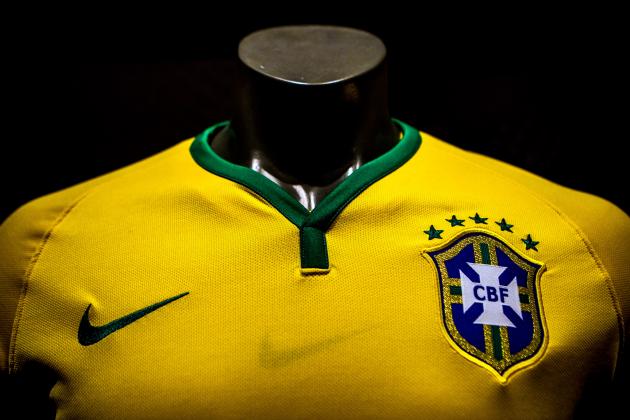
As we enter the final few months leading up to this summer’s World Cup in Brazil, the national teams taking part in the tournament have been unveiling their new kits to ride on the wave of growing interest in international football.

Brazil, England, Germany, Spain, Argentina and France have all released new kit designs for the summer, with various big-name sportswear companies and top international stars at the helm of high-profile launch events and flashy marketing campaigns. (The Mirror has a collection of some newly released kits here.)

As with most commercial activity in football, however, not all the recent kit launches have been met with universal acclaim: Ben Curtis’ article on the Mirror is a cynical rant at the hype machines that these events have become, while Lizzie Parry’s on the Daily Mail highlights just how expensive replica kits, launched over increasingly short time periods, have become.

In February, we explored the importance of stadiums in the overall commercial strategies of football clubs. As top-level football increasingly becomes big business and a huge revenue generator, let’s take a look at another money-spinning side to the sport: football kits.


Vincent Yu


Sponsorships

One of the first things that comes to mind when football kits are mentioned these days is the staggering amount of money they can generate for football clubs, both from the merchandising side and from the corporate sponsorship side.

While club merchandise is generally dependent on the popularity and on-pitch success of the clubs themselves—and the annual Deloitte Money League results generally attest to that—the larger context is the money that sportswear companies actually pay to be the official kit providers of football clubs.

In recent years, just in the Premier League, we’ve seen many instances of eye-watering commercial deals involving kit suppliers. Liverpool’s 2012 deal with Warrior Sports, the latter’s first foray into football, would, according to Andy Hunter of the Guardian, net the club at least £25 million a year.

Just this January, Arsenal announced they would be changing their kit maker from Nike to Puma, in a five-year deal reportedly worth more than £30 million a year, per the BBC. And, as ever when it comes to business deals, Manchester United shocked the world this March with their world-record 10-year deal with Nike, which, according to Simon Mullock of the Mirror, will see the Old Trafford club earn more than £60 million a year.

Besides contracts with sportswear makers, the other big player in the football kit boom is the corporate sponsorship deals that have taken center stage in recent years. This 2013 J.J. Colao article in Forbes listed Manchester United, Barcelona, FC Bayern Munich, Liverpool and Real Madrid as the biggest shirt sponsorship deals in the world.

Another interesting marketing tactic has been employed by Tottenham Hotspur this season, as they featured different sponsors on their shirts in different competitions, with Hewlett Packard their Premier League front and AIA their cup shirt partner. According to Kevin Palmer of ESPNFC, however, even Tottenham will revert to the traditional “principal partner” model at other big clubs, having agreed a lucrative £20 million-a-year deal with AIA for the next five years.


Richard Heathcote/Getty Images


Technology

But with all the money that goes into the kits, and their burgeoning price tags, do those who get to wear them actually benefit?

Specifically, do the footballers themselves get anything out of the constant kit changes, or are they just excuses to step in front of a camera for yet another photo shoot?

Just ask the Italian national team stars. According to the BBC, the high-tech football shirts they will be wearing at the World Cup this summer will be able to deliver massages during the game. The shirts contain a special tape that provides “micro-massages” for their wearers and “maximise muscle power” by allowing the body to recover from exertion more quickly.

Away from the luxury options provided to footballers these days, far more important is the shirts’ ability to keep their wearers warm in extreme cold temperatures. This article from PRNewswire.com lists a few examples of temperature-regulating technologies that are present in football shirts on the market.

Different sportswear manufacturers—the same who enter into the lucrative long-term contracts with football clubs and will rely on such technology to win such bids—integrate different functions into their shirts, but the underlying principles are the same: adding layers onto shirts that keep players comfortable, dry, warm or cool depending on the surrounding weather conditions.

With the digital space increasingly at the center of the football fan experience, besides featuring on shirts themselves, technology has also crept into the marketing side of football shirts and kit launches, so much so that organizing such events can be considered an industry in itself.

See, for example, this analysis on Liverpool’s new kit launch in 2012 on Dan McLaren’s TheUKSportsNetwork.com. Liverpool’s multichannel marketing and promotion strategy, across different social media platforms, was all about putting out a united front for the kit launch, which also had to match the club’s corporate branding.

But, as they’ve tended to do so in social media in general, Manchester City will take home the technology and marketing hybrid approach for football kits as well.

They’ve since switched to Nike as their main shirt sponsor, but City’s launch of their Umbro kits for the 2012/13 season, as covered here by SoccerBible.com, took fan engagement to a new level when they invited fans to decide how the new kit would be officially launched.


Ray Stubblebine


Branding

Using a new innovative campaign to bridge the marketing and technology worlds with branding in football was yet another Manchester City-affiliated project, New York City FC.

Since their official announcement in 2013, New York City FC have caught the attention with their cutting-edge digital-marketing campaigns despite the MLS outfit not yet officially competing in the U.S.’s highest-tier domestic football league.

NYCFC put their fans truly at the center of their business and branding strategy by inviting them to submit ideas for an official club crest, which was met with widespread acclaim and culminated in a win-win scenario where the club also got their hands on an excellent winner, shown here on the MLS official website.

An example of how the football kit itself has become more than just one of the components of a football club’s identity; it’s evolved into an integral part of the football club’s business strategy on the whole.

So eager have clubs and affiliated sponsors wanted to tap into their fanbase for merchandising dollars that they have begun creating hype cycles out of kit launches to boost profits and increase circulation among their followers—at the risk of straying into grey areas and stirring controversies.

In tandem with the ongoing, controversial narrative that football is becoming more and more middle- and upper-class and moving away from the traditional working-class fanbase that gave the sport its following and popularity, clubs and corporations have rushed into a branding frenzy and become eager to associate themselves as “premium” titles.

A major recent example was that of Adidas, who, according to Anna White of the Telegraph, may refuse to supply Sports Direct, one of the biggest sports retailers in the UK, with a variety of World Cup football kits due to concerns over its stores and customer service.

Said Adidas, “Like all manufacturers, we regularly review, season by season, where our products are distributed. We determine distribution channels for all products based on criteria such as in-store environment and customer service levels.”

In other words, sportswear manufacturers are eager for their football kits to be treated as premium consumer goods—indeed, the mooted £140 price tag for the new England kits by Nike almost automatically price themselves into that category—and they’re not afraid to incur the wrath of fans and middlemen retailers to achieve their commercial goals.

Charlie Crowhurst/Getty Images


Prior to the World Cup row, Adidas also landed themselves in hot water with Sports Direct over their treatment of Chelsea’s official club kit. In light of the public spat, Matt Scott of InsideWorldFootball.com put together an excellent and in-depth analysis of the changing role of the football kit itself.

Linking the state and rationale of Chelsea’s commercial and branding activities with the area’s wealthy and exclusive reputation, Scott consolidates a list of the London club’s highest-profile official sponsors, who all pride themselves on their elite stature within their respective industries.

The ever-changing face of the football kit, then, is not just an evolution of modern shirt design and an extension of clothing technology into sport, but is a reflection of a shift in the status of merchandise and football itself in the eyes of football clubs, manufacturers and sponsors.

And with seemingly unstoppable momentum behind money-spinning sponsorship deals, it seems that football kits will continue to be at the center of football’s paradigm shift. One only hopes that it doesn’t one day become only limited-edition items due to their exclusivity.


This article first appeared on Bleacher Report.

Liverpool 4-0 Tottenham Hotspur: 6 Things We Learned from Anfield Rout

A Younes Kaboul own goal and goals from Luis Suarez, Philippe Coutinho and Jordan Henderson handed Liverpool an impressive 4-0 win over Tottenham Hotspur at Anfield on Sunday, which saw the Reds climb back to the top of the Premier League once again.

Another flying start by Brendan Rodgers’ side saw Raheem Sterling combine well with Glen Johnson down the Liverpool right, forcing Kaboul to turn the ball into his own net. Suarez’s excellent left-footed finish after putting Michael Dawson under pressure deservedly doubled the Reds’ lead on 25 minutes.

Coutinho’s excellent low drive from range further extended the hosts’ dominance on 55 minutes, before Henderson’s free kick from the left flank evaded everyone in the Spurs box and sealed another Liverpool rout over Tottenham, following their five-goal demolition job at White Hart Lane back in December.

Here are six things we learned from Liverpool’s excellent win. Enjoy, and let us know your thoughts below.


Impressive Rearguard Action by the Reds

Impressive Rearguard Action by the Reds

Jon Super

Take your pick from two well-worn cliches in the sports world: “The best defence is offence” or “Defence wins championships.”

Whichever your preference—and while Sunday’s result by no means confirmed anything in terms of the Premier League title race just yet—Liverpool showed both offensive drive and defensive steel against Tottenham, much like the reverse fixture in December.

Jon Flanagan bounced back from a quiet couple of weeks with a performance full of heart, commitment and excellently timed tackles, while Glen Johnson put in an admirable defensive shift, albeit against a toothless Spurs left.

Simon Mignolet was on hand to make a few crucial but routine stops—including an excellent left-handed parry of Christian Eriksen’s deflected shot in the dying minutes—to keep what was a rare clean sheet for Liverpool this season.

Martin Skrtel had one of his almost flawless performances featuring a few blockbuster last-ditch blocks. Even Daniel Agger, normally in the “cool, calm and collected” school of defending, saw fit to put in a few flying blocks of his own.

The clean defensive performance, which was admittedly due to a disappointing Spurs display, will be one of the key points stressed by Brendan Rodgers to replicate in the end-of-season run-in.


Liverpool Might Just Have the Best Right Flank in the Premier League

Liverpool Might Just Have the Best Right Flank in the Premier League

Alex Livesey/Getty Images

But enough about the defence: Besides keeping a second successive clean sheet against Tottenham this season, Liverpool have again hit four goals with no reply in the Premier League this season, making it 11 matches this season where they have scored at least four goals.

Even more encouraging for both Rodgers and Liverpool fans alike will be Glen Johnson’s return to fitness—and, it seems, to a level almost touching his flying best. It was Johnson’s run behind the Spurs defence that led to Liverpool’s early opening goal and one that fully illustrated his valuable contributions to the Reds attack.

And in reverting to his tried and trusted 4-3-3, Brendan Rodgers started Raheem Sterling on the right, which paid dividends both in the final third and also on the defensive end. The young winger, who by now must surely be on the plane to Brazil this summer, was a constant menace to the Tottenham defence, while a physical duel with Mousa Dembele before his substitution—which he won—was a sign of his growing confidence and maturity.

Johnson’s dovetailing with Sterling down the right made it once again Liverpool’s preferred attacking outlet, even while the hapless Kyle Naughton started as right-back on the opposite side of the pitch.

Pablo Zabaleta and Seamus Coleman, step aside—if Johnson and Sterling keep up their performances on both ends of the pitch, they’ll comfortably win any award for the Premier League’s best right flank.


Familiarity Breeds Success

Familiarity Breeds Success

Alex Livesey/Getty Images

When Mamadou Sakho’s return from injury was announced, Liverpool fans would’ve been forgiven for wanting him to go straight back into the starting XI, with Daniel Agger not being at his domineering best this season.

When Lucas made a first-team comeback as well, many wanted him to return as the midfield anchor, releasing Steven Gerrard of his holding and controlling duties at the base of the Reds midfield and allowing the captain to push further up the park.

Instead, Rodgers has chosen to stick by and large with a starting lineup that has served him so well, if not entirely in defensive solidity then at least in results, only sacrificing Joe Allen for Sterling.

Besides the Allen/Sterling change, this was the same lineup that started Liverpool’s previous few victories, allowing them to have built up a winning momentum and a growing sense of confidence, which was increasingly apparent as the match wore on.

In sticking with a winning team, despite having other strong contenders on the bench, Rodgers has gone with familiarity, both as a sign of his confidence in his team and as a reward to those players who have served him well amidst the previous injury problems.


Tactical Flexibility Now a Liverpool Hallmark

Tactical Flexibility Now a Liverpool Hallmark

Alex Livesey/Getty Images

It was the Allen/Sterling change, though, that reflected a return to the 4-3-3 formation that had been used to such excellent effect at times this season. (Lest we forget, the 4-4-2 diamond was, of course, a formation ushered in partly out of desperation.)

Liverpool played like they’d never even thought about veering away from their original 4-3-3, such was the fluency in their build-up and possession play, while Coutinho once again impressed as the most advanced member of the midfield trio.

Not that they played the entire match as a 4-3-3, though: Rodgers’ two substitutions between the 64th and 70th minutes meant that Allen and Lucas did come on to replace Coutinho and Gerrard, and Sterling was pushed back into the middle to revert to the 4-4-2 diamond.

In doing so, the home side displayed yet another trait it’s developed this season: a tactical flexibility that has allowed it to approach different opponents in different ways.

The Liverpool players have become so comfortable with each other and with Rodgers’ possession-based attacking philosophy that they’ve taken every formation change almost like a duck to water, and this can only bode well for the rest of their title-chasing season.

And it paid off spectacularly.


Tottenham Hotspur Are Stuck in Limbo

Tottenham Hotspur Are Stuck in Limbo

Alex Livesey/Getty Images

Spare a thought for Tottenham Hotspur, as not only did their players not seem to have a game plan in mind, but their head coach also seemed to have lost his fiery passion for which he’s been so famous.

A 60th-minute double substitution aside, Tim Sherwood didn’t appear to take any initiative to improve his side’s fortunes, and he cut a lone figure in the Spurs director’s box as the match wilted away from a Tottenham point of view.

According to BBC Sport, Netherlands manager Louis van Gaal is reportedly on his way to White Hart Lane as Spurs’ new manager after this summer’s World Cup. Judging from Sherwood’s demeanor, he might well feel like a dead man walking, with his opportunity to impress at the Spurs helm limited in the end to less than a full season.

In the meantime, however, a host of Tottenham players have been frozen out—the likes of Sandro, Mousa Dembele and Paulinho have been left out in favor of the youngster Nabil Bentaleb—and the lack of cohesion on the Anfield pitch on Sunday will have made for some jarring watching for Spurs fans.

Having spent in excess of £100 million in the wake of Gareth Bale’s departure, Tottenham were supposed to mount at least a strong challenge for fourth. Instead, they’ve lost all their league matches against the Premier League top four this season (barring a home draw against Chelsea in late September) and their season is well and truly unraveling.

Plenty of work to be done in the summer.


It’s All in Liverpool’s Hands Now

It’s All in Liverpool’s Hands Now

Jon Super

By notching their 22nd win of the Premier League season, Liverpool return to the top of the table in emphatic fashion, two points above Chelsea after the Blues’ shocking loss at Crystal Palace on Saturday.

While Manchester City have two games in hand and would yet reclaim the top spot with two wins out of two, the reality remains that Liverpool’s fortunes for the season are entirely in their own hands now.

From this point forward, if the Reds win all six of the remaining fixtures on their schedule, they will be crowned Premier League champions since both Chelsea and City have yet to visit Anfield.

For the first time in many a season, Liverpool only have themselves to worry about, without having to hope for rivals dropping points before they can look to capitalize.

Brendan Rodgers will know that this is a key advantage for his team in the run-in, but as usual, he will be stressing the need to keep calm and focus on the next game.

Bring on West Ham United.


This article first appeared on Bleacher Report, where I contribute regularly on Liverpool and the Premier League.

The True Financial Cost of Manchester United Missing out on the Champions League

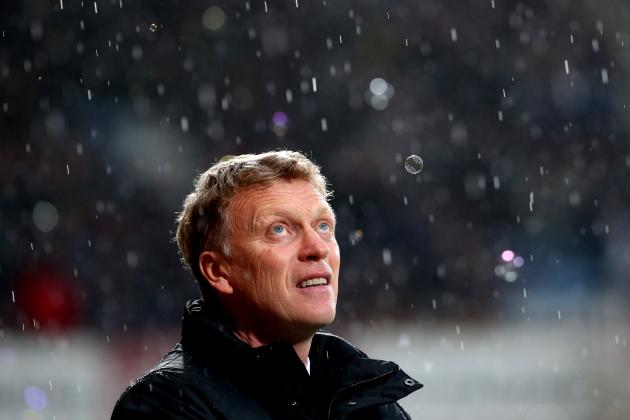
The gulf in class on the Old Trafford pitch was evident on Tuesday night as Manchester United succumbed to another 3-0 home defeat to a major rival, but David Moyes added more insult to injury as he claimed that Manchester City’s standard and level were something to “aspire” to, per Sky Sports.

For Red Devils fans, who had been used to seeing years of Premier League dominance and a true winning dynasty under Sir Alex Ferguson, this statement—that United were now, suddenly, looking up to their “noisy neighbours”—will have irked, much more than their overall lethargic play has already this season.

It hurts, not just because it was United’s sixth home defeat in the league this season—their most ever in the Premier League—but also because a glance away from the scoreboard and at the league table shows just how far they’ve fallen from their supreme title-winning season last year.

As we approach the final weeks of the 2013-14 Premier League season, Manchester United are left staring up rather than down, contemplating what exactly a failure to qualify for next year’s Champions League—and they are on the brink—would mean to the future of the club.

But what exactly would it mean? Here’s a brief study on the true financial cost of Manchester United missing out on the Champions League—and it doesn’t look too rosy.


Alex Livesey/Getty ImagesPremier League Payouts

Qualifying for the Champions League requires a minimum of a fourth-placed finish in the Premier League, so let’s go from there.

It’s a well-known fact that the Premier League provides payments to its competing clubs at the end of every season—and it’s because of the league’s astonishing financial successes that those in England’s top tier receive huge amounts of revenue from television rights and so on.

While we won’t know the exact payouts each club receives for the season until late May, after the season will have officially finished, our benchmark will be from last season, where the fourth- and fifth-placed clubs were Arsenal and Tottenham Hotspur respectively.

For their efforts last season, Arsenal received a total end-of-season payment of £57.1 million, £12.8 million of which were “merit payments” from the Premier League based on position, according to the league’s official announcement. Spurs, on the other hand, received £55.9 million and £12.1 million in merit payments.

It’s easy to calculate the difference just in merit payments as a reflection on the gap between the fourth- and fifth-placed Premier League clubs, but the other components of the payout—the “facility fees,” given each time a club’s matches are shown on TV in the UK, and “overseas TV” costs—are also tied intricately into their performances in the league and in European competition.

So the difference in overall payments is likely a more reliable indicator on the gap. In this case, it’s £1.2 million.

Not too significant as a lump sum, but when it comes to Manchester United, the fact that they were so successful in the league last season means that the hurt will be inevitable—and more considerable.

United finished the season as runaway champions, netting a league-high £60.8 million in payouts, which is a full £4.9 million difference from Tottenham’s eventual payout. And it doesn’t stop there: United’s current seventh place was where arch-rivals Liverpoolfinished last year, and the Merseysiders received £54.8 million.

If the Red Devils drop from first place and finish seventh come May, they will have missed out on at least £6 million just in league payouts—and we haven’t even adjusted for the inevitable league-wide increase yet.


Laurence Griffiths/Getty ImagesChampions League Payouts

Then there are the official payouts from the Champions League, which, if United do miss out on the competition itself, they will naturally not be entitled to next season.

For all their domestic woes this season, United’s run to the quarter-finals this season has by and large been smooth, barring a first-leg shock against Olympiakos in the round of 16. Their easy win of Group A was secured on the back of four wins, two draws and no losses—but this is also why an exit from Europe’s elite cup competition will hurt all the more.

According to the official UEFA website, the Champions League paid a minimum base fee of €8.6 million to each participant in the group stage last season.

An additional €1 million was awarded for each win and €500,000 for each draw, meaning that on their group stage form this season, United netted at least €13.6 million just from the group stage alone.

All clubs competing in the round of 16 received a €3.5 million payout, whereas each quarter-finalist received €3.9 million each.

Added on to the group stage payments, that’s at least a €21 million total that they will earn from this season’s Champions League run—and, again, that’s not adjusted for the inevitable competition-wide increase yet.

And who knows—if David Moyes manages to mastermind a famous victory over two legs against the fearsome and record-breaking Bayern Munich of Pep Guardiola, there could be further payments yet.

Translated into pound sterling, the Champions League prize money from this season is at least £17.5 million (and counting), which puts the total opportunity cost at £23.5 million.

Just exactly the amount Marouane Fellaini would’ve cost last summer—if Moyes submitted his bid before the Belgian’s release clause expired on July 31, 2013, according to BBC Sport.


Paul Gilham/Getty ImagesThe Intangibles

If only the cost of missing out on the Champions League was just £23.5 million.

Just ask Liverpool, perennial arch-rivals to Manchester United, who slipped into several years of mediocrity—including a couple through financial difficulty—after finishing seventh in what turned out to be Rafael Benitez’s last season at Anfield.

Whether it was down to the personal draw of the managers that succeeded Benitez, or due to the lack of top-quality competition that Liverpool were to be involved in, we may never know, but the truth remains that Liverpool’s signings since that exhilarating title challenge in the 2008-09 season had dropped down several notches—and only resurfaced in the past year or so.

In many ways, Manchester United’s current situation and Liverpool’s back then are similar, especially since both clubs are two of the most prestigious in England (and the world), two of the most historically successful and two built on pride and tradition more so than pure financial muscle.

To lose out on what has traditionally been a key part of the United brand—namely their winning tradition and stature in Europe—would be a huge blow to Manchester United’s appeal to prospective players.

David Moyes stressed in January that “the amount of big players wanting to join United is incredible. It’s because of the club and what it stands for in world terms. Players are not looking at the share price. They are looking at the football club,” per ESPN FC.

A Manchester United without the Champions League simply does not provide the same attraction and a scan at Liverpool’s reported missed signings over the years is testament to that.

Far more than the £23.5 million base loss, which less than half a season under the terms of their kit deal extension with Nike can already recuperate, via the Mirror, this might well be the true cost to Manchester United missing out on the Champions League.

Unless, of course, they change tack and throw their financial weight in to compensate for the lack of European competition, in which case the likes of Chelsea, Manchester City, Real Madrid and Paris Saint-Germain become their main competitors.

And they’ve all got Champions League football.


This article first appeared on Bleacher Report, where I contribute regularly on Liverpool and the Premier League.

How Much Is Liverpool Forward Luis Suarez Worth Based on Form in 2014?

Nine matches to go in the 2013/14 Premier League campaign, and Liverpool are still on course for a top-four finish, which would see them return to the Champions League next season—and still in with a shout for the league title outright.

None of this would be possible without the contributions of Luis Suarez, who, despite all the proclamations of the Reds being a dynamic and interchanging team these days, remains one of their most important players.

After 25 goals and 10 assists—making him the leader of both charts in the Premier League—in 24 matches and a contract signed in December, Suarez has once again proven himself as indispensable and invaluable to the Anfield club.

Perhaps even more so than in previous campaign.

Back in December, we embarked on a challenging but interesting attempt to calculate Suarez’s worth in the transfer market then.

In light of Liverpool’s recently released financial results for the 2012-2013 financial year, let’s revisit this subject and try to work out how much Luis Suarez is now worth based on his current form—without any kind of insider access to the boardroom.


Transfer Fee and Wage Estimates

To get us started off, let’s return to our estimates in December regarding Luis Suarez’s transfer fee.

Assuming a basic financial amortization of his initial £22.7 million transfer fee (per BBC Sport) over the course of five-and-a-half years, which was the initial length of his contract signed in 2011, we arrive at an approximate annual cost of £4.13 million.

For the purposes of simpler calculation, let’s consider Suarez has been at Liverpool for 3.2 years, which means the as yet “unpaid” total amortization cost would be updated to £4.13 multiplied by 2.3, or £9.5 million.

Onto his wages, which we will only discuss in the present and future tenses, after his December extension.

Our wage calculations following his new contract in December 2013 are based on this BBC Sport article that claims Suarez is earning £160,000 a week until the end of the current season, and then £200,000 a week for the next four years. Simple arithmetic gets us to a total of £43.06 million over the rest of his new contract.

Our baseline estimated value of Luis Suarez, from just his transfer fee and wages, is thus £9.5 million plus £43.06 million, which gives us £52.56 million.


Possible Champions League Qualification

As it stands, Liverpool are placed second in the Premier League, and they look in ominous form as they approach the final couple of months of the season.

Our key underlying assumption is that the Reds will indeed finish in the top four, qualifying for Champions League football next term, which should also be the assumption behind Luis Suarez staying at Anfield in the first place.

Champions League qualification is known to have a wide range of commercial benefits, and this is an area where we will take the roughest of estimates of player bonuses based on club performance in both the Premier League and the Champions League.

Our best benchmark in terms of Premier League end-of-season payouts, assuming a fourth-place finish by Liverpool this May, is Arsenal’s from the 2012/13 season. According to the official Premier League website, Arsenal’s league payout for finishing fourth last season was £57.1 million.

A further assumption that Liverpool, having secured Champions League qualification, will make it into the group stages of next year’s competition, will take us to calculate possible payouts from participating in the group stages.

According to SportsBusinessDaily.com, all participants who made it into the Champions League proper were entitled to a minimum of €8.6 million, which translates to about £7.2 million.

As we noted in our December calculations, a minimum total of £64.3 million will probably arrive in Liverpool’s coffers just for making the Champions League group stages.


Liverpool’s Business and Commercial Performance

Our December estimates only took into account the potential sum that would come with making the Champions League group stages, and used it as a base to calculate a 5 percent performance bonus for Luis Suarez, one of Liverpool’s most important players.

This time around, however, we’re going to be a bit more ambitious, especially since the Liverpool Echo have also released the 2013 accounts Liverpool submitted to Companies House.

The increase in revenue from all sources is impressive, but for the purposes of calculations in the “current” context, we will exclude media and matchday revenues, since the 2012-13 financial year featured Europa League football, which Liverpool haven’t even been involved with this season.

The growth in commercial revenue, however, was staggering, and with the announcement of new sponsorship deals in the past few months, will only continue. Commercial revenue for the year ended May 31, 2013, was £97.7 million, more than a 50 percent increase over the previous 10 months, which landed £63.9 million. Spread the 10-month average over a period of 12 months, and the increase can be adjusted to roughly 27 percent, still a significant growth factor.

Our final assumption is if Liverpool continue in their current attacking style of football, coupled with the increased exposure of Champions League football, they will generate more interest off the field, which will lead to benefits both in terms of commercial sponsorships, as well as merchandise and image rights-related sales and advertising revenue.

Applying the same 27 percent year-on-year growth factor onto our performance bonus of 5 percent, to ensure that all staff are adequately compensated for their role in helping grow the Liverpool brand, we get a 6.35 percent bonus from the previously calculated Champions League-related payouts.

This gives Suarez 6.35 percent of £64.3 million, which amounts to £4.08 million.


Conclusion: £56.64 Million

Adding this performance bonus to our transfer and wages baseline, we get a total valuation of £56.64 million, which, compared with our December estimate of £56.1 million, is perhaps disappointingly close.

However, considering that it’s only been three months since our previous calculation and that our estimate has already gone up by half a million pounds, this kind of growth rate could yet translate itself into bigger margins given another year or two.

It wasn’t so long ago—last summer, in fact—that Arsenal submitted a high-profile (and now widely mocked) £40-million-plus-£1 bid for Luis Suarez, which was derided at the time by Liverpool owner John W. Henry.

Back then, £40 million plus £1 was seen as a derisory amount for a player like Suarez. Three quarters of a season onward, perhaps £56.64 million will be considered shockingly low for such an important player to the Reds cause.

But of course, this is just a purely financial valuation of Luis Suarez, based on assumptions that might not ring true in the Liverpool boardroom.

Last time John W. Henry checked, football contracts “don’t seem to hold, and [Liverpool] took the position that [they’re] just not selling” (per the Guardian).

We have a sneaking suspicion that they will be holding this position for quite some time.


This article first appeared on Bleacher Report, where I contribute regularly on Liverpool and the Premier League.

Film Focus: Breaking Down Liverpool’s Impressive 3-0 Win over Manchester United

Two Steven Gerrard penalties and a Luis Suarez finish handed Liverpool an impressive 3-0 win over Manchester United at Old Trafford on Sunday. And it could’ve been much more.

Besides Steven Gerrard’s performance, which, despite missing his third penalty of the night, was more than enough to see him awarded the Man of the Match, there were a number of interesting talking points from the match.

First was, of course, the sheer number of penalty kicks that referee Mark Clatternburg could have called over the 90 minutes. Marouane Fellaini’s first-half trip on Luis Suarez was let go, while Michael Carrick’s second-half swipe of Daniel Sturridge’s feet after Gerrard’s missed penalty was also not called.

Then there were the decisions that Liverpool perhaps got away with, namely the lack of contact over the visitors’ third penalty, which saw Nemanja Vidic sent off for a fourth time in this fixture for a tackle that didn’t actually connect—and a Glen Johnson handball inside the Liverpool box.

And then, there was David Moyes’ curious decision-making. It wasn’t limited to just deploying record signing and specialist No. 10 Juan Mata on the wings again. It was the lack of instant reaction from the United manager that saw his first substitutions take place on 76 minutes, a full half-hour after the hosts went 2-0 down.

Away from these three general observations, we felt there were four instances that symbolized the match and its eventual outcome. Let’s take a more detailed look at four scenarios that occurred throughout the match.


Robin van Persie, deep-lying playmaker?

That Robin van Persie and Wayne Rooney have spectacularly failed to strike up a useful and threatening strike partnership this season has not gone unnoticed—but their lack of interplay on Sunday will have been very disappointing for Manchester United fans.

More alarming, however, was the manner in which van Persie and Rooney tried to link up with each other (or at least make it seem like they were).

So isolated was van Persie up front that he often drifted out to the left wing in pursuit of the ball, depriving United of any forward presence up front and in theory allowing the supporting midfielders—and Rooney—to charge forward.

But after so many jokes at the Red Devils’ expense in recent months about their crossing-only attacking play, Sunday was yet another exhibition of why their incessant crossing is so unfruitful.


BBC Match of the DayAs we see in this first-half shot, van Persie has come so deep that he’s literally on the halfway line (yellow circle on the left). Rooney’s charge forward (yellow circle on the right) brings him level with the last man in the Liverpool defence—Daniel Agger—and there are a full three United players between van Persie and Rooney that the former can look to go through.

Instead, his next move is to play a cross-field ball that ends up cleared away all too easily by the Liverpool rearguard. Not a very inspiring attacking approach.

The sad thing was, this was only one of the many times this sequence occurred.


Manchester United’s undisciplined defending

By our count, Liverpool could’ve easily had five penalties called on Sunday—a remarkable stat given that their first, after Rafael da Silva’s handball against Luis Suarez, was the first penalty conceded at Old Trafford in the Premier League since December 2011.

While Rafael’s handball was all down to individual carelessness (and he could arguably have been issued a second yellow card), the second penalty was very much down to a collective lack of discipline in the United defence.

In the immediate buildup to the penalty, Jordan Henderson deserves much of the credit for spotting an excellent Joe Allen run into the box and then producing an exquisite flick over the top to find his fellow midfielder. Allen’s use of the body allows him to take control of the ball, which puts the United defence under pressure.

But let’s take a look at the positional errors that the hosts have committed in this single piece of defensive play.


BBC Match of the DayThis freeze frame, taken right as Henderson is about to release the ball to Allen, comes on the back of a long ball over the top towards Raheem Sterling on the right side of the penalty box, where he is only tracked by Nemanja Vidic.

United left-back Patrice Evra (blue circle on the left) arrives late on the scene and is dragged back by the ball, while Marouane Fellaini (blue circle on the right) also follows the ball into a zone very much out of his own. Evra and Fellaini have almost switched positions here—bear in mind that Evra should have been tracking Sterling and Fellaini, as the defensive midfielder, should have picked up Henderson or Allen.

These positional errors leave centre-backs Phil Jones and Vidic exposed and under pressure from Allen’s run, as Vidic (yellow circle on the right) is also dragged toward the ball and thus behind Allen’s run (white arrow).

Jones’ disadvantageous starting point (yellow circle on the left) means that he could’ve left Vidic come into Allen’s path (red box) and tackled on his right foot, but the former’s rash movement bundles Allen over and concedes the penalty.

2-0 to the visitors.


The movement and magic of Suarez and Sturridge

It’s a testament to how badly United fared that Liverpool didn’t even really get out of their first gear over the 90 minutes and still came away with a comprehensive win.

Arguably the most impressive (and productive) piece of forward play from the Reds’ league-leading strike force came when Luis Suarez took advantage of a Daniel Sturridge mishit and finished with aplomb past David de Gea to take the score to 3-0.


BBC Match of the DayAs we see in this freeze frame, the dotted red line represents the path Sturridge would undoubtedly have wanted his shot to have taken. If that shot would’ve gone through, David de Gea, who had just forced the corner from which this play started after a brilliant stop from Luis Suarez at point-blank range, could’ve been equal to it, or perhaps parried it out for another corner.

Instead it hits Phil Jones and lands at Suarez’s feet, who controls and finishes it with his left foot past de Gea.

That this play started from a corner was instrumental in the buildup to the goal. Martin Skrtel had stayed forward after the corner and made his presence felt in the penalty area: Jones (yellow circle) has his attentions occupied by Skrtel.

Patrice Evra (blue circle) is once again in no-man’s land as he is woefully out of position once more, while none of United’s players tracked the brilliant run that Suarez timed to perfection. As a result, Jones is caught in two minds, and by the time the ball arrives at Suarez’s feet, Jones and all of his defensive colleagues are nowhere near Liverpool’s No. 7, who couldn’t miss from there.

While the goal ultimately came about in a fortuitous manner, with the ball ricocheting off Jones’ legs to find Suarez, the manner of the runs and the positioning in the buildup suggest that this goal could very easily have been conjured deliberately.

If Sturridge had spotted Suarez’s run and decided to play him in with a deft pass, Suarez would still have been in with an easy finish. More importantly, while Sturridge inadvertently turned creator here, it’s not difficult at all to envision a role reversal here, with Suarez pulling the strings and feeding Sturridge through with an exquisite pass.

The fact that both of Liverpool’s strikers could have played either part in this goal shows exactly why the Reds are increasingly far and away the most prolific scorers in the Premier League.


Liverpool still have a midfield problem

With all this said, however, we will also pick one scenario that focuses on the deficiencies that Liverpool still have, even if it wasn’t at all exploited during the game. It’s just as food for thought and a note of caution for Reds fans.


BBC Match of the DayThe scene shown here is a Manchester United attack—their only shot on target during the entire 90 minutes—toward the end of the first half, from which Wayne Rooney forced a good reactive save from Liverpool goalkeeper Simon Mignolet.

Toward the bottom of the screen, Rafael is on the charge with the ball on the right flank. Right before this scene, Rafael’s good combination play with Adnan Januzaj leaves Jon Flanagan for dead, and the Liverpool defender is now forced to chase back after missing his initial tackle (blue circle and arrow).

As Daniel Agger is drawn out of position to mark the supporting Januzaj and Martin Skrtel is trying to maintain a presence in the penalty box, it’s now left to Steven Gerrard to track back and cover for Flanagan’s positional mishap (yellow circle and arrow).

However, Gerrard’s run toward United’s right means that his customary central defensive midfield zone has been left vacant, leaving a huge gap in the middle (red box) for Wayne Rooney (white circle) to storm into.

Rafael does subsequently find Rooney on the edge of the area, and the United forward unleashes a shot that Mignolet parries.

Fortunately for Liverpool, they held out to end the half 1-0 up and scored immediately after the second half.

From there on out, it was just a matter of wrapping up the three points. But as convincing as Liverpool looked on Sunday, they still have some work to do on the training ground.


This article first appeared on Bleacher Report, where I contribute regularly on Liverpool and the Premier League.

Liverpool Transfers: Scouting Report on Reported Reds Target Juan Manuel Iturbe

Liverpool’s high-flying and top-scoring attack this season hasn’t stopped the rumours from flying in. The latest player to be linked with a move to Anfield this summer is Hellas Verona winger Juan Manuel Iturbe.

Jamie Sanderson of the Metro has credited Liverpool with an interest in the Argentine winger, who is currently enjoying an impressive campaign in Serie A on loan from FC Porto.

With five goals and two assists in 20 starts, Iturbe has attracted the attentions of many clubs around Europe—including Hellas, who are keen to make the loan switch permanent this summer.

Starting his career at Paraguayan club Cerro Porteno, he moved to the Portuguese giants in 2010, aged just 17. Prior to his season-long loan at Hellas, he spent six months on loan at Argentine club River Plate.

Just as we’ve done with Micah Richards and Isco earlier, let’s take a look at the pros and cons to Juan Manuel Iturbe’s potential signing, assess his potential role at Anfield and evaluate whether he’d be a good pickup for Brendan Rodgers.


Pros

Juan Manuel Iturbe has long been highly rated in South America. In fact, he earned his first senior cap for Paraguay as early as 2009, when he was just 16 years of age—but he has since declared his national allegiance to Argentina, given that his international debut didn’t count as a competitive match.

With a low centre of gravity, dangerous acceleration, skilful close control, deadly free-kick accuracy and a cool finish, Iturbe has been dubbed the “new Lionel Messi” for obvious reasons.

His pace and strength on the ball are excellent complements to his superb left foot, which has seen him fire in long-range rockets and spectacular finishes for Hellas this term. Another Messi-like trait is his tendency to pick up the ball from deep and run at opposition defences.

Still aged just 20, Iturbe has his best years ahead of him and would be an exciting addition to any squad looking for an explosive winger capable of conjuring moments of match-winning magic.

And if the Metro are to be believed and Iturbe is indeed valued at £15 million, he would most definitely be considered a good deal.


Cons

One of the most damning—and condescending—questions leveled Messi’s way is “can he do it on a cold, wet Tuesday night at Stoke?”

Iturbe, who has yet to establish himself at the top level in Europe and is only spending his first full campaign on European soil, will certainly need time to adapt to English football.

His diminutive stature—he’s just 5’6.5″—means that he will be at an instant physical disadvantage in the Premier League, though his stocky frame will go some way in making up for it.

His one-footedness also limits his attacking play to go via his left side, which makes his tendencies to cut in from the right wing slightly predictable. His preference for the spectacular means that he can be selfish on the ball and in the dribble, which makes him a frustrating individualist rather than a total team player.


Gabriele Maltinti/Getty ImagesPotential Role at Liverpool

With their high-profile (and ultimately unfruitful) pursuits of Mohamed Salah and Yevhen Konoplyanka in the January transfer window, it’s clear that Liverpool are still on the lookout for a goal-scoring winger.

Juan Manuel Iturbe will certainly provide pace, attacking thrust and goals from the wing, and he would slot into a young and exciting Liverpool attack that has already been firing on all cylinders this season.

Brendan Rodgers would still need to instill in Iturbe a work ethic that has been evident in the likes of Philippe Coutinho and Raheem Sterling this season. Besides making his eye-catching contributions in attack, he would need to put his physicality to use as a first line of defence, harrying his opponents from the front.

In addition, in a team where collective play and responsibility reign king, Iturbe would need to shelve his selfish tendencies and improve his decision-making in the final third.

With Coutinho and Sterling forming a scintillating line behind Luis Suarez and Daniel Sturridge, however, Rodgers would need to evaluate how he should best blood Iturbe in and not hamper the former duo’s impressive development at the same time.


Conclusion

On the face of it, Juan Manuel Iturbe would be a brilliant signing for Liverpool: If Rodgers can unlock his full potential, he would be an excellent addition to a side ready to challenge for Premier League honours and looking to make a splash in Europe again.

Anfield would also be the perfect platform for Iturbe to launch himself into the European spotlight and working with Brendan Rodgers, who is now widely renowned for his man management, will only improve his game.

But from Liverpool’s perspective, with a cohesive attacking unit in such fearsome form this season, Iturbe’s “rough diamond” status would add more inexperience to a forward line already young at its core, and his style of play may need extensive coaching to adapt to a team-first, pass-and-move approach.

As such, Liverpool should only consider Iturbe if Porto are indeed ready to let him go at a reasonable price—and they’re not known for selling their best prospects on the cheap.

Perhaps the money that they’d splash on Iturbe would be better served strengthening other areas of the squad for now—unless Rodgers can find a way to fit him into an already stacked Liverpool attack.


This article first appeared on Bleacher Report, where I contribute regularly on Liverpool and the Premier League.

Manchester City: Building a Global Football Empire from the Etihad Stadium

The rise of Manchester City Football Club in recent years has been nothing short of astonishing, and since Sheikh Mansour and the current ownership team took over, they have gone from strength to strength, establishing themselves as a Premier League powerhouse.

Manuel Pellegrini’s impressive setup at the Etihad Stadium had—for a good few months—his City team the runaway top scorers in England, which are currently looking to secure a domestic double with the League Cup already in their hands.

From the outside, City seems like the archetypal sugar-daddy story: After all, didn’t Chelsea, Paris Saint-Germain and now AS Monaco go down the same path of sudden fame, fortune and success because of mega-rich owners?

That City’s newfound prestige—and that their starting XI boasts the likes of Vincent Kompany, Yaya Toure, David Silva and Sergio Aguero—is down to the money injected into the club by their Abu Dhabi owners is undeniable, and in some quarters perhaps spoken of negatively and cynically.

But a quick look at their off-field projects, initiatives and business developments suggests City aren’t just in this for the short term, and they’re not just around to pick up a few trophies.

Manchester City mean business, and they’re well on their way to building a global footballing empire.

Michael Regan/Getty Images

Building a City around their fans

From their well-known support of the club even during their lowly third-tier days to their fanatical celebration of a first-ever Premier League title after a 44-year drought, Manchester City fans have long been famous for their undying support.

So it was only right for any City management to focus on their fans—and to their credit, this is exactly what they’ve done.

As fan engagement started to go digital and social media started to take off, City were one of the first clubs to fully embrace these new channels, and as such became one of the pioneers in this arena among the football industry. (Michael da Silva of Alpha Magazine has more in this excellent write-up.)

Along the way, they’ve picked up their fair share of accolades, and for good reason.

Besides their long-admired Twitter channel, they have also become known for offering one of the most comprehensive YouTube librariesin all of football: Their “Inside City” and “Tunnel Cam” series are a rare breath of fresh air in an industry where much of the behind-the-scenes content remain proprietary and available only on paid subscriptions.

By putting their fans in the center of an all-inclusive, fun and interactive social media strategy, Manchester City have hit the jackpot—and their success has encouraged them to strike up innovative and interesting partnerships to take such marketing and fan engagement methods to the next level.

Take their collaboration with GoPro—known for their work with Red Bull Stratos and Felix Baumgartner’s record-breaking free fall from the edge of space—last year, for example.

Announced in August 2013, the GoPro tie-up was a groundbreaking look into “what it’s like to train and play like a professional footballer.” A slight exaggeration, perhaps, given that players wouldn’t have worn the cameras during competitive games—but their viewer numbers of more than two million to date have more than paid off.

Prior to that, their May 2013 partnership with Cisco and O2 turned the Etihad Stadium into the “Premier League’s most technologically fan-friendly stadium,” allowing fans to fully immerse themselves into the digital world while watching a live match unfold before them.

Shaun Botterill/Getty Images

Transforming the City of Manchester

The City of Manchester means a lot to the football club in two different ways.

The first is obvious: Their landmark deal in 2011 with Etihad Airways, which, according to Daniel Taylor of the Guardian, was worth awhopping £400 million, renamed the City of Manchester Stadium to the Etihad Stadium it is known as now.

It was also the largest sponsorship deal in sports at the time and showed the financial powerhouse that Manchester City Football Club were becoming—and the raw commercial potential they had in abundance.

But while the sponsorship arrangement was momentous, arguably more important was what the owners and related stakeholders had in mind for the city of Manchester itself.

The £400 million partnership had significant funds earmarked for the continued development of the Etihad Campus, an area of land around the stadium including a fans’ village and other training facilities. When they put pen to paper on the landmark deal, the landscape and the immediate vicinity was instantly changed.

Two-and-a-half years since he announced the deal, Taylor revisited the topic and wrote more extensively on the “changing football landscape” in Manchester this February (via the Guardian).

With the Etihad Campus due to start its operations within six months and the redeveloped area to include “16 other pitches, accommodation for players, apartments for relatives, a medical center, a boardman, a media theater,” this is truly the beginning of an exciting new era at Manchester City. (The Telegraph have more on the training facility plans here.)

In conjunction with this is the vision at the boardroom level, where Mansour set out a model to incorporate a sustainable future in his plans for the club, which led him to the long-awaited appointment of Txiki Begiristain and Ferran Soriano, both instrumental to Barcelona’s dynasty under Pep Guardiola.

The Barcelona blueprint was instrumental and central to Manchester City’s own footballing approach, according to Sid Lowe of the Guardian, and has begun to work its magic. As reported by the Independent, Patrick Vieira, the ex-Arsenal legend, was chosen last summer to move from his position as football development executive to head up City’s new elite development squad, who have been flying high in the under-21 Premier League this season.

Ray Stubblebine/Associated Press

Cities abroad: A global empire

As Manchester City’s youth players go through a one-club development philosophy and prepare to graduate to first-team level, City’s groundwork has been laid at the local level. Prepare to arm Manuel Pellegrini with a squad that can compete at the top of the European game in the coming years.

Whenever it comes to empire building, the next logical step after sorting out the local setup is to look global.

And City first hit the headlines for their worldwide ambitions with their foray into the United States’ Major League Soccer, joining up with Major League Baseball team, the New York Yankees, to establish New York City FC as MLS’s 20th franchise, as confirmed via SI.com.

Besides forming a fresh new local rivalry with the New York Red Bulls, New York City FC will also be commissioning a brand new football-specific stadium in the Bronx area, according to the Guardian, while also boasting the highly rated American coach Jason Kreis as their first manager.

They weren’t content with moving to just one continent, either, and in January this year, City confirmed, via the Guardian, they would be dipping their feet into the Australian market with their acquisition of A-League side Melbourne Heart.

These two acquisitions and expansions have been branded as “strategic” investments in two of the fastest-growing football nations: City will have had one eye on their revenue streams and profit margins when they decided to move ahead with these bold ventures.

But just as they’ve done at home, City also have a one-of-a-kind opportunity waiting in front of them, the kind of opportunity that will only present itself to those with the resources and long-term vision to make it happen.

If Mansour and his management team continue their good work in the city of Manchester and decide to invest in boosting the footballing infrastructures in both New York and Melbourne, not only will they develop their new football clubs, but they might also have a defining say in the footballing growth of the US and Australia.

The potential and the possibilities of a Manchester City football empire are as tantalizing as they are awe-inspiring.

They’ve already gone back to their roots: In a classic fan-centric move, New York City FC have released two winning designs for their club badge and put them up for a public vote among their fans.

We can’t wait to see what’s next.

This article first appeared on Bleacher Report, where I contribute regularly on Liverpool and the Premier League, and occasionally on football business.