Category Archives: Football Business

English Football Weekly: Week 9 Recap; Fergie’s Book; Grassroots Football

EPL Week 9 Recap: Suarez’s Hattrick, Torres’ Revival, Hart’s Blunder

Player of the weekend? Luis Suarez, without a doubt. Liverpool faced a West Brom team in good form and who had won their last three fixtures against the Reds, expecting a rough ride, but their “flipped midfield triangle” (in Rodgers jargon) worked a treat against the visitors. And with a trademark nutmeg and finish, a header Andy Carroll would’ve been proud of, and a predatory finish from a precise Steven Gerrard free kick, Suarez delivered a striker’s masterclass at Anfield on Saturday to blow the Baggies away. Daniel Sturridge’s fourth wasn’t too shabby either.

The original Liverpool striking hero is doing pretty well too. Fernando Torres has upped his game at Chelsea this season under strong competition from Samuel Eto’o (but not Demba Ba) and continued his resurgence with an all-action display against Manchester City. Sure, he delivered a now-trademark close-range miss, but he made up for it with an excellent turn of pace and strength to dispose of Gael Clichy to set up Andre Schurrle’s goal, and capitalized on City’s defensive mix-up to continue Jose Mourinho’s excellent record at Stamford Bridge.

But we also need to talk about Joe Hart. Wasn’t it just a couple of years ago that he was earmarked as the next best keeper in the world? It’s been an alarming drop in form in the past year or so, but never with as big an implication as now. Because last year City coasted to a runners-up place, and now Hart has continually dropped precious points this season, making him one of City’s biggest liabilities on the pitch. Which won’t help Manuel Pellegrini in what’s been a challenging first season in a club with the highest of expectations. January needs to come sharpish.

There was also Sunderland’s thrilling Tyne-Wear derby win over Newcastle on Sunday, in which Fabio Borini, on loan from Liverpool, scored an outstanding long-range strike to seal the points in Gus Poyet’s first home game with the Black Cats, who have quadrupled their points total for the season with the win. Southampton and Everton continued their excellent starts to the season with a pair of 2-0 wins, taking them to fifth and sixth in the table, in the process establishing themselves as strong challengers for the European places. A thrilling few months to come.


Fergie reminisces about a time gone by

A few months after Sir Alex Ferguson departed Old Trafford with the fondest adulations and fresh memories of all the right things he’s done in his 26 years as Manchester United boss, he comes out with a book that has it all—but will only be remembered for the wounds he’s opened up again, the fights he’s decided to pick even after retirement, and the dressing room secrets he wasn’t supposed to spill.

As a man management and motivator, Ferguson rarely got things wrong. He kept the spotlight firmly on himself and manipulated the media (and his rivals) to an extent that he enjoyed near totalitarian domination (and admiration) from everyone in football. To be sure, there’s plenty of the managerial insights in his autobiography that will be interesting add-ons to the interviews he’s done as a subject for publications focusing on management and success.

The cynical, petty and no-holds-barred side also shines through. We’d always looked forward to the relevations behind David Beckham and Roy Keane’s departure from Old Trafford, but never did we expect so much dirt to be aired. We’d always expected barbs at old rivals Liverpool and Rafa Benitez, but never did we think he’d call Steven Gerrard “not a top, top player.”

But in describing his managerial philosophy—that no one should be bigger than the manager at a football club, and once any player violated that rule, he was moved on—Ferguson also writes about an era that is fast slipping away. With the exception of Arsene Wenger, who enjoys near-total control at Arsenal, English football is moving into the 21st century of corporatism, with brands, reputations, marketing, profits and spectacle in mind.

The Manchester United after him was always going to be markedly different, whether David Moyes became the next manager or not. In time, Ferguson’s book may be seen as a time capsule of an obsolete style of football management.


England’s grassroots football needs more than just facilities

Last week, it was announced that the Premier League, UK government and Football Association committed £102m to improving grassroots football facilities, which, in light of the recent opening of St. George’s Park and the increased emphasis on youth development and organized football, was encouraging news to all involved in English football.

Whether this means the end of pick-up football in a neighboring park with shirts as goalposts is still up in the air—though I’d surely lament the loss of organic football centered on just having fun—but with the advent of organized football coaching for kids up and down the country, and all across the world, this is the next wave of grassroots football finally arriving on English shores.

But what England really needs is more than just facilities. They already have arguably the best in the world on that front, but it’s not translating into on-field successes. We’ll leave the debate on whether a strong Premier League and a strong English national team are mutually exclusive for later, but to really inspire a generation of outstanding young footballers, there needs to be a revamp in coaching, club academies and footballing culture across all levels.

It means youth coaches—the most important in a young footballer’s journey to the top—need to focus less on winning games and more on team play, passing, movement and flair. It means that kids need to be encouraged to take risks and try new moves. It means that kids need to have the right platforms and competitions to play in during their rise through the ranks. This could lead to a remodeling of the reserve system to inject, say, an Arsenal B in League One (though the U21 Premier League has been a major upgrade over the defunct reserve system), but should definitely lead to a cultural reformation that prizes improvisation, technique and creativity over the clichéd “heart and guts” that the English are now stereotyped for.

The coaching and the culture are at the center of grassroots football, not facilities. Brazil grew generation after generation of World Cup winners on the streets, not fancy million-pound youth academies.


This piece was part of my weekly column on SWOL.co, where I take a look back at the weekend’s English Premier League and domestic cup action, related talking points and news surrounding English football at large.
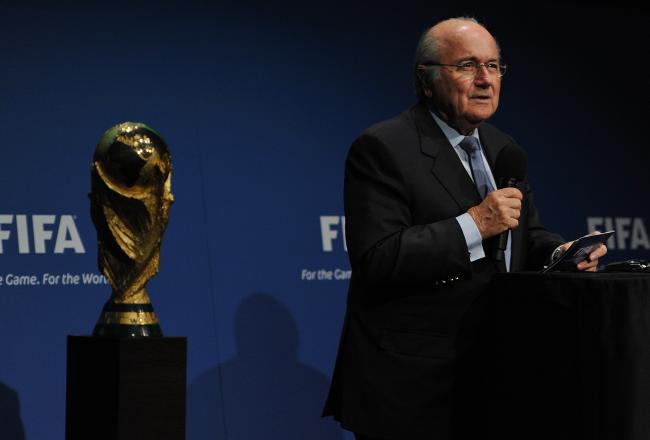
The Football Business Column: The Business and Politics Behind the 2022 Qatar World Cup Controversies

“It may well be that we made a mistake at the time.”

Given the fresh controversy surrounding the death of migrant workers on the building sites for the 2022 Qatar World Cup, Sepp Blatter’s public admission in early September to Inside World Football (h/t ESPN) seems all the more pertinent. If only he’d thought of such implications and possibilities before actually approving the final decision.

No matter. What’s happened has already happened, but FIFA are now left to pick up the considerable refuse that has been generated in the wake of the significant recent fallout over the decision to award the tiny Middle Eastern emirate the hosting rights of the world’s most prestigious single-sport tournament. The problems are rooted in politics, as they were always going to be given the universality of the world’s most popular sport, and the international involvement in and exposure to the game.

Surely more background digging should’ve been conducted prior to the bid, and surely more scrutiny should’ve been paid to the implementation process by FIFA and the Qatari authorities, to avoid any potential banana skin in their grand ambitious plan to bring the tournament to new and exotic places on the planet.

Simply put, the migrant worker situation should’ve been researched and taken into consideration in the bid process. It might have been a bit too political to go into the human rights records and agendas of host countries, but it’s FIFA, it’s the World Cup and it’s all about politics anyway.

David Cannon/Getty Images

The Politics

“The World Cup and foreign labor abuse in host countries” sounds exactly like the kind of problem that should never have been inflicted on FIFA in the first place, such is the emphasis given to the separation of football from politics and anything of the sort. Sadly, this was always going to be tough.

Especially with, in Blatter’s words, football being “a global unifying force for the good, a force that offers to be inclusive in every which way and a force that has written anti-discrimination on its banner under my presidency.” Especially with FIFA’s goal to bring the World Cup to places that haven’t hosted it before—South Africa, Brazil, Russia and now Qatar (representing the Middle East); the likes of Australia and China are surely not far behind.

It’s in this context that Blatter’s admission to German newspaper Die Zeit (h/t The Guardian)—“European leaders recommended to its voting members to opt for Qatar, because of major economic interests in this country”—appears particularly worrying. Not only this: UEFA president Michel Platini has one-upped Blatter and suggested to the Associated Press (h/t The Washington Post) that this sort of political influence was commonplace in international tournaments: “With the extraordinary influence Mr. Blatter has, he has only all of a sudden realized there are political and economic influences when we decide who will host an Olympic Games and so forth?”

A public spat that not only casts a pessimistic, cynical light over proceedings, but one that should be avoided in the first place. Not even Platini’s insistence that former French president Nicolas Sarkozy didn’t personally ask him to vote for Qatar despite Sarkozy’s political support will clear anything up.

And it’s led to Qatar’s FIFA 2022 World Cup Organizing Committee secretary-general Hassan Al Thawadi defending his country’s bid and its legality. There will be lots of questions thrown his way; he’d better get used to fighting the fire.

Handout/Getty Images

The Scheduling

Possibly the biggest question of all when the subject of the 2022 World Cup in Qatar is brought up is this: Will it be held in the summer or will it be moved to the winter?

The first thing that comes to mind when we consider a winter World Cup is: What happens to all the leagues that run throughout the year except during the summer? It just so happens that those are the European leagues that have the most worldwide interest, the highest-profile players and the best quality and competition. Just a simple statement from the EPFL, the umbrella body of the major European leagues, will have FIFA scrambling.

The potential problems brought about by disrupting the league calendar are quite significant. It’s not just about asking those leagues to move their domestic calendars for just a season. It’s not just about the feasibility of working out a schedule that also fits in with the Winter Olympics. And it’s not just about moving a four-week tournament, as they’re finally starting to find out, and FIFA will have all kinds of oppositions, protestations and storms to weather in the coming weeks and months (hopefully not years).

Speaking of the weather, never mind the considerations that FIFA should have made regarding the scheduling due to the summer temperatures in Qatar even during the bidding process; now that the question of whether Qatar should host the World Cup at all is being asked again, even the chairman of FIFA’s medical committee has come out in public opposition.

Michel D’Hooghe has gone on record questioning the prospect of holding the tournament in the summer from a medical perspective and has included aspects other than players training and competing in scorching temperatures while he was at it: He mentioned the delegates, the “FIFA family,” the media and would you know it, the fans as well. A FIFA executive keeping the fans in mind?

Another perspective also had the fans’ interests in mind, or so it claimed. This time it was the Australian Football Federation, who lost its original bid for the 2022 World Cup, who has asked for compensation in the event that FIFA do move the tournament to the winter, just because it feels like it’s entitled to “just and fair” compensation to “those nations that invested many millions, and national prestige, in bidding for a summer event.”

The FFA did give some context, acknowledging the place football has in Australia by citing the fact that the A-League runs through the Australian summer (winter in the northern hemisphere) because high-quality stadiums Down Under aren’t as accessible during the rest of the year. FFA chairman Frank Lowy claimed that “clubs, investors, broadcasters, players and fans would all be affected,” which is a valid argument and observation.

Laurence Griffiths/Getty Images

The TV Money

Just in case we were getting carried away with the seemingly alien notion that football authorities actually care about the common fan, there are other high-profile cases that shoot us right back down.

Fox Sports, a division of the US television network Fox, have made public theiropposition to any potential switch of the tournament to the winter (h/t Nick Harris of the Daily Mail), simply because “Fox Sports bought the World Cup rights with the understanding they would be in the summer as they have been since the 1930s.”

In this case, it’s about the finance and economics of broadcasting such an event, which, when the numbers involved come to light, are hardly a small matter. FIFA earned a whopping $1.1 billion for the rights to the 2018 and 2022 World Cups; Fox paid around $450 million, while NBC Universal’s Telemundo division bought the Spanish-language rights for $600 million.

And these are US networks that have acknowledged the rise in interest in the “beautiful” game (in quotes for obvious reasons considering the topic of this article) by shelling out for the English Premier League this season, but that are also cautious about having football competing for high-profile prime-time spots alongside the traditional big American sports during the regular American season.

Such is the importance and influence of broadcasters that Ben Rumsby of The Daily Telegraph reports FIFA have allegedly held secret meetings with them in an attempt to “quell opposition to any move,” which all but shows that FIFA are the mercy of their own money-making engines.

Harold Cunningham/Getty Images

The Disillusion

The debate and fevered discussion will no doubt continue for a while yet over the staging of the World Cup—and indeed if it will still be held in Qatar at all—but one thing’s for sure: Given the amount of money and politics involved in the game now, surely these were things that FIFA should’ve considered before awarding the hosting rights to Qatar?

If there had been a clear plan and clear communication during the process—even accounting for the widespread unwillingness to change across footballing authorities and TV networks (understandable, considering the financial implications)—perhaps right now, instead of clashing over it all, everyone would be celebrating that the World Cup Finals are finally arriving in the Middle East.

A disappointing chapter in the history of arguably the world’s most inclusive and socially impactful sport, and an undoubted tarnishing of FIFA’s slogan: “For the game, for the world.” Plenty of work to do still.

This piece originally appeared on Bleacher Report and is also part of my Football Business Column for SWOL.co, in which I discuss some of the latest news, trends and developments on the business side of football—everything including marketing, strategy, technology and finance.

The Proliferation of Data-Driven Analysis in Football (Part Two: The Coaches)

Big data.

It’s the flavor of the moment, whether it’s used in conjunction with politics, business or sports, and given the growing ease with which organizations and people can collect data, it looks as if big data is here to stay.

And when the BBC Technology section runs an article on how data analytics is influencing football, you know it’s a hot, hot topic.

In part one of this series looking at data-driven analysis in football, we discussed the growing popularity and importance of statistics to football scouts, which extends to how football clubs run themselves as organizations and businesses.

A key player in the stats arena that we looked at was Manchester City, so it’s no surprise that the BBC article just cited starts with City as a club to look at: They, after all, employ 10 full-time data analysts just for the first team (and this was the picture, at the time of writing, almost six months ago), and club captain Vincent Kompany has realized the value of in-depth analysis, such that he’s reportedly started meeting with his fellow defenders and the data analysts to discuss their findings.

We started off our last piece looking at the role that pre-match preparation played in Simon Mignolet’s exciting penalty save from Stoke City’s Jonathan Walters on the goalkeeper’s debut for Liverpool—the importance of data analysis and the simple of collection of statistics did the job there, and will continue to do this job.

We will now discuss the coach’s role and use of statistics in part two of our four-part series on Business of Soccer, in which we’ll look at how big data and related technologies and trends have influenced and augmented the beautiful game. Parts three and four will look at the sports scientists and, finally, the fans.


Photo courtesy of The Telegraph.

Photo courtesy of The Telegraph.

Club Information

Let’s start with a fascinating Sports Illustrated article from Jen Chang, who talks about the use of performance analytics by Premier League club Everton and how it influenced ex-manager David Moyes’ preparation work.

And there are major repercussions on the tactics side of the game. Steve Brown, Everton’s First Team Performance Analyst, performs this exact role, where he analyzes information provided by Prozone (more on the data providers later) to develop game plans. Where are opposing full-backs usually positioned? What positional traits do opposing wingers exhibit? How can Everton prepare their team shape to take advantage of any habitual practices of next week’s opponent? As Brown says in the article, American forward Landon Donovan was often eager to solicit more information from Everton’s analysts during his time on loan at Goodison Park.

We can thus see the importance of opposition scouting in terms of tactical approach and how teams can prepare their own players to negate formations and systems, as well as take advantage of any possible habitual holes that are magnified. Add this tactical and positional information provided by data analytics onto detailed observations and reports prepared by specialist opposition scouts (such as this quite brilliant analysis done by former Chelsea scout Andre Villas-Boas via the Telegraph), and it could make for a comprehensive picture and extensive preparation.

The implications of this method quite naturally also extend and have applications beyond opposition scouting. By studying a club’s own players, managers can get a feel for how they can better train and mold them into all-rounded stars with fewer glaring holes in their games—and this not only means they can do tactical and positional work, but also fitness work.

We’ll look more in depth at the science of sports fitness in part three of this series (particularly a high-profile example at Liverpool), but we’ll also refer to one of many interesting applications of GPS technology: to track player movement, position and fitness.

Arsenal, with their aesthetically pleasing attacking movement, self-sufficient financial structure and new world-class stadium, are known for their modern approach to the game, and their use of GPS to monitor their own players won’t come as a surprise, and in the case of midfield starlet Jack Wilshere, according to a Guardian report, it was this technology that persuaded him to miss the 2011 Euro U21 tournament.


Independent Information

So all is well and good with regards to data analytics and statistical analysis employed by football clubs, but where does all of this information come from?

Well, there are a number of big players in the sports analytics scene, and Prozone and Opta are the two biggest names around, mostly because their scope and coverage extend far beyond just a single team.

To that end, Prozone has struck up a number of high-profile partnerships with the likes of Arsenal, Manchester United, Manchester City, Stoke City, Fulham and Wigan Athletic, and this self-styled performance analysis firm provides the information that helps the team preparation process of many other clubs around the world.

In the US, where as we covered last time Major League Soccer have been pioneers in the technological and analytical front, both DC United and Chicago Fire have struck up agreements with Prozone to provide technical and tactical analysis, while the US Soccer Federation itself also employs such data to aid its national team and referees association. Their work also helps the German Football Association, who does a similar thing for the German national football team.

Opta, whose succinct Tweets from a variety of accounts looking at different leagues complement a viewer watching football on TV, are probably as famous among fans for their one-word conclusions as they are among clubs with their information, but it is interesting that they seem to be more of a statistical analysis firm as opposed to “performance” per se.

What do we mean by this? This OptaPro blog will shine more light onto what exactly Opta does with its data. Opta is much more of an independent data provider, in that its information is gathered and supplied in a more third-party role, looking at league-wide trends and analysis, as the blog entry does for Premier League goal-scorers.

Opta is, as well, the official media partner of the Premier League, the Football League and the Scottish Premier and Football Leagues, and its focus is much more on the fan engagement level—official Premier League partners such as Barclays and EA Sports will be able to access use live Opta data, while other popular sites like EPLIndex.com and Squawka are built entirely on data provided by Opta.

But it is another kind of analytics project that Opta has done recently that really captures the imagination and the potential of such analysis.

Opta’s project with adidas on “The Engine,” in which a mathematical equation-based algorithm has searched out specific types of box-to-box, stamina-heavy players and will continue to do so over the course of the season. This collaboration looks on the surface to be an ambitious feature aimed at fans interested in player analysis and comparison, but in reality there could be big implications on the world of football scouting and coaching.

Will there be a day that third-party data analysts—not in-house analysts at clubs—take over all the information analysis functions of football clubs, much like generic call-centers and hardware manufacturers support different companies in the same facility?

Could Prozone come up with a standard set of coaching manuals and training regimes, based on their vast databases of performance-related data, that they could then sell onto clubs, academies and leagues as best practices as a “performance consultancy”?

Could Opta unearth players using specially designed algorithms to recommend to clubs as players they should be looking at?

How would clubs be able to turn down such offerings if both fans and they themselves knew that they are the organizations that have access to the widest range of data and as such should be the most reliable in their recommendations?


League-Wide Information

As we ponder the future roles of data providers like Prozone and Opta, we should also keep an eye on the present, where sports firms like adidas are expanding quickly and aggressively into the coaching analytics field.

We discussed above adidas’ “The Engine” project; in 2013, its miCoach Elite system will be implemented across MLS to provide real-time data available to both coaches and fans, who will be able to track performance levels to the minutest detail (if they wish) while the match is going on.

In part two of this four-part series on the proliferation of data-driven analysis in football, we’ve looked at the role data is now playing in the coaching arena. Most of the analysis is done pre- and post-match to prepare and debrief players and managers on what to do next, but when real-time data becomes widely available, everyone comes under heavier attention, and the pressure to perform becomes higher than ever.

As we look ahead to part three on sports scientists, there is already plenty of food for thought related to how all this information—and all the players in this field—can have ramifications for the beautiful game in the future.

Stay tuned.

This piece first appeared on BusinessofSoccer.com, where I cover business and marketing strategy, globalization and technology in football.

The Football Business Column: The Money that Goes to Agents, Technology and Stadiums

football agents

The Money that goes to Agents

We can’t go anywhere in football without hearing about the money side of the game, such is the prevalence of commerce, sponsorships and brand partnerships, and the importance of financial might and ambition. So when it was announced this summer that the Premier League spent a record £630 million in the transfer window, no one really batted an eye.

It couldn’t have come as a big surprise though, given the enormous TV deals that were secured by the Premier League with broadcasters Sky and BT Sport. After all, the number of big signings and the amount of big money being flown around this summer—not least that mind-boggling world record deal for Gareth Bale—showed that money has become less and less of an object to Premier League clubs. (Crystal Palace paid £8.5 million for a League One player, Dwight Gayle from Peterborough.) It turns out, though, that it’s not just the Premier League, and it’s not just the signing fees.

As we saw from the Neymar megadeal to Barcelona, there are (too) many parties involved in a transfer deal. There are “investors”, “stakeholders”, agreements to play friendlies, first-option commitments and, of course, agents. And when your dad happens to be your agent and you happen to be Neymar, your family can suddenly become €40 million richer.

But it’s not just in conjunction with the biggest names in football that agent fees are considerable. The Football League released a report last week on agent fees at the Championship, League One and League Two levels, and the results were quite staggering. In the 2012/13 Championship season, 23 clubs (Blackpool excepted) paid a total of over £18.5 million in agent fees for 431 agent-involved deals, meaning that, on average, each club spent over £800,000 in payments to agents and each deal cost £43,000.

And that’s just at the Championship level. We await (dread) the official numbers affiliated with the Premier League for more discussion (depression). We haven’t even asked the all-important question yet: Are agents even worth it? (Blackburn Rovers spent over £3.5 million in agent fees—which is more than enough for a quality Championship-level player—and ended the season closer to relegation.)

The Money that goes to Technology

When we talk about money in the Premier League, the topic inevitably focuses on the lack of it spent on youth development and as such the promotion of homegrown talent, which adversely affects the performance of the English national team. And we all know the history of underachievement of said English national team in international tournaments, specifically in penalty shootouts, quite unlike their Premier League counterparts.

Fear not: Money can also be a solution there! Need to provide players with a simulated match environment? With a realistic atmosphere like a World Cup Finals penalty shootout? No problem. Engineering company BAE Systems are currently working with UK Sport, “the UK’s high performance sports agency,” to produce virtual reality simulators for Olympians and Paralympians to better prepare them for real-life tournament scenarios, and according to this Guardian report, this technology could be on its way to football as well.

And why not? Given the amount of money devoted to the mental and physical side of football these days—there’s also the sports science side, which has led to the spawning of many a sports science department at major football clubs, as well as the data analysis side—it’s only natural to see money being thrown at technology that can give teams and players that slight extra chance of success.

But is it really that smooth-sailing? Will virtual reality be able to compare to a real-world penalty shootout environment where everything is at stake? Unless BAE add a feature that projects a virtual reality of burning effigies in the penalty takers’ minds, it might not be enough…

The Money that goes to Stadiums

As ever, England isn’t the only country with huge financial burdens in football. Let’s cross the Atlantic for a moment and look at Major League Soccer, where DC United’s proposed new stadium has attracted criticism for its fee.

$300 million is the sum in question for the Buzzard Point, Washington DC location, and while there are obvious benefits to fans of the club and league, the mooted amount has been met with significant criticism from the DC Fiscal Policy Institute, who will have had the current economic climate in mind.

It’s not only in the US where public spending on stadiums have attracted scorn. The 2013 Confederations Cup this summer was marred by public rioting and protesting in Brazil throughout the tournament, against the Brazilian government’s extravagant expenditure on stadiums for next summer’s World Cup and 2016’s Olympics. A total of almost $17 billion is estimated to be spent in conjunction with these two events, and well, there could be a variety of things that this money could be used on otherwise.

But even that is a drop in the ocean compared to Qatar (or should that be a grain of sand in the desert?), who will be spending a whopping £134 billion on their controversial 2022 World Cup tournament, the Middle East’s first ever. How’s that for stadium spending?


This piece was part of my new biweekly column for SWOL.co, in which I discuss some of the latest news, trends and developments on the business side of football—everything including marketing, strategy, technology and finance.

The Proliferation of Data-Driven Analysis in Football (Part One: The Scouts)

It’s Saturday, August 17, 2013. The first English Premier League game of the 2013/14 season, Liverpool vs. Stoke City, is televised and about to come on TV at 12:45pm British time, the standard lunchtime kickoff.

As you sit there on your couch looking at the meticulous passing game implemented by Brendan Rodgers, you may well call up the Squawka second screen app on your iPad to look at the individual passing stats of Philippe Coutinho, or check out Daniel Sturridge’s shot accuracy on the FourFourTwo Stats Zone app on your iPhone.

In the second half, after Daniel Agger’s handball in Liverpool’s penalty area leads to a Stoke penalty in the dying minutes of the game, and as Jonathan Walters steps up to take the spot kick, an infographic is shown briefly on screen, reflecting Walters’ last five penalty kick attempts, hits and misses—a first such offering on televised Premier League games, courtesy of BT Sport.

At first glance, what can be considered as elementary, basic, interesting statistics for us fans seems to augment the experience and inject a little more color into discussions during and after the match, but there’s much more to that than meets the eye.

Take, for example, the admission from both Simon Mignolet—he saved Walters’ penalty, by the way, and won the three points for Liverpool—and Brendan Rodgers in their post-match interviews: Yes, there was an element of luck in the penalty save, but it was the pre-match preparation work that Mignolet did with his goalkeeping coaches that helped prepare him for the big moment. Or, in other words, they did their homework.

Take also the analysis that has been written about Mignolet, comparing him with the departed Pepe Reina in terms of goalkeeping stats—saves, punches et al, and we see the reasoning behind letting go of a want-away goalkeeper who hadn’t been in his best form. Reina’s wages will no doubt have been a factor in Rodgers’ decision in letting him go, but make no mistake: There will have been statistical backing to the outcome, and the choice of successor in Mignolet.

Beyond this particular game and instance, there’s an undoubted proliferation in data-driven analysis in football, so much so that even the Economist has run a feature story on it. In this four-part series on Business of Soccer, we’ll take a look at just how the boom in big data and related technologies and trends have influenced and augmented the beautiful game, and how they will continue to do so. Let’s look first at the scouts. Parts two to four will look at the coaches, the scientists and finally, the fans.

Scouting Performance

Every big sports fan will have heard of Moneyball—the concept that stats can show a side to players that perhaps the conventional wisdom of looking at performances on the field might not. It was this idea, of course, that led the Oakland Athletics to assemble an impressive team using under priced players with good performance statistics. At the heart of this was their general manager, Billy Beane, who advocated statistics-based analysis as part of his transfer strategy.

The most high-profile application of Moneyball in English football is Liverpool, whose current owners, John W. Henry and his Fenway Sports Group organization, just happen to be the owners of the Major League Baseball team, the Boston Red Sox, whose adoption of sabermetrics in sports was featured in the 2011 Moneyball film.

Of course, Liverpool fans will in all likelihood recoil in horror when they hear of Moneyball. It brings back unpleasant memories of the Damien Comolli and Kenny Dalglish era, where the term was associated with big-money flops like Andy Carroll, Stewart Downing and Charlie Adam. But underlying it is a statistical approach that more and more football clubs have taken on board.

Let’s start with Manchester City, whose use of data and statistics and whose Performance Analysis group have increased and expanded as quickly as their global reach and rise as a footballing superpower. The Performance Analysis team is headed by Gavin Fleig, who has extensive experience in coaching, sports analytics and performance analysis, and has enjoyed stints with Bolton Wanderers and Newcastle United in similar roles.

As it turns out, that old-fashioned manager who plays old-fashioned, route-one football (or so he is constantly labeled), Sam Allardyce, was actually a pioneer in the use of data and analysis in English football, and it was during his reign at both Bolton and Newcastle that saw Fleig get heavily involved in his expert areas at both clubs.

In a quite brilliant and comprehensive interview conducted by Zach Slaton for Forbes, Fleig discusses his background in a Premier League environment that still hadn’t fully embraced statistics, working with a like-minded team under Allardyce with an aligned vision with statistics at its core, and the transition that he encountered upon moving to an ambitious and forward-thinking organization at Manchester City.

The nuts and bolts of the interview are contained in the link above, but what catches the eye is the extent to which the data and analytics are used at almost every level at the club. Even more impressively—and we will mention football statistics resources like Opta and Prozone in the coming parts of this series—City develops their own data for analysis.

In other words, they capture their own information to share across the club and to use across all levels of players, starting from the academy, and it is with that information that the coaches at City determine which players are best used in which positions, and what key areas of their games have to be improved. Player development thus lies at the core of statistical analysis in football.

In Slaton’s article, Fleig also mentions his take on Moneyball in a City context. Particularly interesting is the fact that not only is data used to find better players, but “how much value they will bring into our business as well.” He goes on: “Our focus in the last three years therefore has not necessarily been finding undervalued talent…but in order for us to get the club from where they were to where they are now in four years it required a certain level of investment in the top players around Europe.”

Sabermetrics in football, then, serves more than just the football side: It’s about the football club as a business as well.

Scouting Business

But we can’t really be shocked about that emphasis on business, can we? After all, with the growing amount of investment in the Premier League (the 20 clubs in the league spent a record £630 million in this summer’s transfer window), the (apparent) advent of Financial Fair Play and the increasing focus on Germany’s Bundesliga as a model for a financially sound yet fan-friendly league, money is an integral part of the game. Just take a look at the outrage that Gareth Bale’s world-record transfer generated taken in the context of the current economic climate.

So when relatively-unknown Michu signed for Swansea City last summer and went on to exceed all expectations in an exciting Michael Laudrup team, all the talk was around how exactly he managed to pull off such a coup for such a low price (Michu cost £2 million from Rayo Vallecano).

Correction: Michu was a pleasant surprise, but only for those who didn’t bother to do the background check. The pundits and scouts who did look at Michu, an unfashionable name playing at an unfashionable club in Spain, came to the conclusion that he would be worth a punt given his performances and statistics, and lo and behold: He became one of the best Premier League finds in many a season.

When it comes to finding value for money—taken a leaf right out of the Billy Beane book—there are many data provision services that work with professional football clubs to supply analytics and numbers that influence their transfer strategies and purchasing decisions.

Prozone is a well-known name in the professional circles—we’ll have much more on them in part two on coaches—but football fans who get their statistical fill from OptaJoe’s cleverly worded Tweets during matches may not know that Opta actually have an OptaPro division that partners with football clubs and provides exclusive data. As John Coulson, the head of professional football services at OptaPro, puts it, “The biggest area we’re involved with now is player recruitment. No team will sign a player based on data alone, but it’s increasingly a shortcut to a shortlist.”

A simple but effective analogy was offered by Blake Wooster, Prozone’s business development director in the previous quoted article: “It’s like when Amazon tells you other books you might like after a purchase. A coach might not have heard of a player in the Polish second division—but he might have similar attributes to the guy he’s looking at in League One. We are just increasing the due diligence process.”

Essentially? It’s about finding those players who have the potential to become stars, not buying stars outright. It’s about finding quality in proportion to price. That’s the chief mandate for scouts these days, and they are accomplishing it with the aid of extensive statistical analysis.

But it’s not just Premier League clubs that are part of this next big analytical wave in football. Far from it. In fact, it’s been most used in the country that Moneyball as a concept first proliferated.

In Major League Soccer in the US, which is known for its innovative use of technology—more on that, again, in part two—sports analytics have migrated from the traditional American sports to the beautiful game, and the New England Revolution (also based in Boston) have been one of the pioneers of analytics in the American scene.

This NESN article, while not quite as comprehensive as Slaton’s interview with City’s Fleig, nonetheless describes in detail what the Revs are trying to do with their own data analytics program, and their objective is not unlike City’s. There is a focus on scouting and bringing in players that suit their system, but also an eye on the academy in terms of player development and training.

There is certainly life after Steve Nicol, who was famous for his eye for talent during his time as the head coach of the Revolution.

Scouting the Future

So that’s what football analytics are up to when it comes to the scouting side of the game. Statistics have come a long way, and the rising popularity that it enjoys (along with easy access for scouts, coaches and fans alike) reflects a growing trend in its actual employment.

But where next for analytics? Will companies like Prozone and Opta still dominate all the scene, or will more clubs follow the Manchester City practice and collect their own data by themselves?

We don’t know yet, but a tantalizing new app has been developed none other than that tactical master, Rafa Benitez. His Globall Coach app, which started as a tool to store his own notes and formations on his iPad, has been enhanced to include a Scout Tool that allows scouts to create animations, line-ups and notes on players, teams and matches.

The target audience is still professional clubs—even though they do offer different versions for different levels—but the key is that scouts can add data themselves.

Looks like the trend for scouting-related analytics is the creation and sharing of customized data by the scouts themselves, for information that best suits their purpose.

In part two in this series on big data trends and uses in football, we will take a look at how data and analytics are used by coaches. Stay tuned.

This piece was my first for BusinessofSoccer.com, where I’ll be covering business and marketing strategy, globalization and technology in football.

The Football Business Column: Enhanced TV Tech, Total Immersion and Video Games

New season, new technology

It’s a new season in the English Premier League. For American fans, this season’s experience should be vastly different from previous years: NBC has taken on the exclusive broadcasting rights to the English top flight in a way that has revolutionized coverage of football in the US; the marketing efforts that have gone behind promoting this whole new offering, as well as the degree of professionalism and thought put into assembling a top-notch broadcasting team, deserve mention and full credit.

But there have been more subtle improvements in Premier League broadcasting that new EPL fans in America would perhaps have taken for credit. The first is the introduction of goal-line technology. In what’s been a considerable (and frankly surprising) turnaround, the higher powers in the game have approved its use, and HawkEye technology—which is known for its use in tennis—has been installed across EPL grounds this season, and it was immediately put to use on Saturday when Hull City goalkeeper Allan McGregor parried a shot off the line against Chelsea. No goal was given, but a long overdue addition of some simple technology in the game: The lack of emotional and irrational debate on online forums in its immediate aftermath was welcome.

liverpool v stoke city

Courtesy of SI.com

And just like TV viewers will have been able to see the HawkEye analysis and replay of McGregor’s decision, so they too were treated to another simple data set on Saturday. When Liverpool’s Daniel Agger handled inside the box and Stoke City midfielder Jonathan Walters prepared to take the penalty, a brief infographic of Walters’ previous penalty attempts flashed onto the bottom of the screen. Walters had a tendency to shoot towards the keeper’s right, and it turns out that Simon Mignolet had the same information as we all did—just that he’d had it prior to the match—and dived onto his right. A little additional feature for viewers: Nothing too major, but some helpful graphics are always welcome.

GoPro goes pro

In the new era of Manchester City, they’ve been one of the quickest in European football to adopt and embrace the latest in technology. Their social media presence and YouTube features have won rave reviews for their interactivity with fans and depth of coverage, and their latest partnership proves that City are once again on the frontier when it comes to technology in football.

On August 21, City announced that they will be partnering up with California-based video camera-maker GoPro to go even more in-depth into the lives of professional footballers. GoPro has been popular amongst extreme sports enthusiasts, and will now be used to film exclusive behind-the-scenes happenings in and around the football club. Players will be wearing it in training (and have done—see the promotional video) and pre-match routines, similar to Nike’s highly-rated “Take It to the Next Level” commercial series.

With Google Glass the newest hype in American sports—the discussion now is on whether referees in the NBA should wear it on the court—how long will it be before the latest technology is widely adopted in the English game? Exciting times.

The business of football games

Football fans can be divided into two camps: The ProEvo camp (Pro Evolution Soccer, or Winning Eleven) or the FIFA camp. It’s not surprising that EA Sports, the developers behind FIFA, have seized on the world’s most popular game as a huge business opportunity, but it wasn’t always that way. In fact, there were once major doubts at Electronic Arts whether to develop the game at all. For a fine, fine piece of journalism marrying video games and football, check out this piece on the story of FIFA.

So how best to capture the worldwide football fanbase? EA Sports have recently entered into partnership deals with Manchester City (yup, them again), Liverpool and Everton to act as the clubs’ official video games partner, which means that their coverage on the FIFA games will be even more extensive. Everton’s Goodison Park will be eligible for selection as a stadium in-game, and the EA Sports team have traveled onsite to capture the likenesses of their players to deliver a more authentic representation of the teams in the game. (Here’s a video of Liverpool players getting their images captured.) And of course, there will be EA Sports-sponsored corners in the stadiums for fans to play with each other—and for EA to promote their FIFA games.

Oh, and there’s a final category of football fans. That all-encompassing category—Football Manager. Take it from me: It is a magnificent game, but be warned, for you might end up spending hours on it. That is, if you’re not already an FM fan. Here’s another fine piece of writing covering the FM mania.


This piece was my first instalment of my new biweekly column for SWOL.co, in which I discuss some of the latest news, trends and developments on the business side of football—everything including marketing, strategy, technology and finance.