How Has Simon Mignolet Fared as Liverpool’s New First-Choice Goalkeeper?

Hi-res-177601201-liverpool-goalkeeper-simon-mignolet-in-action-during_crop_650x440
Stu Forster/Getty Images
This summer saw a confusing situation develop at Anfield, as Simon Mignolet was brought in from Sunderland for £9 million, and after a move to Barcelona didn’t materialize, Pepe Reina left for Napoli in a whirlwind late loan move.

Since then, Reina has gone on record stating that he is enjoying life at his new club, according to Sky Sports’ Simone Bargellini, and Mignolet has quickly become a familiar fixture between the Anfield posts.

Now let’s take a more in-depth look at Mignolet and the various facets to his game and analyze his start to life as Liverpool’s new first-choice goalkeeper.

Enjoy, and let us know your thoughts in the comments below.


Shot-Stopping

When Mignolet signed for Liverpool in July, many pundits may have questioned the signing given that Reina was still at the club, but undisputed across the board were the ex-Sunderland No. 1’s shot-stopping abilities.

At relegation-fighting Sunderland in the 2012/13 Premier League season, Mignolet was almost alone in performing week in, week out for the Black Cats and salvaging precious points for his team with his agility and brilliant reflexes—and so far he has carried this form into his career at Anfield.

If there were any doubts about his shot-stopping credentials—and there might have been a few given his shaky start to the game—he quickly dispelled them with a thrilling double save right at the death in the opening game of the season against Stoke City.

More than just saving two points (for the saves ensured that the Reds hung on to their 1-0 lead), Mignolet’s debut contribution allowed Liverpool to start the season in morale-boosting fashion, a run that has culminated in an encouraging position in the top three after 10 gameweeks.

This season, Mignolet has made the second-highest number of saves in the league outright—first place is newly promoted Cardiff City’s David Marshall—with 38 in 10 games. That means he’s made just under four saves per game on average.

Considering that he has only let in 10 goals so far, we’d say the No. 22 hasn’t done too badly in the shot-stopping department. See the video above for more evidence.


Aerial Dominance

Mignolet_v_reina_crop_650

As he got through his last couple of seasons in a Red shirt, Pepe Reina showed a decline in his shot-stopping, so in that regard, Simon Mignolet has certainly proved to be an upgrade. So how do they compare in an area that traditionally has been seen as Reina’s signature?

For all of his tendencies to punch and clear crosses, as seen in the above graphic from WhoScored.com, Reina actually didn’t have the statistics to support his instincts—certainly not in the 2012/13 season, and certainly not when compared to Mignolet.

Sure, the Belgian keeper exhibited signs of nerves when he failed to claim a cross in his debut match against Stoke, which led to Robert Huth hitting the crossbar from a mid-range chance, but since then, Mignolet has admirably stuck to his instincts and performed.

Liverpool have seemingly brought their vulnerability at set pieces on to this season, and Brendan Rodgers and Co. still have a lot of work to do to tighten up the holes in such situations, but in Mignolet, he possesses a keeper that has continued to improve on his aerial attributes.

Aerial ability is thus another area in which Mignolet has offered an upgrade on Reina this season.


Distribution

Now onto Reina’s famous attribute: distribution, and there, Mignolet still has a long way to go.

Not because Mignolet’s distribution is below par—it was his long throw that got Luis Suarez on his way to score his second goal in the away win against Sunderland—it’s just that Reina’s qualities in long passes and throws were a staple to Rafael Benitez’s swashbuckling, counterattacking Liverpool side of 2007-2009, and indeed was a key player in making that system tick.

Now that Brendan Rodgers has favored a much more patient buildup—even though this current Reds team have developed a mean capability to counterattack at pace—Mignolet’s comfort on the ball has made him an outlet for passes and helping to recycle the ball at the back.

His kicking hasn’t hit the heights of the Reina era, and as Rodgers’ team continues to become more multidimensional, Mignolet will have to work on improving his distribution.


Mental Attributes

When Liverpool lost both Jamie Carragher and Pepe Reina in the summer, questions were asked about the dressing room atmosphere with two of their main men gone in the space of a couple of months.

Carragher had provided the experience, and Reina was famous for being a jester-like presence and a popular member of the dressing room—were the new recruits going to be able to make up for two major losses and survive in a quieter dressing room?

The camaraderie we’ve seen from the Liverpool team this season has suggested that the answer to that question has been an emphatic “no,” with the likes of Kolo Toure contributing his experience and jovial personality to the team. Mignolet has also chipped in with a confident presence in the dressing room—not quite the jester that Reina was, but still a strong presence and personality.

As for other mental aspects that a good goalkeeper needs to have, concentration is high on Mignolet’s list of strengths. Not that he’s had many quiet periods to sit through—West Bromwich Albion aside—given how many saves he’s had to make so far—but in games where Liverpool are expected to dominate possession, having a keeper who can pull off a save to salvage points is essential.

We’ve seen that in matches against Stoke, Aston Villa and Manchester United, and his teammates—especially now that the midfield weaknesses are becoming increasingly exposed—will continue to rely on him, at least until January rolls around and reinforcements can be made to shore up the midfield.


Conclusion: Pepe Reina Has Not Been Missed

Hi-res-177588568-liverpool-goalkeeper-simon-mignolet-celebrates-the_crop_650
Stu Forster/Getty Images
All of this means that Simon Mignolet has unequivocally been an upgrade on Pepe Reina, especially the Reina of the previous two seasons, and that he has enjoyed a quite superb start to life at Anfield as Liverpool’s new first-choice goalkeeper.

Liverpool fans will be glad to know that Reina, a crowd favorite and Reds legend, is enjoying a new lease of life in Naples, but they will also rest assured that in Mignolet, they have a top young goalkeeper ready to make the No. 1 spot his own for the next decade.

If he continues to mature and improve, especially in his distribution, then Liverpool will have one of the best keepers in Europe in their ranks for years to come.


This article first appeared on Bleacher Report, where I contribute regularly on Liverpool and the Premier League.

English Football Weekly: Week 10 Recap; Joe Hart’s Fall from Grace; Lloris’ Head Injury

EPL Week 10 Recap: Arsenal Impress; City Run Riot; Cardiff Win Welsh Derby

It was supposed to be a fascinating battle between Liverpool’s SAS and Arsenal’s central defenders, but Luis Suarez and Daniel Sturridge were nowhere to be found, and Per Mertesacker and Laurent Koscielny didn’t need to be present, as the Gunners’ midfield took center stage in a clash that had “Arsenal: Potential title winners” written all over it. This was Arsenal at their best, and Liverpool’s midfield had no answer for the movement and dynamism of Olivier Giroud, Mesut Ozil, Santi Cazorla, Tomas Rosicky and Aaron Ramsey. And they still have the likes of Theo Walcott and Alex Oxlade-Chamberlain to return. Manchester United, beware.

United won in impressive fashion too, but even that was overshadowed by their noisy neighbors, who turned in a masterful performance in their demolition of Norwich City (not sure if it was City who were brilliant or Norwich who were absolutely abysmal—probably a bit of both). Joe Hart was a spectator, and Costel Pantilimon was virtually another (more on them later), but Sergio Aguero and David Silva showed once again that they have the ability to dominate the Premier League week in, week out. Oh, and how about that free kick from Yaya Toure? Sensational stuff once again.

On Sunday, for the first time ever, a Premier League fixture was played between two non-English teams. So did the much-fancied and much-lauded Swansea beat lowly Cardiff? Steven Caulker headed in the winner in what would’ve been considered a major upset, in a result that gives Malky Mackay extra leverage in his allegedly troubled relationship with club owner Vincent Tan. On the other hand, after a great start to his Swansea career, Wilfried Bony seems to have dropped down the pecking order in a thus-far underwhelming campaign for Michael Laudrup. There’s work to be done in Wales.

Another upset was Newcastle’s win over Chelsea, which represented a dent in Jose Mourinho’s quest to catch Arsenal at the top of the league. A clean 2-0 home win was the perfect way for Alan Pardew’s men to bounce back from a last-gasp Tyne-Wear defeat last week. The much-anticipated clash between Everton and Tottenham ended up a drab draw with no goals scored. Spurs dominated the possession statistics, but Andre Villas-Boas should surely be concerned at the lack of support for Roberto Soldado and the striker’s own difficulties in integrating with his midfield. The upside is that, despite not really getting going yet, they finish Week 10 in fourth.


We need to talk about Joe Hart

They weren’t the most troubling of oppositions, to be fair, but Newcastle in the Capital One Cup last week and Norwich in the Premier League this weekend had something in common: They didn’t score against Costel Pantilimon.

It’s been well-documented that Joe Hart has suffered a drop in form for the best part of a year, and when given the chance, Pantilimon has always impressed—though his chances have been hard to come by. So from his perspective, it’s a well overdue chance to show his worth in a first-team, competitive setting—and he’s gotten it, after Manuel Pellegrini’s recent announcement that Pantilimon will start this week’s Champions League tie against CSKA Moscow.

But what about Hart himself? It won’t be easy for him to accept a place on the bench—as much as Pellegrini has said he’s “reacted well”—and what follows now is a massive test of character, not least because City have the financial power to strengthen in the January transfer window. They’ve already been linked with the likes of Iker Casillas.

And what about England? City won’t be too big a problem long-term: Goalkeepers are but one position on the field, and they’ve shown that they’re willing to do what it takes to build a top-class side, but England is a totally different situation. The only realistic option as a replacement is Celtic’s Fraser Forster, but his lack of experience doesn’t bode too well looking ahead at next summer’s World Cup. There aren’t too many others.

It wasn’t so long ago that Hart was rated as the next best goalkeeper in the world. If this spells the beginning of the end of Joe Hart, that would be the latest in a series of high-profile tragedies involving unfulfilled potential.


Football needs to deal with the head injury problem

The only incident of note in the otherwise dour 0-0 between Everton and Tottenham was Hugo Lloris being knocked out by Romelu Lukaku’s foot. He was visibly dazed in the immediate aftermath, but refused to leave the field and demanded to stay on. Spurs fans and Andre Villas-Boas will have been thankful for his save from Gerard Deulofeu, but his decision to not take his goalkeeper off has met widespread criticism.

Let’s make one thing absolutely clear: Lloris should be cleared of any blame. As a professional athlete, it’s completely understandable that he would want to stay on the field for as long as possible. Brad Friedel has been rightly usurped as the Tottenham No. 1, but that Lloris might have had one eye on keeping his place in the first team would come as no surprise.

What’s more controversial is the role of the physios and the manager. Spurs have issued a statement noting that Lloris’ post-match CT scan was positive and the on-pitch assessments by their medical team allowed him to play on. Which is all well and good—and fortunate—but what if the CT scan didn’t end with an all-clear? What then?

In that regard, the criticism that has come Spurs’ way is totally justified: Safety first should be the protocol observed when it comes to serious injuries, especially to the head, and the fact that Lukaku’s knee was bandaged and he had to come off after the challenge indicates that it wasn’t a light collision by any means.

But until there are rules put in place to govern such situations, there won’t be any standardized procedure on how clubs and managers should handle concussions and head injuries. It took Fabrice Muamba’s life-threatening collapse to spark the FA into action—and English football fans would surely not prefer to require another such serious case before drastic action is taken—but should physios be relied on for decisions like this, especially when their clubs have an important result at stake?

One suggestion would be to have independent medical staff employed by the Premier League present on standby at every football ground to offer expert consultative advice in cases like this. That’s probably the least that will happen now.


This piece was part of my weekly column on SWOL.co, where I take a look back at the weekend’s English Premier League and domestic cup action, related talking points and news surrounding English football at large.

The Midfield Issue: A January Transfer Wishlist for Liverpool

Hi-res-162650717-javier-pastore-of-psg-in-action-during-the-ligue-1_crop_650x440

Dean Mouhtaropoulos/Getty Images


On paper, it was a 0-2 loss to Premier League leaders Arsenal—only the second time Liverpool had dropped all three points in the league this season. After all, the Reds find themselves in an encouraging third place in the table after 10 games.

But in reality—and this will come as a huge dose of that after the previous weekend’s 4-1 hammering of West Bromwich Albion—this was another display, after the loss to Southampton a couple of months ago, that highlighted the deficiencies in the current Liverpool setup.

Besides the sheer class and quality in the Arsenal midfield ranks (with Mesut Ozil providing a premium addition to the likes of Santi Cazorla, Tomas Rosicky and the ever-improving Aaron Ramsey), we saw at the Emirates Stadium the clear lack of steel, poise and presence in the Liverpool midfield.

So, in coming up with a January transfer wish list for Liverpool, we consider the midfield issue and have drawn up a list of eight midfielders that Brendan Rodgers et al should be looking at. Let us know your comments and suggestions in the comments below.

The Essential: Maxime Gonalons

Back in July, Maxime Gonalons decided to stay at Olympique Lyonnais after being linked with a £10 million move to Arsenal, according to the Daily Mail.

If Arsene Wenger’s storied record of successful signings from France weren’t a good enough reason in itself already, there’s also the fact that as Lyon captain, Gonalons has established himself as one of the best and brightest young players in French football.

A product of Lyon’s academy, Gonalons rose to the first team in impressive fashion. He possesses tactical and positional intelligence, as well as tidy passing, tackling and box-to-box stamina. In short: a much-needed presence in the Liverpool midfield.

It’s no surprise that, according to Goal.com, Napoli are interested in the anchorman. At £10 million, Gonalons seems too good a deal to pass up on (just like Tottenham Hotspur’s £9.8 million capture of Etienne Capoue this summer).

All of this makes Maxime Gonalons the essential target for Brendan Rodgers.

The Premium: Nemanja Matic

The defensive midfield name doing the rounds in recent headlines is Benfica’s midfield general Nemanja Matic, most recently linked with Liverpool by Ben Jefferson of the Express.

The former Chelsea starlet, signed aged 21, sent on loan to Vitesse Arnhem and then to Benfica as part of a £21 million swap deal for center back David Luiz, has developed impressively at his current club, winning the Portuguese Primeira Liga Player of the Year award for the 2012/13 season.

The physically formidable midfield destroyer is quick and accurate in the tackle and would add steel to the Reds’ spine.

The stumbling blocks? He’s also being linked with a return to Stamford Bridge by ESPN FC, and at a rumored £38 million (according to the Daily Star), he would cost an arm and a leg.

The Alternative: Blaise Matuidi

£38 million Matic too expensive? Not to worry, for Brendan Rodgers has two great alternative options staring right at him.

The first is Paris St. Germain’s Blaise Matuidi, who has dominated opposing midfields in a PSG shirt for two brilliant seasons. A deep-lying midfielder, Matuidi is an all-round defensive midfielder with strong tackling ability and a creative knack going forward.

His performances in France have attracted interest from abroad, and this has only been exacerbated by his contract situation at the French capital club: His contract runs out in the summer of 2014, and according to the Independent, Premier League powerhouses Chelsea and Manchester City are already preparing pre-contract offers for Matuidi in January.

But with a little ambition and nothing to lose, Rodgers could, and should, enter the fray and change the landscape by opening the bidding with a transfer fee in January. It wouldn’t be the worst decision he’s ever made.

The Steal: Fernando Reges

The second alternative option also has a contract that runs out next summer and is also a powerful defensive midfielder.

The man in question is FC Porto’s Fernando Reges, who incidentally was linked with a move to Liverpool back in 2011 for a fee of £17 million, according to the Daily Mail.

He’s slightly slipped off the radar since but was strongly linked with a move to Liverpool’s cross-town rivals, Everton, toward the very end of the summer transfer window this year, according to the Mirror.

The deal eventually fell through, leaving his club with a tricky contract situation on its hands—and potentially opening the door for Rodgers to swoop in for a cut-price fee in January for what would certainly be a top-class addition to his first-team squad.

The Rough Diamond: Yann M’Vila

By the time January rolls around, it will be a year since Yann M’Vila, previously one of French football’s very finest prospects, surprised all onlookers with a move to Russian club Rubin Kazan.

Blessed with passing ability and superb vision, M’Vila also has stamina, work rate and a mean tackle to boot, making him an ideal defensive midfielder in the Premier League. Indeed, if this BBC Sport report is accurate, M’Vila was close to signing for Everton last January and was also targeted by Queens Park Rangers, then still fighting for survival in the Premier League.

According to a report on the FIFA website, then-club manager Frederic Antonetti had this to say about him back in 2011: “He reads the game like Claude Makelele, has the presence of Patrick Vieira and can pass the ball like Yaya Toure.”

Unfortunately, he’s courted controversy with his antics off the field—his period in the national team ended after an unauthorized night out while with the U21 squad—and has been criticized for his outspokenness and attitude.

But with news that Everton are again in the frame, according to Ben Jefferson’s article in the Express, Liverpool would do well to fend off interest from their Merseyside rivals and bring M’Vila in. Given Rodgers’ man-management ability, this would be a good chance for a young prospect to fulfill his undoubted potential.

The Prospect: Will Hughes

Moving away from the defensive midfield (finally) and onto more attacking players, we come across that name on everyone’s lips when it comes to Liverpool and January signings: Derby County’s Will Hughes.

A central midfielder who is technically proficient, adept at dribbling and has an eye for a pass, Hughes has, according to this Telegraph report by John Percy, attracted the attentions of many a top Premier League club, including Liverpool.

Such is the air of resignation that Hughes will eventually leave Derby that manager Steve McClaren conceded that he will eventually “be too good,” but the Rams are still looking to keep him at Pride Park for the rest of the season.

Rodgers may well put that to the test with a bid in January for England’s next midfield hope, but would in all probability need to beat tough competition to succeed.

The Luxury: Javier Pastore

As Brendan Rodgers tries to solve his midfield conundrum and fit Philippe Coutinho into an advanced midfield duo—a system that worked well against West Brom—instead of a solitary No. 10—Coutinho’s customary position—a rumor has arisen that would represent a luxurious addition to the Reds first team.

Javier Pastore was the marquee signing to show that the new owners at PSG meant business: His £30 million capture from Italian club Palermo sent shockwaves around Europe and suggested that PSG might be a new player in the super-club class.

After scoring 17 goals in 66 Ligue 1 matches, Pastore finds himself out of the weekly starting XI as PSG’s revolution continues, and he has duly been linked with a £17 million move to Anfield, according to the Metro‘s Jamie Sanderson.

An attacking midfielder with an eye for goal and exciting creativity, Pastore would be the big-name signing craved at Anfield—but not the final piece in the Liverpool puzzle.

The Dream: Juan Mata

Nothing can excite the Liverpool crowd enough at the moment, however, than the mouthwatering prospect of Juan Mata at Anfield, far-fetched though it may be.

Sitting out of Jose Mourinho’s first team in Chelsea’s first few games this season was enough to see Mata heavily linked with a shock loan move to Liverpool this summer, as reported by the Express, but it was enough to send minds and imaginations soaring.

As long as headlines like this from the Daily Star continue to do the rounds, Liverpool fans won’t stop dreaming of a Mata arrival at Anfield.

And who could blame them? Mata wouldn’t solve the central midfield problems at Liverpool, but he could be the Reds’ own Mesut Ozil-esque ground-shaker.

This article first appeared on Bleacher Report, where I contribute regularly on Liverpool and the Premier League.

The Proliferation of Data-Driven Analysis in Football (Part Three: The Scientists)

In this four-part series, we’re covering the burgeoning field of data science in football, with each part looking at one specific player in this ever-expanding market.

We’ve looked at the scout and the coach in previous segments, so let’s dive straight into part three and give the football scientist his due.

We can start with this summary of Arsene Wenger’s time in England and how he’s played a major part in bringing English football up to speed and into the 21st century, and also recall the coverage we’ve paid to both Manchester City and Bolton Wanderers (who, if you’ve followed the series, have shared a few common principles and key figures along the way).

In doing so, we can reflect that football science and its contributions towards a football club are intricately tied in to the big data revolution in football, and came into the sport together with all the statistical and data-driven analyses that we’ve heard about (hence their inclusion in this series).

In Part Three we’ll change focus and give ample coverage to AC Milan and Liverpool and how they’ve incorporated science to help players not only in terms of tactical knowledge and pre-game preparations, but also to maximize their physical potential—and how this is also a way for the clubs themselves to mitigate any unnecessary risks.

milanlab2

Medical Tests

Let’s start with the famous and ubiquitous (during transfer season) medical.

We can turn to renowned resource PhysioRoom.com for a brief explanation of a pre-signing medical, but more insightful is this outstanding piece of football journalism from the Daily Mail’s Matt Fortune, who went through the process of an actual footballer’s medical and wrote a fascinating insider’s tale about it.

We’ll leave it to the experts to tell us what actually goes into a medical, what club doctors actually look for and what kinds of problems they’re keen to avoid—and they vary from club to club—but what’s become increasingly clear over the past few seasons is that the medical has become arguably the most important part of the signing process of a player.

There can be lots of work going into the scouting of a player (as we discussed in Part Two), his strengths and weaknesses, and his potential as a player for a specific football club, but it is the medical department that has to give the final green light before a coach can even start working with the player in a full-time capacity.

It’s in this context that we bring Italian powerhouse AC Milan into the discussion. Their Milan Lab project, which has attracted lots of attention and was a high-profile feature in Simon Kuper and Stefan Szymanski’s Soccernomics, was one of the major players and pioneers in European football in terms of its meticulous approach towards football science.

With a state-of-the-art research headquarters at the Milanello sports center, Milan Lab served both the first team and the youth setup, and was in charge of assessing players in all capacities, whether it be in the pre-signing stage, over the course of the season, or in case of injury problems. Its success in applying scientific research and unique methods allowed veterans like Paolo Maldini and Alessandro Costacurta to play into their forties.

Milan Lab also told David Beckham, upon his first loan move from the LA Galaxy in 2009, that he’d be able to play under he was 38, according to this feature in FourFourTwo. Evidently Beckham had taken that advice fully on board: He retired at the end of the 2012/13 season, aged 38.

You may have noticed that we’ve talked about Milan Lab in the past tense. Sadly, this pioneering venture was closed in 2010 after presiding over a period of unprecedented medical success at AC Milan (yes, we’re asking the same question you are). But fans of English football, fear not: As of February 2013, Milan Lab founder Jean-Pierre Meersseman has been involved with the Premier League and its clubs in a consultancy role to advise on football science.

Let’s turn our attentions to Liverpool, who in recent years have leapt into the modern era with their advents in data analysis and sports science. Incidentally, they have also been the subject of an “Inside Liverpool” series on Bleacher Report, and their first feature was with Chris Morgan, the Reds’ head of physiotherapy.

Throughout the interview Morgan sheds light on his role and involvement at the club, and his working relationship with the coaching staff. In the context of this discussion, what stands out interestingly is his summary of the two main aims of physiotherapists: “to ensure that the player is rehabilitated as quickly and safely as possible,” and “to learn from the injury.”

Nutrition and Diets

Science’s involvement in football naturally extends beyond physiotherapy and medicine. Before we continue with Liverpool, let’s hear again from Arsene Wenger.

He speaks here on the importance of how the players themselves prepare for matches and view their own careers, with eating and sleeping patterns factoring into this “non-visible,” “outside of training” part. Naturally, diet control has been a hallmark of Wenger’s regime at the Gunners, and it’s a trend that has spread throughout football.

Back to Liverpool. Dr. James Morton speaks in a feature on nutrition in Bleacher Report’s “Inside Liverpool” series, where he reveals the role he plays as a consultant for the club’s nutrition program.

This involves planning both team menus and individualized dietary plans, as well as education programs to staff and players on the importance of nutrition and how it affects their performances and preparation. Players “asking for advice on what to put in their shopping trolley” is a far cry from those days where they would go out for a pint at the local bar after a Saturday match. Sometimes the modern game does away with time-honored traditions for the sake of improvement. Or maybe it’s just the game improving and becoming more professional.

Another football club that has embraced sports science and nutrition is Manchester City, which we’ve already covered at length in previous segments. It turns out that City also employ a nutrition specialist to look at dietary habits and design appropriate nutritional and recovery strategies.

In this BBC Sport report on City’s industry-leading work in the football science sector, we see the benefits of a well-planned diet and also recall the importance of meticulous fitness planning and assessment.

Football Science and Conferences

There are a host of other high-profile football clubs to look at in this discussion, but let’s bring Part Three to a close by considering the possibilities of sports science and its potential to keep expanding its influence in football and look at the resources that are now available to clubs and sports scientists.

In other areas of sports and football, there are high-profile conferences such as the world-renowned MIT Sloan Sports Analytics Conference and football’s own Soccerex Global Convention. Football science is increasingly getting its own due and coverage, with the Science and Football Conference and the World Conference on Science and Soccer, which are attracting high-profile participants both as speakers and as attendees.

And slowly but surely, academia is getting involved as well. The University of Liverpool offers a Football Industries MBA, while institutions like the Sports Business Institute of Barcelona and the Johan Cruyff Institute of Amsterdam provide a selection of football-specific courses and degrees to obtain.

The most interesting (and relevant to the topic at hand) of all, though, has to be the Bachelor of Science degree in Science and Football at Liverpool John Moores University (incidentally a key partner for Liverpool Football Club), which covers physiology, psychology, performance analysis, applied science and nutrition.

As we see more and more examples of football science (and opportunities for people interested in these areas), so we witness the continued growth and evolution of the beautiful game itself into a more data-driven business and sophisticated, learned industry.

But the driving force behind all these changes isn’t club management or any industry regulator; it’s the fans. It’s because of the fans that football has become the high-profile sport that it is, and will probably become the highest-earning sport in the world in the future.

So while the coach, the scout and the scientist are all inevitable components of the proliferation of data-driven analysis in football, we’ll return to that key player at the heart of it all in our fourth and final part in this series: the fan.

Stay tuned.

This piece first appeared on BusinessofSoccer.com, where I cover business and marketing strategy, globalization and technology in football.

Arsenal vs. Liverpool Preview: 6 Key Battles to Watch This Saturday

Hi-res-160388190-daniel-sturridge-of-liverpool-loses-his-boot-as-he_crop_650x440

Before the Capital One Cup rolled around this midweek, Arsenal and Liverpool were heading toward Week 10 of the English Premier League in good spirits and fine form, having dispatched confident wins last Saturday.

But Tuesday night saw Jose Mourinho continue his impressive record over Arsene Wenger, with Chelsea knocking Arsenal out of the Capital One Cup with a 2-0 away win at the Emirates Stadium.

Not that the first-team’s momentum should be dented in any way, given that it was a trademark Wenger B team selection on Tuesday, but suddenly the mood among Arsenal fans has turned just a little tenser, a little testier, while the Liverpool camp are starting to feel optimistic again.

Saturday will see the league-leading Gunners welcome the visit of the third-placed Reds in a surefire spectacle. Let’s look ahead at six key battles that will have a huge say in where the points go at the end of the 90 minutes.


Per Mertesacker vs. Luis Suarez

Here’s the current situation: Per Mertesacker on form is one of the best defenders in the Premier League. Luis Suarez on form is one of the best forwards in the Premier League. Both are on form playing in teams that are riding high.

But how will this duel turn out?

Mertesacker excels in his positioning, aerial dominance and composure. Suarez has all three in abundance—his two headed goals in the recent victory over West Bromwich Albion, especially his first one, were of such superlative quality that they’ve surely added “heading” to his skill set—but it will be his unpredictability and propensity to pop up almost everywhere on the pitch that will make things tough for Mertesacker.

Add the other half of the SAS strikeforce, and the Arsenal defence may have a huge in-form headache on their hands.


Laurent Koscielny vs. Daniel Sturridge

So this brings us to the other half of the equation.

Laurent Koscielny has been a standout at the back for Arsene Wenger in recent seasons, and his pace and tackling have been rightly praised as he’s established himself as one of the most consistent defenders in the league.

But he’s up against a Daniel Sturridge surging with confidence and self-belief, well on his way to becoming a top international-class striker, and with a new-and-improved Luis Suarez alongside him to help.

The constant movement and interchanging of Sturridge and Suarez will present a nightmare to all four of Arsenal’s defenders on the day, and their barnstorming form—Sturridge has a league-topping eight league goals with Suarez having scored six in four games—means that keeping a clean sheet at home will be no mean feat.


Aaron Ramsey vs. Steven Gerrard

Thankfully for them, Arsenal have got a brilliant midfield to take the spotlight and pressure off their defenders, and despite Mesut Ozil’s high-profile arrival (more on him later), no one has hogged more of the headlines surrounding the Emirates than Aaron Ramsey.

With five goals (from just 21 shots) and four assists in just nine league games, Ramsey has stepped up his game several notches, in the process becoming one of the Premier League’s most in-form and all-round box-to-box midfielders.

Which, curiously, is the kind of form and description that used to be attributed to his opposite number on Saturday.

Steven Gerrard delivered an impressive midfield performance as one half of an advanced pressing pair against West Brom, but he may find himself looking on at Ramsey and reminiscing the years (and legs) gone by if his colleagues don’t afford him enough support.


Jack Wilshere vs. Jordan Henderson

Ramsey has been in such peerless form that Jack Wilshere, erstwhile Arsenal’s “Golden Boy,” has had his mantle taken off him by the Welsh international.

But while Wilshere’s displays this season have yet to reach the lofty heights that his early performances suggested he would consistently, he has still been a useful outlet in the Arsenal midfield, and his movement, passing and now goalscoring will represent a threat against Liverpool.

He will find himself up against the Reds’ unsung hero this season in Jordan Henderson, who has run his socks off delivering relentless pressure toward opposing midfields.

Henderson’s energy will be essential to nullify the talented Wilshere—and with Philippe Coutinho likely to start on the bench after his injury layoff, he will have to provide a creative spark too.


Mesut Ozil vs. Lucas

But if there were one key battle to triumph over all key battles, it would be Mesut Ozil’s against Lucas in Arsenal’s attacking midfield.

A fluid and dynamic Gunners midfield has Ozil as its tip, and he has shown in his two months in the Premier League that he can influence any game and wreak havoc with his movement, vision and passing.

So it’s just as well that Lucas has seemingly returned to form at the right time. His anchoring of the flipped midfield against West Brom was his finest performance in many a month and will need to be repeated on Saturday.

Brendan Rodgers will have it drilled into his team that the Arsenal midfield isn’t just about Ozil: His masterful manipulation of space brings his midfield colleagues into play and into threatening positions, and Lucas will need the three center backs behind him to provide as much support as he can get.


Olivier Giroud vs. Martin Skrtel

Speaking of space and movement, there’s no finer No. 9 around at the moment than Olivier Giroud, currently on five goals and four assists in the league (just like Aaron Ramsey).

After a decent first season at the Emirates, Giroud has blossomed this term and has struck up a productive understanding with his supporting acts, and Ozil’s arrival and Santi Cazorla’s return has only augmented the attacking setup.

On paper, it’s just the one out-and-out striker that Liverpool’s three-man defence has to deal with, but in reality, when Arsenal move forward as a unit, Kolo Toure, Martin Skrtel and Mamadou Sakho will need to be at their best to keep the hosts at bay.

Especially Skrtel, the man who has kept vice-captain and recognized cultured center back Daniel Agger at bay in recent weeks. Brendan Rodgers has hailed Skrtel’s resurgence in form, according to the Liverpool Echo, but Giroud will have something to say about that.


This article first appeared on Bleacher Report, where I contribute regularly on Liverpool and the Premier League.

The Football Business Column: A Latest Update on Globalization in Football

Germany continues its rise 

At this point, we’re all well-versed in the global financial and marketing power boasted by the English Premier League, otherwise known as the Barclays Premier League: the long-term partnership with Barclays Bank has given England’s top flight plenty of commercial exposure and opportunities. Manchester United have led the way with the corporatization of English football, and are one of the only professional sports clubs (never mind in football) to have an international office.

But German powerhouses Bayern Munich are about to join them. It’s recently been confirmed that they’re about to start a New York office, with Pep Guardiola taking his squad to the US for friendlies and training camps next summer, with plans for an office in China to come. This comes on the heels of Bayern’s rapid ascension towards the “super-club” class in European football, as they vie to win the Champions League in two consecutive seasons.

Does this herald the arrival of the Bundesliga (or at least of the German football club) in the global footballing elite? Bayern are storming into that select category of storied, successful and rich football clubs, and with their recent announcements seem to be aiming for world domination. With the Bundesliga receiving plenty of positive coverage in the past few years on their financial sustainability, profitability, and most importantly the coexistence of commercial successes with the strong development of the German national team, Bayern are riding the waves.

And it’s not going to stop anytime soon. For all the plaudits that NBC have taken for their coverage of the Premier League this season, the higher-ups at the US broadcaster need to beware: Fox have agreed a multi-year deal with the Bundesliga to deliver coverage across North and South America, Europe and Asia. If this is the start of an exciting rivalry between the Premier League and the Bundesliga, then football fans only stand to benefit.


Liverpool break into the emerging markets

For all of the contrasting criticism and praise that John Henry and his Fenway Sports Group have had to endure in their stewardship of Liverpool, one unanimous agreement among all observers has to be that they’ve expanded aggressively on the commercial side of things. And the latest developments at Anfield show that not only do they have ambition to return to the top playing field in football, but they also have the financial and reputational clout that only the biggest clubs enjoy.

We’re talking of course about Liverpool’s recent academy ventures in both India and China, two of the world’s highest-profile emerging markets with fierce interest in football and populations to sustain growth and development. The phrase of choice is “market-leading development center for young players,” but the story for both the Indian and the Chinese academies is the same: It’s a chance to reach out to the young generation, improve football education and potentially unearth Liverpool’s first ever Asian superstar.

As ever in their coaching ventures, Liverpool will be working with local coaches and also adding a considerable portion of social education in the programs to develop youngsters as both human beings and footballers, but the underlying commercial opportunities scream out loud: a chance to secure a generation of kids as Liverpool fans, and the drooling prospect of shirt sales and marketing expansion with an Asian first-team player at Anfield.

With the success of Manchester City’s football school in Abu Dhabi, it seems that elite English clubs will continue their global expansion efforts, and Liverpool’s recent activities capture both the imagination of any football business fan and a fast-growing consumer base.


What happens when you put football with football?

By now, you’ve probably heard about the annual NFL games at Wembley, and Manchester City’s plan for MLS dominance with New York City FC. Put the US and two of the most popular and financially successful leagues in the world together, and you have a marketing bonanza, and that’s exactly what the Americans and the English have collaborated on and produced.

Except that it’s about to be taken to another level. Not only has new Fulham owner Shahid Khan considered playing an NFL game at Craven Cottage featuring the Jacksonville Jaguars (also under his ownership) in the future, but the NFL could even be exploring the possibility of opening a franchise in London. Which means that a London-based team could be competing in a league across the pond.

Even more interesting are the stadium plans associated with this global expansion of the NFL. Tottenham Hotspur, who have already been featured in a brilliant skit mocking football fans in America and American football this summer as part of NBC’s promotions for their Premier League coverage in the US, are reported to be interested in cohabiting a new stadium with said London NFL franchise.

This would mean that White Hart Lane Mark II (let’s call it that for now) would not only host two high-profile teams in two of the highest-profile sports in the world, but that it would immediately challenge Wembley’s status as the preeminent (only) American football stadium in London. Following the New York Yankees’ involvement with New York City FC and Manchester City, this latest reversal plan seems just to be the beginning of an intriguing soap opera.


This piece was part of my new biweekly column for SWOL.co, in which I discuss some of the latest news, trends and developments on the business side of football—everything including marketing, strategy, technology and finance.

Brendan Rodgers’ Liverpool Legacy Depends on Luis Suarez’s Future at Anfield

Hi-res-174339242-liverpool-fc-manager-brendan-rodgers-looks-on-as-luis_crop_north

(Photo by Scott Barbour/Getty Images)


Just a few months ago, Liverpool fans were hurling vitriol Luis Suarez’s way for publicly expressing his desire to leave Liverpool, and Brendan Rodgers was taking plaudits for the way he handled Suarez’s ultimate stay at Liverpool.

So for most Liverpool fans—and Rodgers himself, who has been full of praise about the quality, inventiveness and importance of the No. 7—Suarez’s fine current form is a welcome scenario and probably something that not many envisioned would still be taking place every week at Anfield.

Indeed, Suarez’s latest magician’s act on Saturday, with a thrilling hat trick against West Bromwich Albion, reaffirmed his fast rise as Liverpool hero again, and with six goals in just four league games, he’s quickly propelling himself up the league scorers’ chart, despite having had a delayed start due to his suspension.

Brendan Rodgers said after the match that he substituted his star striker—for that is what Suarez is, despite the continued protestations of top scorer Daniel Sturridge—so he could get an ovation from the supporters, according to ESPN, and continued his recent claims that Suarez is “better off” at Liverpool, after the public flirtations with Arsenal this summer.

And the way things are shaping up, Brendan Rodgers’ reign at Anfield—he’s almost halfway into his initial three-year contract—will be dependent on Suarez’s future at the club.

/Getty Images
The present form of the team has a lot to do with Rodgers’ current status in the eyes of Liverpool fans, and the present formation has a lot to do with that.

After several rounds of chopping and changing, and a few performances that delivered three points despite not playing in the fluid way we know his team could, Rodgers has, for now, settled on a variation of a 3-5-2 formation. (B/R’s Karl Matchett has more on the newly flipped midfield triangle and its importance in Liverpool’s most convincing display of the season.)

As Jamie Carragher pointed out in an absorbing analysis on Sky Sports, this 3-5-2 system allows Liverpool to play two of the league’s most devastating and in-form strikers up front and lets Sturridge and Suarez (now termed “SAS”) get right in the throats of opposing defenders.

And as soon as Suarez returned to the team, his form was too unstoppable to make him droppable, which was the reason Rodgers arrived at this formation in the first place. That Glen Johnson and Philippe Coutinho, on paper perfect fits for such a formation, were injured at the time were of no concern to Rodgers: SAS was simply too mouthwatering a prospect to not implement ahead of a fully fit squad.

We’ll leave the discussion of Coutinho’s role in a 1-2 midfield to a later time (and to get things started, check out Matchett’s article linked earlier in this piece), but SAS are so crucial to Liverpool’s successes this season that it’s nearly impossible to envision a starting XI at Anfield without the pair up front (except, of course, if injury strikes).

All’s well and good—and Liverpool are only third in the league table because of goal difference—but suddenly, just a few months after the possibility of weaning themselves off Suarez’s consistently distracting PR disasters, the club find themselves ever more dependent on the maverick Uruguayan forward.

Because, as has been made so apparent across all channels, it’s Suarez’s movement and unpredictability that allow Sturridge to go at defenders and do his own damage (and vice versa). It’s Suarez’s sheer presence that compels opponents to direct their attentions toward him and allows Sturridge to flourish. It’s Suarez’s partnership and telepathic understanding with Sturridge that allows the latter to continue his meteoric development and maturation into a world-class striker.

And it’s only just the beginning.

/Getty Images
The key, however, is that the early stages of such a promising partnership coincide with a defining season in Rodgers’ reign and in Liverpool’s short-term and medium-term future as a Premier League club.

It’s been well-documented that Liverpool need to return to the Champions League, and that this season is almost the perfect opportunity for them to achieve it, with the unpredictability of rival teams around them.

It’s also been well-documented that Liverpool needed Suarez all along to actually achieve their long-standing goal of getting back into the Premier League top four. And it’s becoming increasingly clear that they need Suarez to lead the line as one half of SAS to take them to the Promised Land.

But they also need Champions League football to secure Suarez’s long-term future at Liverpool Football Club. A player of his stature and ability could easily make a bigger and more instant impact at, say, Real Madrid than a certain world-record signing from north London.

Suffice it to say that Brendan Rodgers knows this. So while he adopted his hard-line stance in accordance with his bosses at Fenway Sports Group in the summer on Luis Suarez’s rumored departure, he’s turned his attentions to praising Suarez to the hilt since his return to first-team action.

Of course, Suarez’s excellent form and seemingly improved behavior on the pitch have helped things massively, but Rodgers’ Anfield legacy rests largely on Suarez’s future at the club. He finds himself in that curious dichotomy that he and Liverpool need Suarez more than he needs them, and keeping him in the summer only intensified such a one-way relationship.

Fail to qualify for the Champions League, and Luis Suarez may well leave for pastures new. And Rodgers would have to rebuild his side with just one half of SAS, starting nearly from scratch and competing against a formidable set of opponents in the Premier League for signings of Suarez’s influence and caliber.

By then, Rodgers would only have one year left on his contract. And Liverpool’s plans to return to the best club competition in the world will have been delayed yet again.

If he succeeds in bringing Champions League football back to Anfield, however, a Luis Suarez hungry to prove himself at that level with Liverpool could be just the start of a very beautiful symbiotic synergy with Rodgers in the position to fully harness it. If.


This article first appeared on Bleacher Report, where I contribute regularly on Liverpool and other Premier League-related matters.

English Football Weekly: Week 9 Recap; Fergie’s Book; Grassroots Football

EPL Week 9 Recap: Suarez’s Hattrick, Torres’ Revival, Hart’s Blunder

Player of the weekend? Luis Suarez, without a doubt. Liverpool faced a West Brom team in good form and who had won their last three fixtures against the Reds, expecting a rough ride, but their “flipped midfield triangle” (in Rodgers jargon) worked a treat against the visitors. And with a trademark nutmeg and finish, a header Andy Carroll would’ve been proud of, and a predatory finish from a precise Steven Gerrard free kick, Suarez delivered a striker’s masterclass at Anfield on Saturday to blow the Baggies away. Daniel Sturridge’s fourth wasn’t too shabby either.

The original Liverpool striking hero is doing pretty well too. Fernando Torres has upped his game at Chelsea this season under strong competition from Samuel Eto’o (but not Demba Ba) and continued his resurgence with an all-action display against Manchester City. Sure, he delivered a now-trademark close-range miss, but he made up for it with an excellent turn of pace and strength to dispose of Gael Clichy to set up Andre Schurrle’s goal, and capitalized on City’s defensive mix-up to continue Jose Mourinho’s excellent record at Stamford Bridge.

But we also need to talk about Joe Hart. Wasn’t it just a couple of years ago that he was earmarked as the next best keeper in the world? It’s been an alarming drop in form in the past year or so, but never with as big an implication as now. Because last year City coasted to a runners-up place, and now Hart has continually dropped precious points this season, making him one of City’s biggest liabilities on the pitch. Which won’t help Manuel Pellegrini in what’s been a challenging first season in a club with the highest of expectations. January needs to come sharpish.

There was also Sunderland’s thrilling Tyne-Wear derby win over Newcastle on Sunday, in which Fabio Borini, on loan from Liverpool, scored an outstanding long-range strike to seal the points in Gus Poyet’s first home game with the Black Cats, who have quadrupled their points total for the season with the win. Southampton and Everton continued their excellent starts to the season with a pair of 2-0 wins, taking them to fifth and sixth in the table, in the process establishing themselves as strong challengers for the European places. A thrilling few months to come.


Fergie reminisces about a time gone by

A few months after Sir Alex Ferguson departed Old Trafford with the fondest adulations and fresh memories of all the right things he’s done in his 26 years as Manchester United boss, he comes out with a book that has it all—but will only be remembered for the wounds he’s opened up again, the fights he’s decided to pick even after retirement, and the dressing room secrets he wasn’t supposed to spill.

As a man management and motivator, Ferguson rarely got things wrong. He kept the spotlight firmly on himself and manipulated the media (and his rivals) to an extent that he enjoyed near totalitarian domination (and admiration) from everyone in football. To be sure, there’s plenty of the managerial insights in his autobiography that will be interesting add-ons to the interviews he’s done as a subject for publications focusing on management and success.

The cynical, petty and no-holds-barred side also shines through. We’d always looked forward to the relevations behind David Beckham and Roy Keane’s departure from Old Trafford, but never did we expect so much dirt to be aired. We’d always expected barbs at old rivals Liverpool and Rafa Benitez, but never did we think he’d call Steven Gerrard “not a top, top player.”

But in describing his managerial philosophy—that no one should be bigger than the manager at a football club, and once any player violated that rule, he was moved on—Ferguson also writes about an era that is fast slipping away. With the exception of Arsene Wenger, who enjoys near-total control at Arsenal, English football is moving into the 21st century of corporatism, with brands, reputations, marketing, profits and spectacle in mind.

The Manchester United after him was always going to be markedly different, whether David Moyes became the next manager or not. In time, Ferguson’s book may be seen as a time capsule of an obsolete style of football management.


England’s grassroots football needs more than just facilities

Last week, it was announced that the Premier League, UK government and Football Association committed £102m to improving grassroots football facilities, which, in light of the recent opening of St. George’s Park and the increased emphasis on youth development and organized football, was encouraging news to all involved in English football.

Whether this means the end of pick-up football in a neighboring park with shirts as goalposts is still up in the air—though I’d surely lament the loss of organic football centered on just having fun—but with the advent of organized football coaching for kids up and down the country, and all across the world, this is the next wave of grassroots football finally arriving on English shores.

But what England really needs is more than just facilities. They already have arguably the best in the world on that front, but it’s not translating into on-field successes. We’ll leave the debate on whether a strong Premier League and a strong English national team are mutually exclusive for later, but to really inspire a generation of outstanding young footballers, there needs to be a revamp in coaching, club academies and footballing culture across all levels.

It means youth coaches—the most important in a young footballer’s journey to the top—need to focus less on winning games and more on team play, passing, movement and flair. It means that kids need to be encouraged to take risks and try new moves. It means that kids need to have the right platforms and competitions to play in during their rise through the ranks. This could lead to a remodeling of the reserve system to inject, say, an Arsenal B in League One (though the U21 Premier League has been a major upgrade over the defunct reserve system), but should definitely lead to a cultural reformation that prizes improvisation, technique and creativity over the clichéd “heart and guts” that the English are now stereotyped for.

The coaching and the culture are at the center of grassroots football, not facilities. Brazil grew generation after generation of World Cup winners on the streets, not fancy million-pound youth academies.


This piece was part of my weekly column on SWOL.co, where I take a look back at the weekend’s English Premier League and domestic cup action, related talking points and news surrounding English football at large.

The Football Business Column: The Business and Politics Behind the 2022 Qatar World Cup Controversies

“It may well be that we made a mistake at the time.”

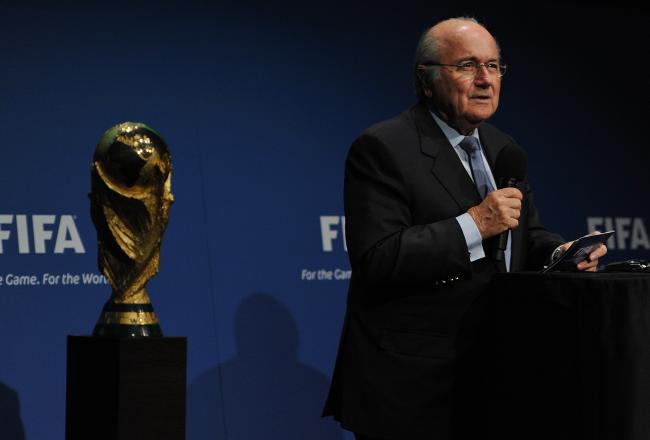
Given the fresh controversy surrounding the death of migrant workers on the building sites for the 2022 Qatar World Cup, Sepp Blatter’s public admission in early September to Inside World Football (h/t ESPN) seems all the more pertinent. If only he’d thought of such implications and possibilities before actually approving the final decision.

No matter. What’s happened has already happened, but FIFA are now left to pick up the considerable refuse that has been generated in the wake of the significant recent fallout over the decision to award the tiny Middle Eastern emirate the hosting rights of the world’s most prestigious single-sport tournament. The problems are rooted in politics, as they were always going to be given the universality of the world’s most popular sport, and the international involvement in and exposure to the game.

Surely more background digging should’ve been conducted prior to the bid, and surely more scrutiny should’ve been paid to the implementation process by FIFA and the Qatari authorities, to avoid any potential banana skin in their grand ambitious plan to bring the tournament to new and exotic places on the planet.

Simply put, the migrant worker situation should’ve been researched and taken into consideration in the bid process. It might have been a bit too political to go into the human rights records and agendas of host countries, but it’s FIFA, it’s the World Cup and it’s all about politics anyway.

David Cannon/Getty Images

The Politics

“The World Cup and foreign labor abuse in host countries” sounds exactly like the kind of problem that should never have been inflicted on FIFA in the first place, such is the emphasis given to the separation of football from politics and anything of the sort. Sadly, this was always going to be tough.

Especially with, in Blatter’s words, football being “a global unifying force for the good, a force that offers to be inclusive in every which way and a force that has written anti-discrimination on its banner under my presidency.” Especially with FIFA’s goal to bring the World Cup to places that haven’t hosted it before—South Africa, Brazil, Russia and now Qatar (representing the Middle East); the likes of Australia and China are surely not far behind.

It’s in this context that Blatter’s admission to German newspaper Die Zeit (h/t The Guardian)—“European leaders recommended to its voting members to opt for Qatar, because of major economic interests in this country”—appears particularly worrying. Not only this: UEFA president Michel Platini has one-upped Blatter and suggested to the Associated Press (h/t The Washington Post) that this sort of political influence was commonplace in international tournaments: “With the extraordinary influence Mr. Blatter has, he has only all of a sudden realized there are political and economic influences when we decide who will host an Olympic Games and so forth?”

A public spat that not only casts a pessimistic, cynical light over proceedings, but one that should be avoided in the first place. Not even Platini’s insistence that former French president Nicolas Sarkozy didn’t personally ask him to vote for Qatar despite Sarkozy’s political support will clear anything up.

And it’s led to Qatar’s FIFA 2022 World Cup Organizing Committee secretary-general Hassan Al Thawadi defending his country’s bid and its legality. There will be lots of questions thrown his way; he’d better get used to fighting the fire.

Handout/Getty Images

The Scheduling

Possibly the biggest question of all when the subject of the 2022 World Cup in Qatar is brought up is this: Will it be held in the summer or will it be moved to the winter?

The first thing that comes to mind when we consider a winter World Cup is: What happens to all the leagues that run throughout the year except during the summer? It just so happens that those are the European leagues that have the most worldwide interest, the highest-profile players and the best quality and competition. Just a simple statement from the EPFL, the umbrella body of the major European leagues, will have FIFA scrambling.

The potential problems brought about by disrupting the league calendar are quite significant. It’s not just about asking those leagues to move their domestic calendars for just a season. It’s not just about the feasibility of working out a schedule that also fits in with the Winter Olympics. And it’s not just about moving a four-week tournament, as they’re finally starting to find out, and FIFA will have all kinds of oppositions, protestations and storms to weather in the coming weeks and months (hopefully not years).

Speaking of the weather, never mind the considerations that FIFA should have made regarding the scheduling due to the summer temperatures in Qatar even during the bidding process; now that the question of whether Qatar should host the World Cup at all is being asked again, even the chairman of FIFA’s medical committee has come out in public opposition.

Michel D’Hooghe has gone on record questioning the prospect of holding the tournament in the summer from a medical perspective and has included aspects other than players training and competing in scorching temperatures while he was at it: He mentioned the delegates, the “FIFA family,” the media and would you know it, the fans as well. A FIFA executive keeping the fans in mind?

Another perspective also had the fans’ interests in mind, or so it claimed. This time it was the Australian Football Federation, who lost its original bid for the 2022 World Cup, who has asked for compensation in the event that FIFA do move the tournament to the winter, just because it feels like it’s entitled to “just and fair” compensation to “those nations that invested many millions, and national prestige, in bidding for a summer event.”

The FFA did give some context, acknowledging the place football has in Australia by citing the fact that the A-League runs through the Australian summer (winter in the northern hemisphere) because high-quality stadiums Down Under aren’t as accessible during the rest of the year. FFA chairman Frank Lowy claimed that “clubs, investors, broadcasters, players and fans would all be affected,” which is a valid argument and observation.

Laurence Griffiths/Getty Images

The TV Money

Just in case we were getting carried away with the seemingly alien notion that football authorities actually care about the common fan, there are other high-profile cases that shoot us right back down.

Fox Sports, a division of the US television network Fox, have made public theiropposition to any potential switch of the tournament to the winter (h/t Nick Harris of the Daily Mail), simply because “Fox Sports bought the World Cup rights with the understanding they would be in the summer as they have been since the 1930s.”

In this case, it’s about the finance and economics of broadcasting such an event, which, when the numbers involved come to light, are hardly a small matter. FIFA earned a whopping $1.1 billion for the rights to the 2018 and 2022 World Cups; Fox paid around $450 million, while NBC Universal’s Telemundo division bought the Spanish-language rights for $600 million.

And these are US networks that have acknowledged the rise in interest in the “beautiful” game (in quotes for obvious reasons considering the topic of this article) by shelling out for the English Premier League this season, but that are also cautious about having football competing for high-profile prime-time spots alongside the traditional big American sports during the regular American season.

Such is the importance and influence of broadcasters that Ben Rumsby of The Daily Telegraph reports FIFA have allegedly held secret meetings with them in an attempt to “quell opposition to any move,” which all but shows that FIFA are the mercy of their own money-making engines.

Harold Cunningham/Getty Images

The Disillusion

The debate and fevered discussion will no doubt continue for a while yet over the staging of the World Cup—and indeed if it will still be held in Qatar at all—but one thing’s for sure: Given the amount of money and politics involved in the game now, surely these were things that FIFA should’ve considered before awarding the hosting rights to Qatar?

If there had been a clear plan and clear communication during the process—even accounting for the widespread unwillingness to change across footballing authorities and TV networks (understandable, considering the financial implications)—perhaps right now, instead of clashing over it all, everyone would be celebrating that the World Cup Finals are finally arriving in the Middle East.

A disappointing chapter in the history of arguably the world’s most inclusive and socially impactful sport, and an undoubted tarnishing of FIFA’s slogan: “For the game, for the world.” Plenty of work to do still.

This piece originally appeared on Bleacher Report and is also part of my Football Business Column for SWOL.co, in which I discuss some of the latest news, trends and developments on the business side of football—everything including marketing, strategy, technology and finance.

5 Things Raheem Sterling Must Do to Take His Liverpool Career Forward

Hi-res-157276417-raheem-sterling-of-liverpool-looks-on-during-the_crop_650x440

Chris Brunskill/Getty Images


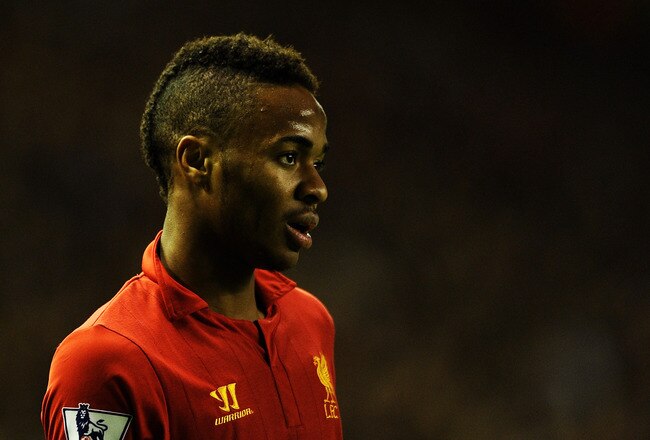
It was only last year that Raheem Sterling burst onto the scene with the Liverpool first team, and it’s only 11 months since he won an England debut after a scintillating start to his Premier League career.

He had the world at his feet: Born in Jamaica and playing in England as a winger, Sterling was quickly compared to Anfield legend John Barnes, and his impressive and confident performances won fans and attracted admirers alike.

But since the turn of the year, with fresh faces arriving and making instant impacts, Sterling has been taken out of the first team for a break and has recently gotten into trouble with the law, making it an underwhelming and unhappy few months for the No. 31.

Aged just 18—he signed his first professional contract in December 2012—Sterling still has an entire career ahead of him and a wonderful opportunity to blossom and grow under the tutelage of Brendan Rodgers.

To make sure he takes his Liverpool career forward, here are five things Raheem Sterling must do.


Put His Focus Back on Football

Just a week ago, Brendan Rodgers issued a public warning to Raheem Sterling over his off-field issues and brushes with the law in 2013, as reported by the Guardian:

He needs to have a clear mind in everything in his life. He needs to stabilize his life, understand the remarkable opportunity he has at one of the biggest clubs in the world and focus everything in on his career. Once he does that and he is clear in his mind, he has no distraction and we can get to the level of performance of the first four or five months of last year.

A big pronouncement, and quite rightly so, given that Rodgers had granted Sterling a break at the turn of year, according to the Telegraph, from fatigue and frequent first-team action so early on in his career.

In late September, a court case against Sterling, where he had been accused of assault by an ex-girlfriend, collapsed due to a weak testimony, according to the Daily Mail. But, having also had assault charges dropped in May earlier this year, he has been in the public eye for all the wrong reasons.

And that needs to change. To get his budding career back on track—and what a track it was—Sterling needs to knuckle down, get his priorities straight and focus back on his football, where he can express himself on the pitch and fulfill his undoubted potential.


Stay Hungry

It’s not every day you see a 17-year-old start in a Premier League first team against the likes of Manchester City, Manchester United and Chelsea and deliver arguably the best displays on the field.

It’s certainly not every day—no matter what they say about England caps being easier to come by these days—that a youngster is awarded an England cap on the back of two months in the first team, never mind in the Premier League.

And, of course, it’s not every day that a hot prospect receives a glowing endorsement of his potential and nothing but pure praise from Gary Neville, ex-archrival and famously critical TV pundit.

So if we look at it from Sterling’s point of view, perhaps we’d forgive him for feeling pretty good about himself and what he’s accomplished in his short career to date.

But he can’t let that get to his head. Yes, he’s played in the Premier League, in Europe and he’s worn the England shirt, but he needs to stay hungry and focus on achieving everything he possibly can in what ultimately is a short stay at the very top of professional football.

He’s said the right things and now needs to make sure he goes into training with those goals in mind every single day.


Be More Assertive on the Pitch, Even as an Impact Substitute

And now we come to the on-field stuff.

In a thin squad at the beginning of the 2012/13 season, Sterling was one of an impressive trio, along with Andre Wisdom and Suso, to have established themselves in Brendan Rodgers’ first team for the first half of the season.

Getting opportunities to play at least an hour week in, week out will have done his confidence and development a world of good, while the exposure and competition with the England U-21s will also have helped complement that learning experience at the top level.

Since the arrivals of Daniel Sturridge, Philippe Coutinho and to some extent Iago Aspas, however, Sterling has found first-team minutes harder to come by, and with the exception of the Capital One Cup—a competition from which Liverpool have been eliminated after just their second game—has more often than not been considered as an impact substitute.

Which is a role that allows for less time to impress and less room to work with, but nonetheless is one that Sterling should embrace for the time being: After all, it is to Sterling that Rodgers often looks in the second half, rather than other options off the bench, so the feeling is that the No. 31 still has his manager’s trust in his abilities.

He made a big enough impression last year and continued to do so over this summer’s preseason fixtures, but now with his changed role, he needs to come alive instantly when he arrives on the pitch and deliver that same spark with the same assertiveness and confidence that he personified just 12 months ago.


Develop More Areas of His Game in a Changing Tactical System

It won’t come easy, partly because of the increase in options in the first team and on the bench, but also due to Rodgers’ tweaks to his tactical system this season.

From a 4-3-3 to an aesthetically pleasing 4-2-3-1, Liverpool have further evolved—both out of necessity with the injuries they have suffered and out of choice with their strength in depth in defence—to a 3-4-1-2 system in the 2013/14 campaign.

In this new system, which, considering the fine form of Kolo Toure, Martin Skrtel and Mamadou Sakho in the back three, appears to suit the Reds down to the hilt, the width is provided by two wing-backs rather than two attackers, and both positions already have incumbents in Glen Johnson (currently injured) and Jose Enrique.

With two central midfielders supporting a No. 10 behind Luis Suarez and Daniel Sturridge, the opportunities for a genuine winger or attacking midfielder to establish himself in the first team are rapidly diminishing—and even that No. 10 role, which has been filled by Victor Moses in recent weeks, is quite clearly destined for Philippe Coutinho when he returns from injury.

So could he reinvent himself as a wing-back to fit into this system or possibly a credible option in the hole? It all depends on whether he can improve on his already impressive defensive work and physical strength, as well as his creativity, passing and crossing.

Going out on loan in January or next summer is a real option for Sterling to get first-team experience at a top-flight club elsewhere without having to wait on the bench in a team currently right in the mix for a top-four spot—he’s good enough to play in the Premier League every week, especially when he’ll be 19 by then—but to fit into Rodgers’ blueprint for the Reds in the long term, adding more facets to his game will only help.


Bide His Time and Be Patient

It’s a cliche, but one that needs repeating: Raheem Sterling needs to be patient.

He will know that this is a Liverpool team that’s vastly different from the setup he so excitingly entered last year, when he was given a chance because of a lack of real depth on the bench. This year, after a fruitful summer, the squad is equipped with talent to fight for a Champions League finish, and certainly their results so far have been encouraging to that end.

So it won’t be easy for Sterling to force his way into the first-team setup, and it won’t be easy for Brendan Rodgers to change a winning team getting results on most weeks.

Rumors of a loan switch in the summer—this one from the Daily Star linked him with a move to West Ham United—may resurface over the next 10 months, and like Suso, Sterling may find himself looking for sustained first-team action at another club.

But since his debut for Rodgers, it’s been nothing but patently clear that his manager has high hopes for him and appreciates the improvement that he’s had in just over a year, so Sterling should take every chance he gets—be it at Anfield or elsewhere for the time being—knowing that he has the right mentor to develop him and help him fulfill his potential.

If he manages to focus on the right things for the sake of his career, we may well see Raheem Sterling develop into the world-class player that his talent suggests he can be.

Liverpool, English Premier League, Football Business