Tag Archives: English Premier League

English Football Weekly: Manchester and Liverpool Roar; Fletcher’s Return; Managing in the Premier League

EPL Week 16 recap: Manchester and Liverpool roar

It’s been a while since Manchester United have made the headlines for anything positive, so before we get to Darren Fletcher’s return to first-team action, let’s give United their due credit for a professional job on Aston Villa at Villa Park. Sure, it’s a ground where they’ve traditionally enjoyed success, but we also saw Danny Welbeck score two (two!) and Tom Cleverley score (score!). That Wayne Rooney played in a deep, prompting Scholes-esque role (and that Welbeck was finally deployed in his favored centerforward position) was curious—a sign of things to come?

Which result was the bigger statement this weekend—Manchester City scoring six against Arsenal, or Liverpool hitting five at White Hart Lane? We’ll leave the debate to you, but what’s clear is that Manuel Pellegrini and Brendan Rodgers, both known for their “philosophies” and approaches to the game, are apparently also masters in dissecting opponents and exploiting their weaknesses to the full. City’s sheer power through the middle saw Fernandinho and Yaya Toure give a midfield masterclass and completely blow Aaron Ramsey and Jack Wilshere away, while Liverpool’s relentless pressuring, movement and dynamic passing dominated a Tottenham midfield that’s been tipped as one of the league’s finest.The gap between leaders Arsenal and fourth-placed City has now been reduced to just three. Liverpool are sandwiched just in between along with Chelsea.

That hasn’t deterred Everton, however, as they continued their impressive rise—documented in this column last week—with a 4-1 rout over Fulham, who themselves have exhibited signs of springing back into life under Rene Meulensteen. Seamus Coleman, Gareth Barry and Kevin Mirallas all got goals that their excellent campaigns thus far have deserved (so did Leon Osman), but Gerard Deulofeu’s injury will have been concerning for Roberto Martinez. An interesting set of December fixtures (Swansea away, then Sunderland and Southampton at home) may yet see Everton start the New Year in the top four.


Welcome back, Darren Fletcher

It was in 2010—over three years ago—that Darren Fletcher first captained Manchester United and then went on to be nominated as their vice-captain. He was named in the PFA Premier League Team of the Year in April 2010 after a successful season, and aged 26, he had already undergone a transformation from “not good enough” to become an important member of Sir Alex Ferguson’s squad.

So it was particularly poignant that Ferguson decided to pay Fletcher a special tribute in his retirement speech at Old Trafford, wishing him a speedy recovery and a quick return to first-team football. Of course, sandwiched in between was an unfortunate case of ulcerative colitis, which ruled him out of most of United’s matches for the seasons to come—and at one point, put his professional career into jeopardy.

And so it was particularly good news when Fletcher—widely seen to be a hardworking, honest model professional—returned once again to the field against Aston Villa on Saturday. The ovations were heard around Villa Park, and they won’t have been confined to Birmingham. But his presence and return will give David Moyes another experienced option in the Manchester United midfield, who have missed Michael Carrick and who haven’t been significantly bolstered or upgraded with the signing of Marouane Fellaini.

Best that Fletcher gets to work and returns to form as soon as possible, then.


Still want to be a Premier League manager?

In recent weeks, we’ve read all about how Martin Jol is utterly incompetent, recently that Steve Clarke was ultimately not good enough for West Brom, and now that Andre Villas-Boas has become the latest to lose his job as a Premier League manager. There are rumblings of Sam Allardyce being on borrowed time at West Ham. In the Championship, Owen Coyle and Dave Jones have been sacked in the first two weeks of December.

It’s a peculiarity in modern football that so much emphasis is still being placed on the manager—sometimes styled as “Head Coach,” sometimes “First-Team Manager,” among other iterations of the title. It’s not happened overnight, and it’s largely been done behind the scenes, but the European model of football operations, otherwise known as the corporatization of Premier League football clubs, has almost entirely taken over in the Premier League. With the retirement of Sir Alex Ferguson, perhaps only Arsenal employ a traditional all-powerful manager, but even he is working within the confines of a very American, very business-like setup.

So how much influence do Premier League managers actually have? Managers can bring a philosophy, a dream, a vision into their clubs, but how much room do they actually get to see it through? When your best players are being sold against your wishes and replacements are being brought in after consultation with “advisors,” “consultants” and “specialists” but not necessarily with you, how would you be able to fit them into your ideal starting XI to play the type of football you want?

Essentially, a Premier League manager has now become akin to a middle manager in the corporate world, who has to work within major constraints but is still expected to bring stellar results. Except corporate executives (generally) don’t have to endure mass protestations of “You’re getting sacked in the morning” from 40,000-plus fans every single week, which in turn put more pressure on chairmen, whose backgrounds are usually in other industries, to take action, all in the name of sporting glory—in a league where there can, alas, only be one winner.

The plus side? You get to do a job you “love” and have always dreamed about—and the payoff, in case things just don’t work out, is pretty attractive.
This piece was part of my weekly column on SWOL.co, where I take a look back at the weekend’s English Premier League and domestic cup action, related talking points and news surrounding English football at large.

Tottenham Hotspur vs. Liverpool Preview: 6 Key Battles to Watch on Sunday

Hi-res-163457345-liverpool-manager-brendan-rodgers-speaks-to-tottenham_crop_650x440
Michael Regan/Getty Images

This Sunday, Liverpool travel to White Hart Lane to take on Tottenham Hotspur in a clash that could see the Reds go just two points behind Premier League leaders Arsenal if results go Liverpool’s way. However, if the home side are victorious at White Hart Lane, Spurs will draw level with Liverpool on 30 points.

Not so long ago, a crisis was being touted at Spurs, and Andre Villas-Boas’ job was rumored to have been in danger, according to ESPN. Two wins on the bounce see them climb back up to sixth in the league, just two points off fourth-placed Manchester City, but first they must welcome the visit of Anzhi Makhachkala in the Europa League on Thursday night.

Tottenham’s recently creaking defence will be coming up against a Liverpool attack firing on all cylinders: Brendan Rodgers’ side have scored 34 goals in 15 games—the second-highest tally in the league—and boast an in-form Luis Suarez spearheading their strikeforce.

As Arsenal travel to the Etihad Stadium, Chelsea take on Crystal Palace and Everton play Fulham this weekend, Tottenham-Liverpool may yet have wider ramifications on the top-four race—and the European credentials of either side.

As we look forward to an exciting match on Sunday, let’s preview six key battles that will be taking place on the White Hart Lane pitch that may just hold the key to all three points for either side.


Hugo Lloris vs. Simon Mignolet

If it weren’t for Tottenham’s six-goal thrashing at the hands of Manchester City a few weeks ago, they’d still have one of the meanest defensive records in the Premier League. As it stands, with 16 goals conceded, they have the fifth-best defence this season, two places ahead of Liverpool with 18 let in.

A large part of Spurs’ defensive record has been down to their impressive French No. 1, Hugo Lloris, while Liverpool are indebted to Belgian goalkeeper Simon Mignolet for pulling off the third most saves thus far this season (55 in comparison to Lloris’ 39) and helping them to second in the league.

So White Hart Lane will feature two of the Premier League’s best goalkeepers. Given Luis Suarez’s form and confidence, and Tottenham’s fondness for long-range shots—according to InfoStrada Sports, 55 percent of their shots are from outside the penalty area this season (via TheScore.com)—they’d do well to be on their best form on Sunday.

Lloris will be wary of repeating his blunder against Sunderland on Wednesday for sure.


Michael Dawson vs. Luis Suarez

From Tottenham’s point of view, Liverpool’s danger man will undoubtedly be Luis Suarez. Hardly a surprise, of course—he’s leading the Premier League goalscoring charts with 14 this season, despite missing the first five games of the campaign.

He’s improved on his conversion rate to an impressive 25 percent (via BassTunedToRed.com). He’s added the free-kick to his arsenal of tricks. He’s cleaned up his act and cut out the petty moaning and unsavory simulation from his game.

In short: He’ll be a handful for Michael Dawson, to say the least.

Spurs skipper Dawson has put in some steady performances this season, but the Tottenham back line have already capitulated once against quality opposition (Sergio Aguero of Manchester City) and will be on their toes to prevent the same thing from happening at the hands (or feet) of Suarez.

A lot will thus depend on the midfield.


Kyle Naughton vs. Raheem Sterling

Before we get to the midfield, though, we have a Liverpool wing to address, and on their right flank, Raheem Sterling will come up against Kyle Naughton in a clash between two hot young English prospects.

Villas-Boas’ stand-in left-back Naughton will likely start in place of the injured Jan Vertonghen, while Sterling should reprise his starting—and starring—role for Rodgers for his fourth game in a row.

In particular scrutiny will be AVB’s fondness for a high defensive line, especially at home: As Liverpool showed against West Ham United on Wednesday, they’re capable of building quick counterattacks that tear through opposition midfields. Sterling himself burst through the middle and went clear on goal on several occasions, only for his finish to let him down.

Just like Philippe Coutinho on the opposite flank, Sterling’s cutting infield will mean that Naughton will likely be dragged inside with him on multiple occasions, leaving Glen Johnson to storm down the Reds’ right flank as a dangerous attacking outlet.


Paulinho vs. Lucas

The midfield battle won’t just be Paulinho vs. Lucas, of course, but this particular matchup—where both protagonists are not your stereotypical Brazilian flair players—is very much symbolic of the respective midfields on show this Sunday.

Paulinho’s brand of physicality has been a hallmark of the Spurs midfield play this season. Whether he’s been supported by Mousa Dembele, Sandro or Etienne Capoue, his barnstorming style lacks the intricacies and deft touches of Christian Eriksen and Erik Lamela, yet Tottenham’s midfield domination over Swansea City at the beginning of the season provided a glimpse of the new Spurs.

By contrast, a Lucas-Steven Gerrard axis has more often than not been pedestrian and offered far less of a physical control in the middle of the park. Against sides with more robust midfields, such as Southampton, Liverpool have had their weaknesses exposed.

The injury absence of Gerrard—and Jordan Henderson’s fitness permitting—should see Joe Allen retain his spot alongside Henderson and Lucas slotting back in. The hope is that they will be able to offer the dynamism and relentless movement while Gerrard is out.

Villas-Boas has constantly rotated his midfield three this season, but whichever combination he puts out on Sunday, it will surely be a huge challenge for Lucas and Co.


Aaron Lennon vs. Jon Flanagan

Just as Sterling will prove a test for Naughton on Liverpool’s right flank, so Aaron Lennon will be a fearsome opponent for Jon Flanagan over on Tottenham’s right.

Martin Kelly’s return to fitness is a welcome boost for Brendan Rodgers, but he will likely keep his faith in young Flanagan, a right-back by trade, and reward him for a series of solid performances in an unfamiliar position with another start on Sunday.

That will suit Lennon down to the ground. In recent weeks, the Spurs No. 7 has regained his starting slot on the right wing at the expense of Andros Townsend, and his propensity to bomb down the touchline will take advantage of Flanagan’s weaker side. And there’s also his pace.

A Liverpool left flank of Flanagan and Coutinho may offer far too little in terms of physicality and defensive presence—the injured Jose Enrique will be fondly remembered—to rein in the likes of Lennon and right-back Kyle Walker.

Without a doubt, this will be a problem position for Liverpool.


Jermain Defoe vs. Mamadou Sakho

Prior to Tottenham’s last three matches, where they scored a total of four goals, they had scored just a solitary goal—from the penalty spot—in four games.

It would be unfair to heap the blame on four-goal, £26 million striker Roberto Soldado, but his replacement, Jermain Defoe, has seemingly won back his manager’s faith in recent fixtures.

It’s been well documented that an isolated lone striker has been at the root of Tottenham’s scoring problems this season. The lack of a Gareth Bale-like attacking midfielder capable of transitioning smoothly into the forward lines has been made clearer by the lack of mobility, and involvement in overall play, of both their strikers, who belong in the same “predator” category.

So while the Spurs midfield may well overwhelm Liverpool’s, the hosts’ strikeforce (if we can call it that) may not pose enough of a danger to a defence expected to be marshaled by the imposing and improving Mamadou Sakho.

Better for Sakho and Co. to focus on stopping the tidal wave coming in from the Tottenham midfield, then.


This article first appeared on Bleacher Report, where I contribute regularly on Liverpool and the Premier League.

English Football Weekly: Week 15 Recap; Everton’s Revolution; Match-Fixing Scandal

EPL Week 15 recap: A weekend of upsets

Not that an impressive 2-0 home win would’ve been at all upsetting for Fulham, but was it Rene Meulensteen at work on Craven Cottage on Sunday, or was it just another case of the “new manager syndrome”? Only time will tell, but the confidence—even arrogance—in the way the Cottagers set up against Aston Villa will bode well for their fight to stay in the Premier League, and marked a huge contrast to the soulless, dithering squad in the final days of Martin Jol. Even Dimitar Berbatov turned up to play. He might not be accustomed to the wrong end of the table, but he’ll be important in Fulham’s resurgence—hopefully.

It’s been a while since the Britannia has been regarded a fortress the way it was when Tony Pulis first took Stoke up to the Premier League. Back then, there were Rory Delap’s long throws and other manners of rugby football play. Now, there’s the maverick flair of Marko Arnautovic, the cultured finishing of Stephen Ireland—and apparently also the magician’s touch from Oussama Assaidi. An example of Stoke’s resolve and fight towards a mid-table place? Or a public appeal from Jose Mourinho to Roman Abramovich to land them a striker in the class of Radamel Falcao? Either way, much work to be done still.

Alan Pardew tried to offer some solace in his interview after Newcastle’s first win at Old Trafford in 41 years, but his smug grin, which has been doing the rounds on Twitter, will say all there is about what’s going on at Manchester United—and to an extent at Newcastle as well. For while United toil in ninth place, some 13 points off leaders Arsenal and seemingly having lost that famous comeback spirit, Newcastle have defied critics, predictions and a barren summer transfer window to storm into seventh place, just three points behind City in fourth and four points ahead of United. What a strange season it’s been.

There to take advantage of the dropping of points by Chelsea, Arsenal and Manchester City were Liverpool, who overcame a sloppy own goal and a 10-minute resurgence from West Ham to secure a 4-1 win. It’s been a few seasons since the Reds have found themselves still right in the mix in December, but the hard part is coming. Three formidable opponents and competitors, all away from home, will be obstacles to Liverpool finishing in the top four by the end of December. They’ll be hoping that Cardiff at home next weekend will provide some much-needed breathing space. Spurs, City and Chelsea will not be easy.


Young Everton are here to stay

There was never a chance Arsenal-Everton would’ve escaped mention on a weekly wrap; it was too exciting and unpredictable (see: “the perfect advert for the Premier League”) to leave out. But while football fans were expecting Arsenal to reaffirm their title credentials at the Emirates, instead we’ve come out of the game with a renewed appreciation of Everton and Roberto Martinez.

The manner in which Everton took their game to Arsenal was as impressive as it was audacious—possibly even ill-advised prior to kickoff. After all, Liverpool, having had quite a decent run of results this season, went defensive at the Emirates and still got battered. Surely Everton would’ve set up to defend a bit more, especially with Gerard Deulofeu on the bench?

Wrong. The difference between the Merseysiders is that the Blues have a far more industrious, dynamic and well-balanced midfield in comparison to the Reds, and it showed. There was Ross Barkley, brash and confident, taking on the likes of Aaron Ramsey and Mikel Arteta and strengthening his claims for a place on the plane to Brazil next summer. There was James McCarthy, working so well with Gareth Barry as the central midfield duo and largely nullifying the hitherto potent and unstoppable Arsenal attacking line. And there was Bryan Oviedo, who had impressed with goals in consecutive matches (including a famous winner against United), bombing down the flanks to such good effect that he might just render Leighton Baines a bit less indispensable.

It was a result, and a performance, to confirm that Everton aren’t now fifth in the league because of a fluke. It’s the start of a youthful revolution shaped by a young manager with a vision. The critics still have their knives out, of course, what with two key players and a secret weapon (Romelu Lukaku, Barry and Deulofeu) on loan, but that’s a concern best left for the summer—if it’ll still exist at all. If Everton qualify for Europe, they’ll be able to bring in a few good ones yet.


Match-fixing: The elephant in the room

So it appears match-fixing has finally arrived on English shores. The recent reports linking the Sodje brothers and the likes of DJ Campbell will have presented a huge step back for English football and the FA.

£70,000 for a red card? £30,000 for a yellow? Surely players on such lucrative salaries in the English game won’t even bat an eyelid, and surely the competitiveness of the Premier League and the Championship means that sporting integrity and the chance of glory should by default render match-fixing a useless force in England? Why would a player on £50,000 a week sell out for that?

As easy as it is to criticize someone for holding the above beliefs, it is a true pity—but a real necessity—that match-fixing has been revealed to affect the English game, even at the top level. It’s a pity because all along it’s seemed that English football was too competitive, too pure and too exciting to even consider the existence of corruption and the evil influences of money. And for a long time, this image was sustained.

But now that this news has surfaced, it’s come as a huge smack in the face, and many a pundit, follower and fan will be smacking his head out of sheer frustration at his own ignorance. Because given the amount of money in the global game—an amount which will only rise with time—what could possibly have made England immune to corruption? Where there’s money, there’s corruption: It’s a sad fact of professional sports, and now it’s all coming to light.

What’s important now is not to hide and be embarrassed about match-fixing in England, but for the government, the police and the FA to join forces and crack down on the antagonists. Heavy punishments should be issued for those found guilty, and points should be deducted—with relegation implemented—for teams that have been complicit, if it emerges that any might have been.

It’ll be a long, hard journey and will require active policing—even racism has apparently resurfaced in recent years—but it’s the only course of action that makes sense.


This piece was part of my weekly column on SWOL.co, where I take a look back at the weekend’s English Premier League and domestic cup action, related talking points and news surrounding English football at large.

5 Ways Liverpool Should Approach a Tough December to Stay in the Top Four

Hi-res-452750457-brendan-rodgers-manager-of-liverpool-looks-on-prior-to_crop_650x440
Jamie McDonald/Getty Images

Second place, 15 matches played, 30 points, and a goal difference of +16. With four games left to go until the mid-season (and the January transfer window), Liverpool so far look in pretty good shape this 2013/14 Premier League season.

Their average of two points per game, if extended over the course a 38-game season, has historically been enough to secure a top-four spot by the end of the season—which, besides launching Liverpool back into the Champions League spotlight, should also be enough to secure Luis Suarez’s future at Anfield.

Before we look ahead to next May, however, let’s first acknowledge the obstacles to the Reds finishing their first half of the season in the top four—and there are many.

Starting with their remaining four fixtures in a busy December period—Tottenham Hotspur (away), Cardiff City (home), Manchester City (away), Chelsea (away), the latter two coming in the space of three days.

With Jose Enrique and Daniel Sturridge both out until at least January and Steven Gerrard sidelined for the Christmas period with a hamstring injury, according to the Telegraph, Liverpool’s problems are as much on the treatment table as they are with the fixture list.

But this is also a crucial period where Brendan Rodgers’ team will be tested on their ability to stay near the top, and where preliminary conclusions may yet be drawn about their quest to return to Europe.

Here are five ways Liverpool should approach a tough December ahead of them and still fly high in the top four come the start of January.


Keep Their Second-Half Setup Against West Ham

With the aforementioned Enrique, Sturridge and Gerrard out for the Christmas period, Liverpool’s best XI for the moment will have been their second-half, post-Gerrard substitution setup in Saturday’s game against West Ham United.

Glen Johnson seemed back to his best, and indeed was the provider of a very fine assist to Luis Suarez for Liverpool’s third goal of the night, while Jon Flanagan on the opposite flank stuck to his task and defended confidently.

Martin Skrtel looked more assured and assertive with the dominant Mamadou Sakho beside him, and with stability being the key in a defensive partnership, Brendan Rodgers would be wise to stick with them in the center, though the shambolic defending in conceding their own goal—in the process letting the Hammers back into the game—will have been a cause for concern.

Joe Allen in front of them was a livewire in midfield, seemingly over his catastrophic miss in the Merseyside derby a couple of weeks ago. If he continues his improvement, his probing passing and deceptively quick turn of pace should prove a very useful additional outlet in midfield, alongside the more workmanlike duo of Jordan Henderson and Lucas Leiva.

Philippe Coutinho and Luis Suarez pick themselves in the starting XI, while Raheem Sterling deserves a run in the side for his upturn in form and encouraging showing on Saturday, especially with Victor Moses’ cameo once again not providing any kind of imagination, creativity and game-changing potential.

The only change that should be considered by Rodgers and co.—besides any enforced through injury concerns—would be to shift Johnson over to the left and put Martin Kelly in on the right, especially against pacy right wingers that Flanagan might struggle against.

Otherwise, this is a team that can be decent at the back, strong in the middle and incisive up front.


Adopt a Relentless and Interchanging Midfield Three

Hi-res-454128347-joe-allen-of-liverpool-competes-with-mohamed-diame-of_crop_650
Clive Brunskill/Getty Images

It’s hard to imagine a Liverpool midfield without Steven Gerrard in it: He’s been ever-present for the Reds this season, and is both their assists leader (six) and third highest scorer (three).

Whether his world-class set pieces and impressive long passes compensate for his decreasing mobility has been a hot topic for debate (and best left for another discussion), but his more withdrawn, “quarterback”-like regista role has come with a diminishing ability to take games by the scruff of the neck and drag his team to victory.

Which means that in his absence, Liverpool fans may yet catch a glimpse of an ideal Brendan Rodgers midfield. To be precise, a relentless, dynamic and interchanging midfield three capable of supplying incessant pressure on their opponents, recycling the ball among one another, and contributing comfortably to the attack.

After his aforementioned horror miss against Everton in November, Joe Allen has rebounded in terms of his confidence, putting in good performances echoing his encouraging start to life at Anfield back at the start of the 2012/13 Premier League season.

His reverse pass to Martin Kelly in the dying minutes of the West Ham match on Saturday was a particular highlight, but it was his forward-thinking passing, neat touches and ability to move the ball out of pressure that caught the eye.

Add in the dynamism and famous work rate, as well as the at-times scintillating passing (though consistency is necessary) of Jordan Henderson, and Liverpool have got a young, energetic and deceptively quick British midfield core. And while Lucas hasn’t fully reclaimed his excellent pre-injury form, his positioning and tactical awareness have been triumphed by Rodgers (and are debated constantly among Reds fans).

Altogether, the Gerrard-less midfield that will travel to such opponents as Spurs, City and Chelsea will exhibit a stark contrast to the captain’s prompting from deep.

Which can mean that Liverpool are short of a sure-fire set piece specialist. But also that their opponents now have to focus on defending against an interchangeable unit instead of one single playmaker.


Continue to Refine Their Counterattacks

Pepe Reina he might not be just yet, but Simon Mignolet has been earning rave reviews for his improvements in distribution: A couple of quick long throws set up dangerous counterattacks for his teammates on Saturday.

(Needless to say, Mignolet’s shot-stopping has already far exceeded Reina’s levels of the past few seasons.)

And Arsenal they might not be just yet, but Liverpool have evidently worked on their counterattacking plays to make use of their pace in attack.

Previously it was in the 3-5-2 system that featured Suarez and Daniel Sturridge up top. But against West Ham, as in his stellar start to his Liverpool career, it was Raheem Sterling who frequently burst through the opposition midfield and rush onto passes down the center. If it weren’t for his lack of a clinical finish, the home side would have scored at least two more from those breaks.

As dominant as Liverpool aspire to be in ball and possession retention, there’s no reason to discourage them from working on breaking, attacking and scoring at speed. Even without Gerrard’s 40-yard passes to feet, they possess accomplished passers like Allen and Coutinho, and with the inventiveness of Suarez and Sterling, the counter should be a Liverpool staple.

Especially in away fixtures against teams who like to overload in the attack and pile up in their final third, exactly Liverpool’s big upcoming tests at White Hart Lane, the Etihad Stadium and Stamford Bridge.

If Liverpool can withstand some inevitably strong attacks from their hosts, they should look to capitalize on their relatively soft underbellies and hope to snatch goals—and points—that way.


Improve Decision-Making and the Final Ball

Hi-res-454129349-james-collins-of-west-ham-united-challenges-philippe_crop_650
Clive Brunskill/Getty Images

With 20 goals in their last five matches at home, it wouldn’t seem on the surface that Liverpool need work on their finishing and final ball.

Indeed, Luis Suarez needs to be given lots of credit for his massive improvement in finishing off his chances. In the context that he used to be a profligate striker who often frustrated Reds fans with his poor finishing, this article from BassTunedToRed.com tells us that his conversion rate has jumped from 8.2% in the Kenny Dalglish era to a staggering 25% this season.

But even though they scored four goals against West Ham on Saturday, there was ample evidence, especially in the first half when the visitors shut up shop in front of their penalty area, that Liverpool took one touch too many or played one pass too many.

Coutinho continually decided to attempt to play a colleague into space when shooting from range would’ve been more beneficial, while Sterling’s final ball, even when sent through on goal, seemed to be just lacking in confidence.

And we don’t have to go too far back to see a glaring example of Joe Allen’s composure in front of goal, or Jordan Henderson’s lack of an assured finish at the end of a lung-busting run at Arsenal, to know that this is an area where Liverpool still need to improve on.

Given their proneness to conceding from just one solitary defensive mistake, they should work on taking their chances when they create them. Against smaller teams that they’ve admittedly demolished in recent weeks, chances will come by simply because of their relentless pressure and approach play, but goal-scoring opportunities will be few and far between in the coming few weeks.

Of course, 1-0 is all it takes to take home three points, and Liverpool started their season off with three well won, if not entirely convincing, 1-0 wins, which featured lots of deep defending. But to do that, besides holding firm and keeping a clean sheet, you need to take that one chance when it comes by.


Approach Tough Away Matches Fearlessly and Confidently

With 34 goals scored in 15 league games thus far—the second most in the Premier League—it’s clear that when Liverpool feel like it, they can turn on the style and blow opponents away with their attacking play.

A large part of that—nine goals, to be exact—is admittedly down to the now-injured Daniel Sturridge and his impressive all-round contributions up front for the Reds this season, but Luis Suarez’s form and the overall cohesiveness in attack means that they remain an offensive force to be reckoned with.

So why did they go to the Emirates and come away with a comprehensive 0-2 loss when they could’ve started the game on the front foot if they’d been set up to do so?

A look at Roberto Martinez’s impressive setup at Everton shows that a consistent mental, technical and physical approach, once ingrained throughout the squad (which includes the coaching staff and management team), can take their game and impose it on whichever opponents they come up against.

They’ve done it against Manchester United, and they did it just this Sunday night with a fearless, confident and assertive display at the Emirates, when they forced a 1-1 draw against league leaders Arsenal.

Brendan Rodgers will realize that his squad has deficiencies—which squad doesn’t?—but he will also know that keeping the same identity in whatever fixture can reap large benefits and may even spring the odd surprise.

Just look at Liverpool’s trip to Manchester City last season. Granted, City weren’t managed by Manuel Pellegrini then, and Liverpool had a Steven Gerrard blockbuster to thank, but if Pepe Reina hadn’t rushed off his line, the visitors would’ve taken home an impressive 2-1 win.

More of that please.

This article first appeared on Bleacher Report, where I contribute regularly on Liverpool and the Premier League.

Scouting Report on Reported Liverpool Transfer Target Martin Montoya

Hi-res-150991387-martin-montoya-of-fc-barcelona-runs-for-the-ball-during_crop_north

Gonzalo Arroyo Moreno/Getty Images

The latest rumor doing the rounds at Anfield links Barcelona full-back Martin Montoya with a move to Liverpool in January, and according to the Guardian, the Reds’ Managing Director Ian Ayre traveled to Catalonia to open transfer talks.

In light of the recent injury blow to joint top scorer Daniel Sturridge—who, as reported by BBC Sport, is set to miss the next two months with an ankle injury—and the projected absence till February of left-back Jose Enrique due to a knee problem (c/o BBC Sport), both of which leave the squad short of first-team options, the recent Montoya links will be positive news for Liverpool fans.

Despite a surfeit of options in the center of defence following the Reds’ deadline-day swoop for Mamadou Sakho and Tiago Ilori, they remain short on the flanks, given Enrique’s injury, on-loan Aly Cissokho’s disappointing form, and Martin Kelly’s continued absence.

Young Jon Flanagan, who impressed in his first few outings in the first team under Kenny Dalglish but suffered a loss in confidence and form since, has defied his critics in recent weeks with encouraging performances filling in on the left, but he remains a back-up option—and a specialist right-back.

Which brings us—and Liverpool, allegedly—to Martin Montoya. Let’s take a look at the pros and cons to his potential signing, assess his potential role at Anfield, and evaluate whether he’d be a good pick-up for Brendan Rodgers.

Gonzalo Arroyo Moreno/Getty Images
Pros

The first pro is arguably the most obvious: Martin Montoya is a La Masia youth product and has grown up in the Barcelona way since the age of eight, before graduating to the first team in the 2011/12 La Liga season.

Considering the passing-dominant style of football that Brendan Rodgers wants to implement at Anfield, Montoya, with his comfort on the ball and encouraging passing statistics—this article from Squawka shows his pass success rate in the 2012/13 season to be 91 percent—would seem to be an instant cultural fit into the philosophies currently being put in place at Liverpool.

A just reward for his perseverance in the Barcelona setup, Montoya was awarded an extended run-out in the Blaugrana first team in the injury absence of regular right-back Dani Alves last season, and took his opportunity with both hands, making Alves bide his time on the sidelines despite the latter returning to fitness.

In his time with the first team, Montoya showed a tremendous work rate, as well as consummate ease transferring play from defence to attack, while his defensive work was uncompromised by his willingness to go forward and take on opponents. The same Squawka article quoted above provides the statistical underpinnings of Montoya’s solidness as a full-back.

In his seven appearances this season, Montoya has, according to WhoScored.com, averaged 2.9 aerial duels won per game, more than any Liverpool defender in this campaign, while his 2.9 tackles per game is bettered only by Glen Johnson (Jon Flanagan’s five tackles per game is averaged over the course of three appearances).

Then there’s his impressive versatility, which has seen him play on both flanks at Camp Nou with ease. His current status as first-choice back-up to Dani Alves suggests that he is most comfortable on the right, but he has also played on the left on three occasions this season.

Stanley Chou/Getty Images
Cons

Such is Montoya’s completeness as a full-back that he hasn’t shown any obvious weaknesses during his time at Barcelona, besides the lack of a sustained run in the first team due to the importance and outstanding form of Dani Alves.

However, he has been dribbled past by an opponent an average of 1.3 times per game this season, higher than any Liverpool full-back, suggesting that work may be needed on both the mental and physical aspects of his defending.

His 0.3 key passes per game is lower than Johnson, Cissokho and Enrique (with Flanagan once again excepted), though his tendency to dribble may offset that as different facets of attacking and creative contributions.

Potential Role at Liverpool

Work rate, stamina, unsung squad player without a sustained run at the top level—on paper, Martin Montoya sounds a lot like Alvaro Arbeloa, who was signed by Rafa Benitez in January 2007 and went on to become a key part in his impressive Liverpool team.

Indeed, with the stats showing Montoya to be a reliable and all-rounded full-back capable of playing on either flank and of the odd surge forward, the 22-year-old Spaniard may prove to be an equally inspired capture in just a few months, if Ayre manages to secure a deal to capitalize on Montoya’s contract situation.

And at Anfield, Montoya would likely arrive as instant competition for Flanagan on the left flank in the short term. As impressive as Flanagan has been with his defensive work rate, he has not offered much of note going forward.

Enrique’s bursts into the final third, as an outlet for the likes of Philippe Coutinho, have been missed, and Montoya might just provide a bit more incisiveness and attacking threat with his dribbling and forward runs.

Clive Brunskill/Getty Images
What about in the medium to long term? Well, it’s becoming a well-known fact that Glen Johnson is about to enter the last 18 months of his contract, where in a year’s time he will be allowed to negotiate pre-contract deals with foreign sides—and even leave Anfield on a free transfer in the summer of 2015.

If he were any other key first-team player, Liverpool would have begun negotiations on a contract extension with Johnson already. But, as dissected by James Pearce in the Liverpool Echo, Johnson’s current £110,000 p/w deal at Anfield means that the 29-year-old will almost certainly have to consider a pay cut if he is to stay at Liverpool.

Which may explain why Managing Director Ian Ayre is reportedly so keen on securing Montoya’s signature this January, instead of leaving it till the summer to bring him to Anfield on a Bosman free transfer. If Montoya impresses in the next six months, Liverpool may well have secured their next long-term right-back on the cheap.

Conclusion

All of this leads to our conclusion that Martin Montoya should be a key priority for the Reds this January transfer window.

Whether it’s for the short term—to fill in for Jose Enrique and challenge Jon Flanagan—or for the long term—as a potential replacement for Glen Johnson if a contract extension doesn’t progress as smoothly—Montoya has the ability to establish himself in the Liverpool first team.

Compared to Johnson, a regular top performer for four seasons and an integral part of this attack-heavy Liverpool team, Montoya still has some development to do before he will mature and evolve into a top-class complete full-back, but his grounding at La Masia will have provided a stellar platform for his continued growth.

At a potentially discounted price due to his contract situation, Montoya would be too good an opportunity to pass up—and a potential regret for Brendan Rodgers and co. if he ends up at a Premier League rival on a free come next summer.

This article first appeared on Bleacher Report, where I contribute regularly on Liverpool and the Premier League.

The Football Business Column: MLS Expansions, Premier League Interest and the Rise of Football in the US

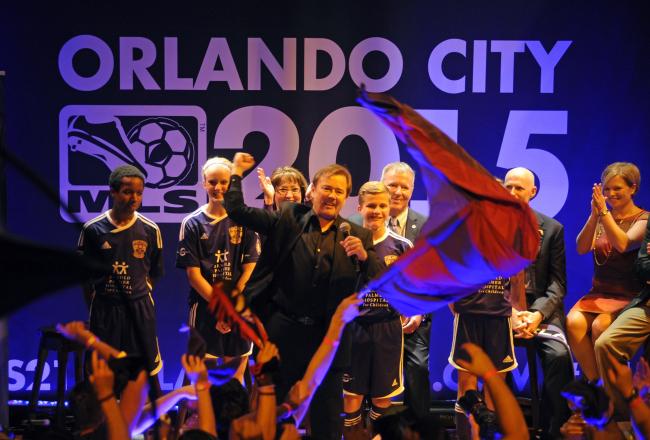
The latest installment in the never-ending story surrounding Major League Soccer and its expansion plans arrived last week, as Orlando City Soccer Club was officially announced as the league’s 21st franchise, to join New York City Football Club as new entrants in 2015.

The story of football’s expansion and rise in the US is impressive, especially given the context of its domestic league’s relative young age, but a look at the FIFA World Rankings shows that at 14th place (as of the time of writing), the US is here to stay.

To explore just how football has developed in America though, we have to first look back across the pond and to the Premier League, whose increasingly globalized product is at the heart of it all.


NBC Sports deliver polished Premier League product to US audiences

The new PL carrier in England, BT Sport, recently struck a groundbreaking deal to carry the Champions League from 2015-2018, as reported by BBC Sport.

But they’re arguably not even the biggest newcomer to have caused waves through the football television industry. That accolade goes to America’s NBC Sports, who have well and truly taken football coverage in the US up several notches, especially in comparison with the likes of FOX Soccer and ESPN.

NBC’s coverage is a curiously familiar one, especially to those already well versed in typical English broadcasts. There’s little to interfere with normal play, and the analysis shows before and after the matches—as well as during half-time—all feature English commentators and pundits.

Essentially, NBC have stuck to the basics and not delivered any coverage that might come across as patronizing towards the American viewer; they’ve assumed that their audience is familiar with football and have promoted intelligent discussion with this as the basic assumption.

Add in the aggressive marketing campaigns that NBC have embarked on—especially in New York City in the buildup to the 2013/14 season—and the conclusion thus far is that the English Premier League has been an unequivocal success. Keeping with the core English base but adding some of that famous American marketing and broadcasting technique on top? Sounds like a winner.

Tom Pennington/Getty ImagesFootball’s rise in America

For avid fans of the Premier League—and no doubt for its executive team—the fact that NBC’s coverage has been a success in America bodes well for the future of what is surely now the world’s most popular and exported professional sports league, so much so that the PL is now seen in some circles as NBC’s flagship product.

But those worried about any possible decrease in interest in the US’ own Major League Soccer because of the widespread coverage of the Premier League need not fret: According to this New York Times report, since PL coverage began on NBCSN, viewership of the eight MLS games on NBC has increased by 60 percent, while the number of unique visitors to NBC-streamed MLS games has jumped 322 percent.

There was never any worry about Americans’ interest in their own national teams in World Cup years—whether it be the men’s or the women’s tournament. Neither was there ever any worry, especially in recent years, about support of their local MLS teams, who have boasted stadium attendance numbers to rival and surpass those of both the NBA and NHL, according to this Forbes article. Nor was there any worry about American football fans paying attention to their overseas-based stars, such as Tim Howard, Landon Donovan and Clint Dempsey (the latter two have, of course, returned to the US).

So the fact that TV viewership of MLS is rising—and alongside the Premier League—is massively encouraging for the sport and its growth prospects in the world’s most sports-consumption-heavy country.

USA TODAY SportsMLS expansion, aggression and inevitable evolution

Given the Americans’ propensity and expertise at marketing, commercialization and business expansion—and especially given the increase in the number of American owners of European football clubs—was it any wonder that interest, both foreign and American, would eventually return to US shores?

Setting aside the increasing trend of relatively big names in Europe spending their final footballing years in MLS, the incident that really indicated the prospect of a “soccer boom” in the US was Manchester City’s investment in their joint venture, New York City FC, due to join MLS in 2015.

Sheikh Mansour interested in American growth and influence? A partnership with one of Europe’s newest big boys? Almost seems too good to be true.

If that wasn’t enough indication of a new era beckoning in American football (ahem), what about the recent announcement of the Orlando City SC franchise expansion—and the imminent possibility of a Miami-based MLS venture backed by David Beckham?

That both of these developments have hit the airwaves is not surprising: MLS have shown textbook aggression by aiming to capitalize on a rising wave of interest in football, by proclaiming that the Orlando-Miami rivalry will be one to look forward to, according to the Miami Herald. The bullish pronouncements of Orlando City’s owners, reported here by BBC Sport, regarding the possible signing of Brazilian star and AC Milan legend Kaka merely add to the hype.

And if even that wasn’t enough, surely the recent revelation that MLS franchises have increased 175 percent in value over the past five years (c/o SportBusiness.com) will do it. The current average valuation is $103 million, with seven teams—Seattle Sounders, LA Galaxy, Portland Timbers, Houston Dynamo, Toronto FC, New York Red Bulls and Sporting Kansas City—already surpassing it. (Don’t be surprised if NYCFC and OCSC join them at the top by 2016.)

Harry How/Getty ImagesThe growth will only continue. The beautiful thing about the beautiful game is that once interest starts to grow, it snowballs. And the beginnings of a real football revolution are starting to take place in America.

Which, inevitably, leaves club owners and the league with big decisions to make over the coming years, regarding the direction that they want to take the sport in. Murmurs of instituting the promotion and relegation system, so ubiquitous in the European leagues but almost nonexistent in the US, are growing in noise level, and with MLS expanding to a grand total of 21 teams by 2015 (22 if Miami is awarded a franchise by then), that leaves MLS wanting to join the world’s collection of elite first-division football leagues with the most number of teams in it.

The rest of the infrastructure—league-paid transfer fees, league-owned players, salary caps and Designed Player systems—is currently still a universe away from what the top professionals in Europe are familiar with, and there will need to be an inevitable coming together of practices and policies if MLS are to break into that top bracket of leagues.

While that’s being pondered by Don Garber, the MLS Commissioner, and his executive team, they’ll continue to see the steady growth of the beautiful game in the US.

Perhaps one day, it’ll be they who look forward to exporting their product overseas.


This piece originally appeared on Bleacher Report and is also part of my Football Business Column for SWOL.co, in which I discuss some of the latest news, trends and developments on the business side of football—everything including marketing, strategy, technology and finance.

English Football Weekly: Liverpool v Everton; England’s Philosophical Troubles; Questionable Referees

EPL Week 12 recap: Manchester contrasts; Merseyside wonders

What a difference a goal makes. If it weren’t for Kim Bo-Kyung’s injury-time equalizer against Manchester United, they’d be two points ahead of Manchester City by now. A nine-match unbeaten run is now extended, but David Moyes will have been left ruing the defensive chaos and laxness of his side as they shipped a forgettable two goals to gain only a point. Top teams take points even when their performances don’t necessarily justify them, but a point away at Cardiff—acceptable as an off-day though it might have been during the Sir Alex Ferguson era—does no good for the Red Devils.

Especially when their city rivals roared yet again at home, scoring six goals against an admittedly woeful Tottenham side to take their goal difference to +22, a whole eight goals above nearest challengers Arsenal. Much has been made of Sergio Aguero’s star performance and burgeoning status as the Premier League’s premier player, and also of Fernandinho’s pivotal role in making everything tick—and Andre Villas-Boas’ side were every bit as embarrassing and disjointed as Manuel Pellegrini’s was slick and ominous. City need only replicate their form away from home; Spurs need desperate reinforcement in January.

As contrasting as the two Manchester clubs’ fortunes were on Sunday, Merseyside was united on Saturday in its appreciation for a good derby, a first openly attacking and truly end-to-end derby in many a season. Luis Suarez made sure that Aguero wouldn’t take all his spotlight, while Romelu Lukaku also put in a performance that can only be described as Didier Drogba-like. More interesting was Brendan Rodgers’ post-match comments and public criticism of Daniel Sturridge’s fitness, Ross Barkley and James McCarthy’s upper hand in the midfield, and Joe Allen’s miss. Oh, Joe. How can you redeem yourself from that?

At the Emirates, Southampton were actually not as bad as the final scoreline made it seem. But they had Artur Boruc and a soft penalty to thank, and so the Gunners machine rolls on. Newcastle also kept up a decent run of results with a 2-1 win over Norwich that takes them into eighth place above Spurs, with Yohan Cabaye impressing once again. The fall guys of the weekend? Martin Jol, who surely edged closer to the brink at Fulham with another defeat, and Gus Poyet, who, for all the right noises he’s made, is still rooted at the bottom of the league.


England dealt a lesson in philosophy and long-term thinking

If international friendlies—especially those that take place knowing that a World Cup place is secure—are meant to be experimental exercises, then Roy Hodgson will have learned much more about the state of English football than he did about his own players, after the deflating back-to-back Wembley defeats last week.

It’s not so much England having a disappointing day out against Chile—any upset, while, erm, upsetting, would be understandable as an off-day—but a case of a philosophical defeat to a young, energetic and vibrant South American side. Of course, the standard post-match talk was on the valuable experience that playing Chile provided, and that the players were looking forward to playing European opposition when they met Germany. One lesson that flew by.

The problem was that Germany, despite winning by a one-goal margin, also turned out to be comprehensive winners. And there, the second glaring lesson was impossible to ignore: England, a short-team team with a short-team outlook, had been beaten by teams that have realized the importance of a top-down philosophy and organized, pervasive infrastructure. In other words, England’s defeats were no fluke.

Granted, it’s a vicious cycle: A lack of long-term thinking means that qualification for the next tournament is what the media expect, and to meet those expectations, England throw out a team (hopefully) capable of winning the next game to secure the next point or three. A textbook example of short-termism. Which, of course, will have been the elephant in the room until Premier League action resumed and took back all the spotlight.

Another week goes by without much change. This inquisition will take place again when England underwhelm in Brazil next summer, again without much change. What an injustice to the new and talented generation of England youngsters.


We need to talk about the referees

So it turns out goal-line technology was the one that was the least needed. It was implemented, of course, due to its relative ease (just paying the installation costs and setting up the technology in stadiums would suffice) and the authorities’ unwillingness to discuss the governance of far more important—and far trickier—decisions.

But we knew that all along. So what’s been done to prepare referees for ever-trickier situations that arise in the ever-quickening pace of the English game? From the ample evidence on show this weekend, the answer is a resounding no.

As much as we don’t want to blame referees because of the lack of help that they currently receive in having to make such big calls on the fly, it’s clear that big decisions are having bigger impacts on the outcomes of games—and overturning those decisions post-match, just like the FA may do with Wes Brown’s nonsense red card, might even end up undermining the power and decision-making of officials on the pitch.

And it’s not just situations around the ball—like Wayne Rooney’s petulant kicking out at Jordon Mutch and Kevin Mirallas’ dangerous knee-high challenge on Luis Suarez—there are off-the-ball incidents too, like Gary Medel’s punch on Marouane Fellaini and Mirallas’ elbow on Jordan Henderson. None of which, naturally, received the adequate attention and punishments from the referees on show.

So what do we do? Defer to post-match punishment of both offending players and referees who happened to miss the incidents? Or take a more rational approach to video reviews like tennis, by allowing each team a few challenges per match to appeal to a video replay? The latter makes much more sense in the evolving integration of sports and technology, but given the reluctance in adopting even goal-line technology, we football fans probably have to endure a few more questionable calls yet.


This piece was part of my weekly column on SWOL.co, where I take a look back at the weekend’s English Premier League and domestic cup action, related talking points and news surrounding English football at large.

Everton 3-3 Liverpool: 6 Talking Points from Thrilling Merseyside Derby Draw

Hi-res-451536457-luis-suarez-of-liverpool-scores-his-teams-second-goal_crop_650x440
Alex Livesey/Getty Images
Goals, drama and controversy. High tempo, high energy and intense atmosphere. Liverpool lead, Everton comeback and Liverpool equalize. Simply put, the 221st Merseyside derby had it all.

Philippe Coutinho got things rolling from a set-piece situation in a frantic opening 20 minutes, which saw Kevin Mirallas equalize before Luis Suarez’s exquisite free-kick saw the Reds enter the break 2-1 up.

Romelu Lukaku notched up two devastating goals for the hosts to seemingly complete a gutsy turnaround, only for Daniel Sturridge to come off the bench to tie things up right at the death.

Saturday’s Premier League opening game was a spectacle for Liverpudlians and neutrals alike, and displayed to a full extent the attacking philosophies of the respective managers on the Goodison Park touchline.

Here are six talking points from a thrilling Merseyside derby draw between Everton and Liverpool. Enjoy and let us know what you made of it all in the comments below.

The Spotlight Shines on Luis Suarez, Simon Mignolet and Romelu Lukaku

After Luis Suarez’s goal, diving celebration and non-goal in this corresponding fixture last year, we knew there wasn’t a chance he’d let this one pass him by either.

If his free-kick in the 19th minute—an expert low curler from outside the box—was impressive, equally eye-catching and perhaps even more important was his fanatical work rate, desire and commitment to the Reds cause.

Sergio Aguero would have had something to say about this after his barnstorming performance in Manchester City’s demolition of Tottenham Hotspur on Sunday, but there’s a very strong argument that Luis Suarez is currently the best player in the Premier League.

If Suarez is the best outfield player in the top flight, surely Simon Mignolet has an equal shout as the best shot-stopper currently in England.

Brendan Rodgers and Liverpool fans will, in the aftermath of the draw, look at the positive side of Mignolet’s nine saves and conclude that he has indeed been an upgrade on Pepe Reina, and ignore all the insinuations that come with conceding so many shots on goal in the first place.

Mignolet has won the Reds many a point and kept them in many a game this season, but Everton’s loan star Romelu Lukaku made sure that the Belgian goalkeeper would have to concede three times before making the return journey across Stanley Park.

The cream of the crop among some fine transfer window business by Roberto Martinez, Lukaku simply had too much for Liverpool as they looked to recover from Joe Allen’s horrendous miss.

With two goals in 10 minutes, Lukaku enhanced his burgeoning reputation as the premier target-man striker in the Premier League and he’s only 20 years old.

Liverpool Hurt by Kevin Mirallas, Phil Dowd and Joe Allen

Hi-res-451547825-luis-suarez-of-liverpool-lies-on-the-pitch-after-being_crop_650
Clive Brunskill/Getty Images

It wouldn’t be a Merseyside derby without its fair share of controversy and drama, and a single dose of Kevin Mirallas provided all the poison this traditionally fiery clash warranted—not that it needed it.

Currently doing the rounds on the Internet are comparisons between Mirallas’ knee-high challenge on Luis Suarez and the other noteworthy referee blunders of the weekend—starring Wes Brown’s sending-off and Wayne Rooney’s petulant lash—but he wasn’t finished there.

A further stamp on Suarez and a bloodying elbow to Jordan Henderson’s face ensured that Mirallas ended the game as the villain. So it was all too fitting that he’d opened the scoring for Everton before any of the above happened.

If Phil Dowd had stuck to the referees’ guidelines of sending players off for dangerous tackles to protect the recipients, perhaps this game would have turned out differently.

As it were, just as we predicted before the match, the referee’s decision and the Fat Lady came to the fore, like it did in both the derby fixtures last season. Mark Halsey was demoted to the Championship after his blunder against West Bromwich Albion a few weeks ago; Dowd might just be fearing the same.

Of course, Liverpool could’ve rendered any outside forces and chance to a mere afterthought if they had taken charge of their own destiny and made their own luck.

We’re talking, of course, about Joe Allen, who found himself clear with just the goalkeeper to beat from a mere 10 yards, and proceeded to fail to test Tim Howard so comprehensively that Everton—as though footballing karma actually exists—completed their comeback almost immediately.

Another “coulda-woulda-shoulda” for Liverpool, who, thanks to other results in the Premier League, keep their spot behind league leaders Arsenal for another week.

Time for a Change to the Reds’ Central Defence

After Mamadou Sakho’s heroics for France during their World Cup play-offs against Ukraine last week, one could’ve reasonably expected him to start in the derby with his confidence sky-high, especially against the sheer force that is Romelu Lukaku.

But marshalling the defence instead were Martin Skrtel and Daniel Agger, Liverpool’s tried and trusted central defensive pairing back in those days when they didn’t have any quality backup.

The problem, of course, is that the visitors do have alternative options these days, and in not playing Kolo Toure and Sakho, Brendan Rodgers opted—wrongly—for more of the same, and a continuation of old tradition.

Against a busy Lukaku and an energetic Everton midfield, and with a lacklustre and tired central midfield ahead of them, Toure and Sakho would have offered steel, composure, experience, physicality and pace as a defensive partnership.

Alas, the lack of strong defensive options meant that Saturday’s Liverpool had a soft core, and Everton’s approach play almost fully exploited it, like Southampton had done before them.

Without a strong right-sided central defender anchoring in beside him, Glen Johnson struggled as well, perhaps predictably, against the dynamic duo of Steven Pienaar and Leighton Baines, in a generally testy and nervy performance by the Liverpool defence.

We will reserve our compliments for Jon Flanagan, who, despite the pre-match doubts of almost all Liverpool fans, put in a shift that Jose Enrique would’ve been proud of. Aly Cissokho went on record stating his hopes of making his loan move from Valencia permanent (h/t Sky Sports)—on current evidence, he’ll need to work a whole lot more.

A Tale of Set Pieces

Hi-res-183158799-steven-gerrard-of-liverpool-takes-a-corner-during-the_crop_650
Clive Brunskill/Getty Images

It is curious that one of Liverpool’s likeliest ways to get a goal these days is also one of their most vulnerable areas, and that the main protagonist in the former is also one of the main culprits for the latter.

Let’s mention attacking set pieces first, and salute the deliveries of Steven Gerrard time and again, for it was his corner kick that led to Philippe Coutinho’s opening goal, and it was his free-kick in the 89th minute that made Daniel Sturridge’s dramatic headed equalizer possible.

A week ago, of course, two Gerrard set pieces got the ball rolling at Anfield against Fulham. It’s no surprise that with the captain in such inspired form from these situations, he currently leads the Premier League in assists, with five.

On the flip side, as inventive and effective as Gerrard has been from set piece situations, he has unfortunately been equally lethargic and lacking in mobility as a central midfielder, which would be less obvious if a dominant defensive midfielder were supporting him.

As it is, the combined energy, pace and positioning of Lucas and Gerrard have created holes in the midfield this season that have let opposing midfielders run past them all too easily, especially those with the physicality and power to do so.

This leads to the unfortunate propensity of conceding free-kicks in the Red half. Not an ideal situation, especially given the set-piece frailties that still plague Brendan Rodgers’ side.

Liverpool fans will be fervently hoping that Yann M’Vila, spotted in the stands on Saturday, was doing more than just paying his friend Mamadou Sakho a visit, as was rumoured by the Liverpool Echo.

Young Blues Full of Pace, Power and Promise

According to the main events in the match, it seemed like Kevin Mirallas and Romelu Lukaku stole the spotlight for Everton and will be the Blues’ main men this season.

After all, both profited from defensive mishaps to score the goals to almost win all three points for the hosts, and with five assists and seven goals respectively, they are high in both charts thus far this season. Mirallas leads the assists table with Gerrard, while Lukaku is joint fifth in goals scored with Robin van Persie and Olivier Giroud.

But many of the excellent performances that Everton have put on this season have been down to their young midfield duo, Ross Barkley and James McCarthy, both of whom put in mature displays on Saturday in one of the biggest matches in the Premier League season.

Barkley’s driving runs from midfield were relentless as they were tormenting, while McCarthy’s composure alongside the experienced Gareth Barry set the platform for the hosts’ impressive second-half comeback.

Just as Lukaku has been a brilliant loan signing, so too has Barry been a real bargain for the Blues. Looking long term, the trouble is whether or not Martinez will be able to replace them in his starting XI. But that’s a problem for another day—for January, or for next summer, perhaps.

For now, this Everton side have added pace, dynamism and an aesthetically pleasing brand of attacking football to their play. Martinez’s philosophies—and his excellent summer signings—seem to have found their place at Goodison Park already.

Daniel Sturridge Has Much to Learn

Hi-res-451542451-daniel-sturridge-of-liverpool-celebrates-scoring-his_crop_650
Clive Brunskill/Getty Images
With his match-winning goal-scoring prowess, affable confidence and crowd-pleasing dance celebrations, what’s not to like about Daniel Sturridge?

From Brendan Rodgers’ post-match press conference, however, it seems that this exact attitude may have found its way into Sturridge’s own head, with the Liverpool manager citing “different personalities, different types” while comparing Suarez’s competitiveness to Sturridge’s lack of fitness, according to the Telegraph.

It is indicative of Rodgers’ man-management approach that he has embraced the qualities of Sturridge—qualities that were evident as he scored a dramatic equalizer after coming off the bench—but also that he has seen fit to criticize Sturridge’s fitness in times like this.

When your strike partner is Luis Suarez, though, it means you almost have to improve in every facet of your game.

Suspended for the first five games of the season, Suarez has roared back into first-team action and is already currently tied with Sturridge on nine league goals (just one behind league leader Sergio Aguero). But Suarez also brings with him a tremendous work rate and an eagerness to compete, even in training, which Rodgers has brought to attention.

“A lot of players, especially the top ones, are never 100 percent fit. Suarez will never have been 100 percent in his time here.”

For all the right noises that have been coming out of Daniel Sturridge, there is still plenty for him to learn. Fortunately for him, he’s got the perfect role model alongside him—at least for this season.


This article first appeared on Bleacher Report, where I contribute regularly on Liverpool and the Premier League.

Everton vs. Liverpool Preview: How and Where the Merseyside Derby Will Be Won

Hi-res-168089996-sylvain-distin-of-everton-scores-a-disallowed-goal_crop_650x440

Laurence Griffiths/Getty Images
 
 
The Red and Blue halves of Merseyside will meet for the 221st time on Saturday, as Liverpool prepare to travel across Stanley Park to take on Everton at Goodison Park.

After two successive derby draws last season, the rivalry has a different complexion to it this time around: Having finished outside of the European places last May, Liverpool enter this fixture second in the Premier League table, while Everton, with 20 points in hand, are just a solitary point behind fourth-placed Chelsea.

As we look forward to a Merseyside derby with a renewed significance, let’s look at five areas—outside of focus on Liverpool’s Luis Suarez-Daniel Sturridge strike partnership and Everton’s in-form Romelu Lukaku—where the points might just be won on Saturday.

Enjoy, and let us know your views in the comments below.

Full-Backs and the Flanks

Let’s start first with a position that both Roberto Martinez and Brendan Rodgers consider to be integral to their style of play: the full-backs.

With both managers preferring wingers that cut in and build through the middle, the full-backs figure prominently in the tactical setups of both Everton and Liverpool—Seamus Coleman and Leighton Baines have been every bit as impressive and important as the Glen Johnson and Jose Enrique duo over at Anfield.

And with Enrique out with a knee injury (according to BBC Sport, he will likely face surgery), Liverpool’s deputy left-back—whether it’s Aly Cissokho or Mamadou Sakho—will face a battle on his hands against Coleman and the talented Kevin Mirallas.

Johnson and Baines over on Everton’s left flank will be a battle between two of England’s most all-rounded full-backs, and will be equally mesmerizing. We can’t rule out a Baines free-kick or a Johnson stunner as the match-deciding goal either.

Steven Gerrard and His Young Pretender

Hi-res-179408999-ross-barkley-and-steven-gerrard-of-england-arrive-for-a_crop_650
Alex Livesey/Getty Images


The central midfield at Goodison Park will likely feature a matchup that more than fans of the Merseyside derby will be keeping an eye on: Premier League fans, England fans, England manager Roy Hodgson and journalists looking for quick headline fixes will be paying attention as well.

That’s because in Steven Gerrard vs. Ross Barkley, we have the makings of a battle between the present (and soon-to-be past) and the future of the England central midfield.

Everything that Steven Gerrard is and used to be—the influential midfield playmaker, talismanic captain and erstwhile match-winning driving force—Ross Barkley, at 19 years of age, is currently aspiring to emulate.

And everything Barkley has been for Everton this season—a young, energetic talent with a penchant for the spectacular, and a snappy attitude to boot—Gerrard wishes he still had in his locker as a precocious teenager.

A changing of the guard, one that Liverpool fans surely wish was happening at Anfield instead of the derby, could also be pivotal in determining the result on Saturday.

Potential Match-Winners off the Bench

But it’s not just the starting XI that will influence proceedings, especially given the talent present in both squads these days. The match could easily be affected by a managerial masterstroke.

Let’s look at the home bench first, where on-loan Barcelona starlet Gerard Deulofeu is clearly the danger man for the Reds to keep an eye on. His pace, dribbling and eye for goal will be a threat to the Liverpool defence—the No. 10 might even find himself in the starting lineup on Saturday.

Outside of Deulofeu, Everton also have Steven Naismith, who scored the winner against Chelsea back in September, and the admittedly short-of-confidence Nikica Jelavic to call on. Three goalscoring options off the bench, then. Not too shabby.

Quite on the contrary, Liverpool don’t have any strikers to call on, but they do have one of the league’s best strike partnerships in Suarez and Sturridge, of course. Victor Moses and Raheem Sterling are valuable attacking options that will help open up the midfield for SAS and Philippe Coutinho to push through the middle and attack.

Luis Alberto and Joe Allen also help add a sense of calm to the midfield possession play and could be crucial in changing the tempo of the game.

The Swansea Old Boys

Hi-res-140618328-swansea-manager-brendan-rodgers-greets-his-wigan_crop_650
Stu Forster/Getty Images


As we look ahead at a new and freshened up Merseyside derby this weekend, it’s also time to pay tribute to Swansea City, for it was at the Liberty Stadium that both Roberto Martinez and Brendan Rodgers made their names as up-and-coming managers.

Indeed, it was Martinez who implemented the aesthetically pleasing and now-famous passing style at Swansea, and Rodgers who continued that legacy and brought the Swans into the Premier League for the first time.

With their similar footballing philosophies of emphasizing technique and passing on the ground, Martinez and Rodgers share one other unique trait: Both were linked with the Anfield hot seat in the summer of 2012.

It was Rodgers who ended up receiving the offer, of course, which potentially makes Saturday a chance for Martinez to settle a personal score with his predecessor at Swansea. It’s already been referenced in the South Wales Evening Post.

The Daily Mail tells us that Martinez has never beaten Rodgers in the league, with the latter winning four and drawing one of their five meetings. Let’s see where the record stands at the end of the 90 minutes.

Referees—and the Fat Lady

Suffice it to say that the men with the whistles have been at the center of the past two Merseyside derbies.

For Liverpool fans, this fixture last year should’ve yielded all three points to the Reds—Luis Suarez’s would-be winner was wrongly chalked off for offside in injury time—while Everton fans will have been incensed at Sylvain Distin’s own ruled-out effort in the reverse fixture in May.

And it’s not only the ruled-out goals: Since the start of the Premier League, the Merseyside derby has seen more red cards than any other matchup, making the referee a central figure in such matchups. According to the Mirror, Phil Dowd will be officiating the 221st derby.

There’s also the small matter of luck. Lady Luck will look to make her presence felt in a pivotal game like this, but that’s the subject of a totally different analysis.

This article first appeared on Bleacher Report, where I contribute regularly on Liverpool and the Premier League.

English Football Weekly: Arsenal Slip, Liverpool Close-In; A New Managerial Generation; BT Sport’s Champions League Megadeal

EPL Week 11 recap: Reds dominate; Spurs slip; United roar

There were no lingering memories of Liverpool’s forgettable loss at the Emirates last week, as the Reds took Fulham to task and practically ripped them apart. Four goals were scored at Anfield on Saturday, but it really should’ve been more like seven or eight, such was the Reds’ domination. Fulham’s form will have been the bigger talking point, however. This was a side that indulged the laxness of Dimitar Berbatov and kept a pedestrian midfield unmoved for 90 minutes. Surely Martin Jol is on the brink of the sack; he has to be, or Fulham will spiral into a relegation battle.

After a promising start to the campaign, suddenly it doesn’t look so rosy anymore for Andre Villas-Boas and Tottenham, which on the surface should just be ludicrous—20 points and joint fifth in the table doesn’t spell crisis in any way. But after the three Premier League clubs at the bottom, Spurs are the fourth lowest-scoring team in the top division, and it’s starting to hurt them big time. Sunday’s loss against Newcastle, albeit against an inspired Tim Krul, represented their second loss in three home games. For all of the money AVB spent on the midfield in the summer, he has yet to find someone to link the middle with the front.

On the flipside, Manchester United are rising again—and fast. David Moyes crowned an encouraging run of performances with a statement of a display against Arsenal on Sunday. Given the tightness of the league this season, it won’t have caused the seismic wave that’s been mentioned in too many quarters in the immediate aftermath, but it does give United’s rivals plenty to think about—and Arsene Wenger will have plenty to think about as well. It’s not the end of the world for the Gunners, not still leading the table going into the international break and almost a third into the season. The January window will be key for both clubs.

That Southampton won yet again shouldn’t be a surprise anymore: They’ve won more often than not this season and find themselves just three points behind the league leaders. Title challengers? We can’t be sure yet, but they’re definitely European contenders right now. West Brom also delivered a very credible draw at Chelsea, who will be very relieved that their controversial penalty gave them even a point. Norwich’s 3-1 win over West Ham will also offer some much-needed breathing space for Chris Hughton and co.—about time his summer acquisitions started hitting the net. Let the international break be over sharpish. This league is too much fun.


A new generation of managers is emerging

In the Premier League top four currently are two managerial stalwarts who have practically won it all in European football—Arsene Wenger and Jose Mourinho. But it’s the two other occupants that intrigue, for they are relative novices at the top level.

But Brendan Rodgers and Mauricio Pochettino, and the style of football they preach, are a breath of fresh air in the fast-changing Premier League landscape—and a very welcome change of scenery at the top as well. Look just a bit further down and we see the likes of Roberto Martinez and Andre Villas-Boas, who also champion the merits of possession, energy and pressing. And this can only be a good thing for English football.

It’s always seemed that English football has been slower to catch onto emerging footballing trends. After all, it’s taken until now for possession-based technical football based on an energetic, high-pressure playing style to take root in the Premier League. But it’s taking it by storm, and we as fans are reaping the benefits.

As managers bring with them a philosophy—not just a winning mentality—this inspires clubs to revamp their structures, academies and internal setups to catch up to the rest of the continent (clubs that trust their managers enough, mind). As the coaching setup is increasingly tailored to cater to youngsters from around Europe (due to the globalizing nature of football), coaches and methodologies need to be updated to reflect the relentless growth and development.

Could the Premier League and the English national team end up not as adversaries, but as mutually beneficial endeavors? Food for thought as we consider another side to football below.


BT Sport, the latest game-changer in football

The buildup to Week 11’s Premier League action was dominated by the earth-shattering revelation that BT Sport secured the exclusive broadcasting rights of the Champions League and Europa League starting from 2015—for a massive £897 million.

How will this affect English fans? Well, this allows them to tune into one broadcaster only for their European fix, which is much easier to manage for cable subscribers. It also frees up the Champions League final and at least one match featuring each participating British team to be shown free-of-charge every season, which is a boost to everyday viewers as well.

Those already sounding the death knell of affordable football for the everyday fan need not panic just yet; the goal behind this money-spinning deal is to get even more interest to ramp up the bids the next time around, so there will be mechanisms to make European football coverage at least as affordable as it is now (inflation permitting).

What it also means is that starting from 2015, European football will be even more of a cash cow for top clubs than ever before. (Yes, “European football,” given that the Europa League will be given much more of a boost as well.) While this news has gotten the Daily Mail to proclaim an imminent rise in significance and importance of the FA Cup and League Cup, it also means that the much-mocked Arsene Wenger Fourth-Place Trophy will edge ever closer to reality.

Those clubs that are fighting to get back into Europe—and especially the Champions League—by the start of the 2015/16 season might be tempted to shell out even more on prospective signings in the coming few transfer windows to stock up enough ammunition to launch a real fight for the top four, which will have UEFA scrambling to impose its controversial Financial Fair Play rules—but also raise the quality of the Premier League even further, perhaps at the cost of creating a “Big Eight” in the English top flight.

We’re only beginning to scratch the surface here, but BT’s deal has already changed the landscape. Now they should consider shelling out just a little bit more to bring Gary Neville and Jamie Carragher over from Sky. Then it’ll make a tad more sense.
This piece was part of my weekly column on SWOL.co, where I take a look back at the weekend’s English Premier League and domestic cup action, related talking points and news surrounding English football at large.