Tag Archives: liverpool

All Liverpool-related posts

A Comprehensive Half-Term Report on Liverpool’s 2013/14 Premier League Season

After their 2-0 home win over Hull City to start the New Year off with three points, Liverpool are now fourth in the Premier League table with 39 points from 20 games, and just over halfway into their quest for a return back to the Champions League.

All told, it’s been an encouraging season for Brendan Rodgers’ men so far, and with the prolific Luis Suarez in their ranks, the Anfield side currently boast the second highest goal difference in England’s top flight with +23 (46 scored, 23 conceded).

Most Reds fans—indeed, probably including the Liverpool management and players—would have taken fourth in the league at the start of 2014 if it could’ve been offered to them at the start of the season, yet how do they stand for the rest of the season?

In the following 10 slides you’ll find a comprehensive half-term report on Liverpool’s season halfway into the 2013/14 Premier League campaign, where we’ll assess different aspects of the club’s performance thus far, before arriving at a prediction on how far the Reds can go this season.

Enjoy, and give us your take in the comments below.


Formation and Playing Style

Hi-res-185923742-liverpool-manager-brendan-rodgers-issues-instructions_crop_650
Clive Brunskill/Getty ImagesBrendan Rodgers came to Liverpool in the summer of 2012 with a well-known fondness for a 4-3-3 formation favoring quick, short passes and constant movement of the ball. His Liverpool team showed unfamiliarity with his new methods and thus got the 2012/13 season off to a slow start.

A year on, his team roared to a perfect start to their Premier League campaign in a more familiar 4-2-3-1 formation, with Daniel Sturridge leading the line as lone striker in Luis Suarez’s continued absence due to suspension. Sturridge was to score his side’s first three goals of the season in three consecutive 1-0 wins.

Those three victories over Stoke City, Aston Villa and Manchester United were achieved in stark contrast to Rodgers’ slick possession-dominant style, as they reverted to defence first in the second halves and ground out the wins. A case of warming up to the new season, perhaps, but the Reds have only achieved three clean sheets in the league since then.

As Suarez returned in brilliant form, Rodgers encountered a selection dilemma, and eventually opted for a 3-5-2 to accommodate his free-scoring strikers and also take advantage of his strength in numbers in central defence.

Right when this surprise 3-5-2 formation was suggested as the Liverpool way of the future, Daniel Sturridge got injured, leading Rodgers to switch back to his favored 4-3-3, with Philippe Coutinho and Raheem Sterling flanking Suarez as the central striker. This was the start of a scintillating personal campaign for Suarez that has seen the No. 7 score 20 goals in just 15 league games thus far, in the process becoming the fastest player to hit the 20-goal mark.

All this was achieved with a new withdrawn regista role for Steven Gerrard, who played alongside Lucas and provided a newly revitalized Jordan Henderson with the platform to charge forward. New signings Iago Aspas and Victor Moses both tried and failed the No. 10 role, while Coutinho has taken up a place on the left cutting in to support Suarez.

Gerrard’s relatively pedestrian contribution in the side could have been considered an antithesis to Rodgers’ all-action style, but his long balls and set-piece delivery in turn led to goals in every manner possible: Liverpool, having picked up a reputation for being weak defending set pieces, also became known for their goal-scoring prowess from free kicks and corners. (Luis Suarez’s deadly finishing from free kicks outside the box also contributed.)

When Gerrard himself was injured in the beginning of December and Joe Allen was fit enough to return to the starting XI, Liverpool began to transform into something more akin to a Rodgers staple. A midfield trio of Lucas, Henderson and Allen, while remaining in the 4-3-3 formation, pressed and harried opponents into losing possession, thereby sticking to Rodgers’ “death by football” mantra, and looks to be Liverpool’s image in the medium to long term, especially when Gerrard eventually calls time on his career.

In just six months at Anfield, we witnessed transformations and progress in Liverpool’s tactical setup and playing style while the points continued to be picked up. We’ll have more on each area of the field and Liverpool’s progress from last season in the coming slides.


Transfers

Hi-res-459490657-simon-mignolet-goalkeeper-of-liverpool-celebrates-the_crop_650
Jan Kruger/Getty ImagesFor players who joined the club in the summer, find our grades and analyses on how they’ve done in their first six months at Anfield in our guide here, where we assess them on value for money, impact and potential.

We’ll cover most of the first-team players in the following few slides focusing on the Liverpool defence, midfield and attack.


Defence

Hi-res-459716489-martin-skrtel-of-liverpool-celebrates-with-teammates_crop_650
Clive Rose/Getty ImagesOne of the stories of Liverpool’s season thus far is the return to prominence of Martin Skrtel—if prominence can be measured by first-team starts.

Since his return against Manchester United early in the season, Skrtel has been a fixture in Brendan Rodgers’ starting XI, having made 18 appearances this season already with two goals to his name.

While he enjoyed a resurgence in form for a few months, in recent weeks he has committed a number of defensive errors—not least in the buildup to Samuel Eto’o’s winning goal against Chelsea on December 29—that have largely been glossed over. Questions will continue to arise of his blatant shirt-pulling in the box, as well as of the relative lack in vocal leadership and on-field organization when Skrtel is playing.

Alongside Skrtel, Daniel Agger and Mamadou Sakho have taken turns as Rodgers’ starting left-sided centre-back with mixed results, as Agger—despite having been awarded the vice-captaincy in the summer after Jamie Carragher’s retirement—hasn’t been able to find the consistency and form that previously made him an Anfield icon.

Sakho, on the other hand, established himself as first choice over Agger prior to his hamstring injury sustained at Stamford Bridge. In Sakho’s absence over the coming few weeks, however, Agger will have a chance to reestablish his place in the starting line-up. If he manages to sustain his performance against Hull City on New Year’s Day, Rodgers may well have more to think about when Sakho returns.

On the right flank, Glen Johnson has been ever-present, but sadly out of sorts at the moment, having put in a series of lethargic and uninspiring performances in recent weeks. A lack of genuine competition in the right-back slot hasn’t helped, but Rodgers will surely continue to look at Martin Kelly’s fitness and form to see when would be a good time to reintroduce him for some much needed competition to Johnson.

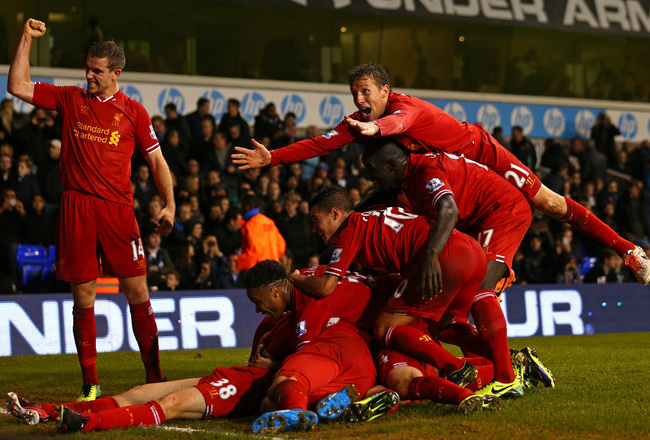
Jose Enrique had started to enjoy an improvement in his form at left-back before he was ruled out with a lengthy injury layoff in November. Jon Flanagan, a right-back by trade, came into the side after on-loan Aly Cissokho failed to assert himself, and the academy graduate grabbed the headlines with a standout performance in the Merseyside derby and an exciting first-ever senior goal in the 5-0 rout of Tottenham Hotspur. Cissokho’s decent display against Hull after Flanagan himself was injured will have been encouraging—and a relief.

Overall, Liverpool’s defensive record this season speaks for itself: A total of 23 goals conceded, just over a goal a game—with just six clean sheets—is not good enough, though an all-conquering strikeforce has rendered it a lesser concern for the time being.

Their proneness to concede from set pieces, as well as questioning positioning on counter-attacks—not helped by a gaping central midfield hole—will be two key defensive issues for Rodgers and his backroom team to iron out for the second half of the season.


Midfield

Hi-res-185345517-steven-gerrard-of-liverpool-celebrates-scoring-his_crop_650
Paul Thomas/Getty ImagesAh, the midfield—so important to the Rodgers philosophy and Liverpool’s style of play.

Before we elaborate further, we must first recognize the work and rise of Jordan Henderson at Liverpool Football Club. Just a year ago, Henderson had the choice of continuing his career at Fulham or fighting for his career at Anfield. He picked the latter, and Rodgers has been impressed enough to give him almost a permanent starting spot in his first XI.

Put simply, Henderson has blossomed. There is a newfound confidence, a refreshing swagger in his play, while he has been able to put his incredible work rate to good use in pressuring and harrying his opponents.

His passing has been positive, and his running in the advanced midfield position has been direct and threatening. If he adds the finish and the final ball to his game, Liverpool fans may finally forgive his £16 million price tag.

Alongside Henderson, another midfielder to flourish recently is Joe Allen, who is enjoying a new lease of life in his “second stint” at Anfield, if we can call it that after a lengthy injury layoff following a mixed half-season last year.

Having returned to the line-up after Gerrard’s own injury, Allen has upped his game considerably following a painful miss at Goodison Park and has become an integral part of the dynamic, interchanging midfield now delighting fans week in, week out.

And like Henderson, Allen needs to work on his composure in front of goal. As the midfield unit progressively moves forward on each attack, every midfielder has a chance to break through and arrive in the box. They need to take their goal-scoring chances.

Further back, Steven Gerrard and Lucas have had mixed seasons thus far. A common criticism leveled at the Reds this season is that their midfield has the tendency to implode against quick and powerful opponents, as was evidenced against Southampton, Arsenal and Chelsea. Both Gerrard and Lucas do not have the legs or the positional awareness to hold the midfield, and thus the central areas are badly exposed, especially against counterattacks.

Gerrard has contributed three goals and six assists in his 16 Premier League appearances this season, which suggests that he still has a big part to play at his club, but may not be a good fit in the Liverpool blueprint going forward. Lucas, meanwhile, may find his importance diminished and first-team status affected if Rodgers does sign a defensive midfielder in January.

In the first half of the 2013/14 season, we’ve seen a few different identities, as we laid out in the first slide on formation and playing style. The changes and variances are all anchored in and affected by the midfield: Gerrard’s presence allows for a more varied approach but with more potential to be overwhelmed, while the recent Lucas-Allen-Henderson combination gives Liverpool a more relentless image.

It will be interesting to see when Rodgers decides to use which option when all of his charges are back to full fitness.


Attack

Hi-res-459415699-luis-suarez-and-raheem-sterling-of-liverpool_crop_650
Alex Livesey/Getty ImagesIt would be fairer to start this section with Daniel Sturridge, who got Liverpool through the first couple of months of the season, but 2013/14 at Anfield has been all about one man: Luis Suarez.

Suarez, having publicly flirted with an exit from the club in the summer, was forced to buckle down, and buckle down he has. Not only that: He’s improved on almost every aspect of his play and seemingly on his attitude as well. A devastating improvement on his finishing has seen him rocket towards the summit of the Premier League scoring charts, setting records along the way.

In addition to becoming one of the most feared strikers in the world, Suarez has also kept his hardworking style, which makes him Liverpool’s defender from the front and an important component of a relentless, pressing unit. It’s just as well that they managed to sign him on a new and improved contract extension in December.

But before Suarez came back with aplomb, Sturridge was the one carrying the Liverpool team. With nine goals and two assists in just 12 league games, Sturridge has enjoyed a fruitful season as well, carrying on his form from last season—just not as stellar and exhilarating as Suarez.

A rapidly maturing striker in his own right, Sturridge will likely return to first-team action in January, giving Rodgers a tactical dilemma and opponents all the more reason to fear the Reds.

But Liverpool fans had been looking forward to Sturridge’s return since the confirmation of his injury layoff, so why would it give Rodgers a dilemma? The answer lies in Raheem Sterling, who has come back into the first team and showed signs of continued development and growth with a series of exciting displays on the right of the frontline.

Sterling’s pace, trickery and direct running have caused opponents all sorts of problems since his own return to the first team, and his three goals in 15 appearances show that he is starting to add the final touch to his impressively all-rounded game, something that fellow attacker Philippe Coutinho also needs to work on.

It was always going to be hard for Coutinho to reprise his excellent first half-season at Anfield after signing for Liverpool last January, as opponents would have had six months to figure him out. With that said, while he has shown the vision, creativity and pace that were so threatening last season, he has yet to hit the same heights. A paltry sum of two goals and two assists this season sums up his difficulties, though he has largely been played on the left instead of in his favored No. 10 position.

With the league’s second most prolific scoring record, Liverpool have other areas than their forward line to worry about for the rest of the season. Their existing attacking setup will continue to deliver.


Strengths

Hi-res-183158436-steven-gerrard-of-liverpool-takes-a-corner-during-the_crop_650
Clive Brunskill/Getty ImagesSo with the lengthy summaries of each on-field department now covered, let’s move towards Liverpool’s strengths in their first six months of the season.

Without a doubt, Liverpool’s set piece mastery needs to be mentioned. For a team that struggles so regularly in defending set pieces, their prowess attacking form is surprising and quite extraordinary. Nonetheless, all three of their regular starting central defenders—and, of course, Suarez and Sturridge—have scored from set pieces, largely due to the world-class deliveries of Steven Gerrard.

The evolution in Liverpool’s approach play also deserves a mention here, as they have started to dominate games completely and blow away their opponents: Their “goals scored” column is so emphatic because they have really honed their craft going forward this season. They have now scored 87 goals in their past 38 league games, 10 more than their highest-scoring full season in the Premier League era.

A product—or perhaps the foundation—of such fearsome attacking play is their excellent home record this season. Anfield has well and truly regained its “Fortress” moniker, as the Reds have stormed to nine wins out of 10 at home this season, scoring 27 goals and conceding just six in the process. Their 27 points from a possible 30 at home this season is just behind Manchester City (30/30) and Chelsea (28/30).

Finally, we must devote some column space to the youngsters at Rodgers’ disposal: A young goalkeeper in Simon Mignolet and a future star in Mamadou Sakho; the pace, industry and massive improvement of Jordan Henderson and Raheem Sterling; and the undoubted quality in Philippe Coutinho and Daniel Sturridge. This is a squad whose full potential lies ahead of them and whose young age needs to be regarded as a strong asset.


Weaknesses

Hi-res-451548293-joe-allen-of-liverpool-misses-a-chance-on-goal-during_crop_650
Alex Livesey/Getty ImagesThere have been a few weaknesses of note evident in their season thus far, however.

Just as we started our coverage on Liverpool’s strengths with their set piece prowess, so we must highlight their vulnerability at defending set pieces and crosses into the box. The unconvincing defending and unsure positioning in such situations have caused panic to spread among supporters and manager alike in those situations—Rodgers had already outlined his concerns back in October, according to the Liverpool Echo.

We’ve touched on this in our slide on the midfield as well, but it bears repeating here: The gaps that open in the midfield area due to positional errors, pedestrian pace and a lack of specialist defensive midfielders can hurt Liverpool badly, especially on the counterattack.

Steven Gerrard’s return from injury may be a double-edged sword and must be managed carefully by Rodgers, who has seen a revolution in his midfield performances during the captain’s absence.

For a side that possesses such a fearsome scoring record and frontline, Liverpool could do with further improvement in their finishing across the squad. While this obviously doesn’t apply to Suarez and Sturridge, the rest of the team needs major work in this area.

Allen, Henderson, Coutinho and Sterling have all missed absolute sitters this season. It’s tempting to think where Liverpool would be at now, especially in terms of goal difference, had they scored at least some of them.


Results

Hi-res-452758835-luis-suarez-of-liverpool-looks-dejected-as-he-falls-to_crop_650
Jamie McDonald/Getty ImagesOn to results, an area that has seen a massive improvement over last season, largely because of the improvement in Liverpool’s attack.

A prolific stretch that started in October and lasted all the way through December saw the Reds score 23 goals in just six home games, while a five-goal hammering of Tottenham on December 4 will go down as one of their best Premier League performances of all time.

It’s not for no reason that Liverpool finish round 20 in fourth place: They’ve simply outplayed opposition they’ve needed to beat and regained that useful habit of picking up points in winnable games on paper. An overall record of 12 wins, three draws and five losses in 20 games—including a few major refereeing controversies—is more than admirable.

So it is on those five losses that we will focus, but the surprising thing—and the silver lining—is that they can easily be remedied.

We’ve mentioned the Southampton and Arsenal losses in previous sections; hopefully further reinforcement to Liverpool’s midfield down the line will improve their record against teams strong in the middle of the park.

Lee Mason and Howard Webb’s officiating against Manchester City and Chelsea respectively drew widespread criticism from both Rodgers himself and the media at large. While Liverpool’s performance at Stamford Bridge wasn’t quite up to scratch—again, the midfield was at issue—their excellent display at the Etihad Stadium should have yielded at least a point, but for the referee’s whistle.

Which leaves the defeat to Steve Bruce’s Hull City, at the KC Stadium on December 1, as perhaps the lone outlier. The simple explanation is that Bruce’s side enjoyed a fine result and Rodgers’ men had an off day, and it wouldn’t be too far off as Liverpool just didn’t turn up for the match. A disappointing day out for the Reds, which fortunately hasn’t been replicated for the remaining matches until this point.

Liverpool quite clearly need further strengthening to their ranks, starting from this January, but their results thus far have highlighted areas they need to reinforce. Targeting those improvement needs should be able to bring about improved results for the remaining 18 games.


Progress from Last Season

Hi-res-176676967-daniel-sturridge-of-liverpool-is-congratulated-by-iago_crop_650
Clive Brunskill/Getty ImagesTo gauge Liverpool’s position at the halfway point of the 2013/14 season, besides evaluating it against their immediate rivals and in the context of just the past six months, a useful barometer would be where they stood this time last season.

On New Year’s Day 2013, with 20 league games played, Liverpool found themselves in 10th place on just 28 points, with a goal difference of +5. A quick comparison to their current picture (fourth, 39 points, GD +23) shows just how far they’ve come in the past year.

Brendan Rodgers deserves massive credit for this turnaround in results, as does the transfer committee for securing two of Liverpool’s most exciting transfer signings in recent history last January in Coutinho and Sturridge, who have been instrumental in the Reds’ growth this calendar year.

Keeping Suarez in the summer was perhaps more important than any signing they would’ve been able to make, as he’s almost singlehandedly fired Liverpool to their lofty position this season, but even besides the impressive increase in goals scored, the maturity in their overall play—particularly in recent weeks with Rodgers’ blueprint midfield—has been evident.

No wonder they’re mulling a new contract extension for Rodgers himself (c/o Mirror).


Potential and Prediction for the Season

Hi-res-179184723-liverpool-manager-brendan-rodgers-gestures-during-the_crop_650
Alex Livesey/Getty ImagesWith a side capable of switching formations at will and changing attacking approaches when required, Brendan Rodgers has at his disposal a flexible, versatile and well-drilled unit that has the world at their feet and their best years ahead of it.

The key is to unlock his squad’s potential at the earliest opportunity possible, as this unpredictable and topsy-turvy 2013/14 Premier League season represents perhaps Liverpool’s best chance yet of getting back into the top four—perhaps their best chance in the coming years.

An impressive and encouraging first half of the season will need to be at least replicated for the next five months for them to have a shot at the Champions League places, but judging from the way they clicked after January last year, we can’t possibly put a limit on what they can achieve.

The key, then, is to have a productive January transfer window that will bring important new reinforcements to the squad capable of instantly upgrading the quality of the starting XI, which will be no easy task in itself.

20 games in, they’re just six points behind league leaders Arsenal, and just three games ago they entered Christmas Day on top of the tree. If they can build on their first-half successes and iron out their weaknesses, who knows how far Liverpool can go?


This article first appeared on Bleacher Report, where I contribute regularly on Liverpool and the Premier League.

Grading Liverpool’s Summer Transfer Signings of the 2013/14 Season

Hi-res-174642782-manager-brendan-rodgers-of-liverpool-fc-during-press_crop_650x440
Thananuwat Srirasant/Getty Images

Welcome to January 1st, 2014, where a new year begins, the second half of the 2013/14 Premier League campaign starts—and the winter transfer window opens.

Back in September, right as the summer transfer window was still shaking from the emphatic way it slammed shut as it always does, speculation already emerged, as rumors started spreading regarding potential transfers four months on.

For Liverpool, especially given their recent injury crises, fans have been eager to discuss the names being linked with the club every week, as the Reds no doubt have to bring in new players to strengthen both their starting XI and their squad if they are to sustain their challenge for the top four and the title.

But just in case we forgot, Liverpool did actually bring in eight players in the summer. And with half a season gone and the prospect of new signings to arrive at Anfield this month, what better time than now to look back on how their summer signings have fared?

Here are our grades and analyses for all eight of Liverpool’s summer signings for the 2013/14 season. We’ve broken it down into four categories: value for money, impact, potential and overall grade. Share your thoughts in the comments below.


Victor Moses: D

Hi-res-185345977-cheick-tiote-of-newcastle-in-action-with-victor-moses_crop_650
Paul Thomas/Getty Images

When Victor Moses arrived on deadline day as a loan signing from Chelsea, he was on paper an interesting and exciting signing for Liverpool: He was always known as one of the brightest prospects in English football, and had just finished the season as an integral part of Rafael Benitez’s short tenure at Stamford Bridge.

When he came off the bench to score a brilliant solo goal against Swansea City on his debut, the hope was that he would go on and establish his place in Brendan Rodgers’ starting XI as a pacy, tricky winger capable of scoring goals and in need of a sustained run in a first team at the top level—much like Daniel Sturridge.

Fast forward a few months, and he finds himself permanently rooted to the bench, and his substitute appearances are often met with groans and moans as Liverpool fans wonder why Rodgers doesn’t decide to send on a more productive player. Moses has failed to score since his debut and has generally appeared lethargic, uninterested and off the pace.

From an encouraging start to a dismal current state, Moses has lots in common with last season’s failed loan signing, Nuri Sahin. He’s even been played out of position, as Sahin was. Unfortunately for Moses, Sahin had his loan deal terminated halfway through the season and was sent from Real Madrid back to Borussia Dortmund to finish his season.

Now that Raheem Sterling has reestablished himself in the starting XI and rumors abound of other wing signings—including Mohamed Salah, according to the Mirror—Moses could find himself following in Sahin’s footsteps. What a disappointment he’s been.

Value for money: B. As a loan signing, Liverpool only had to pay Chelsea a loan fee of £1 million, according to BBC Sport. For a short-term signing, however disappointing he’s been, that’s not steep.

Impact: D. His debut goal hinted at a bright loan spell, but it’s all gone downhill from there. Restricted to sub appearances these days, and continues to underwhelm.

Potential: E. The discussion among fans initially was whether or not Liverpool had a deal in place to sign him on a permanent contract at the end of his one-year loan spell. Now there are far better options who are actually contracted permanently to Liverpool for Rodgers to play.

Overall: D. Moses may return to Chelsea this winter, and no one at Anfield will be missing him. Surely that says enough.


Iago Apas: C-

Hi-res-181439635-victor-wanyama-of-southampton-tackles-iago-aspas-of_crop_650
Clive Brunskill/Getty Images

Iago Aspas has suffered from arguably the same predicament as Victor Moses: that of initial expectation and subsequent disappointment.

Aspas had enjoyed an impressive season with Celta Vigo last term, with 12 goals in 34 games as their talisman and having helped them avoid relegation on the final day of the campaign.

When he arrived at Anfield in June for a fee of £7.6 million (according to the Guardian), the common feeling was that Brendan Rodgers had secured one of La Liga’s top players and that Aspas would be one of the Premier League’s surprise bargains of the season a la Swansea City’s Michu a year earlier, albeit for a steeper price.

Aspas scored his first Liverpool goal in a preseason friendly against Preston North End, and even started the season in the starting XI, but showed signs that he would take time to adapt to the Premier League’s physicality. He has also been rusty in his finishing when provided the opportunities: His preseason goal remains his only in a Red shirt to date.

A thigh injury, sustained in October, brought Aspas’ first-team involvement to a halt but offered him a chance to take a breather and regain his confidence. In his absence, however, his colleagues have taken their chance to impress.

He is now being linked with a loan move away from Anfield—and in a twist of irony, Michu has said, according to ESPNFC, that he would welcome Aspas at Swansea.

Value for money: C-. For £7.6 million, Aspas won’t go down as one of Liverpool’s biggest ever flops, but none of it has been paid back on the pitch yet.

Impact: C. His early-season performances offered a glimpse of his ability and quality, but sadly his physique and finishing were not up to speed. His path to the first team now looks rockier than ever.

Potential: D. At 26 years of age, Aspas is considerably more experienced than some of his colleagues who have now taken his place in the first team. Only if he impresses majorly out on loan will he even be considered for the long term at Anfield.

Overall: C-. Not much better than Moses. Perhaps a move back to Spain, as has been suggested in the Daily Star, might resurrect his previously promising career.


Aly Cissokho: C

Hi-res-185346455-aly-cissokho-of-liverpool-in-action-during-the-barclays_crop_650
Julian Finney/Getty Images

After a summer of pursuing a new left-back to provide competition for Jose Enrique, Brendan Rodgers finally brought in Aly Cissokho on loan from Valencia in August for an initial loan fee of around £850,000, according to the Metro.

Cissokho’s debut came on the left wing, as he bumbled awkwardly through the Villa Park right flank as a substitute for fellow new signing Iago Aspas against Aston Villa. A subsequent ankle injury ruled him out for six weeks, and he has never looked too comfortable at the back since his return.

For a left-back boasting FC Porto, Olympique Lyonnais and Valencia in his top-flight resume, Cissokho has looked distinctly average in his six league appearances for Liverpool, though he did provide the assist to Luis Suarez’s brilliant 18-yard header against West Bromwich Albion.

He has since claimed that he would like to make his loan move permanent, according to the Mirror, but on current evidence, Cissokho would have to do a lot more before Rodgers even considers the possibility: That he lost his place as stand-in to Jose Enrique to youngster Jon Flanagan, a specialist right-back, says plenty about his Liverpool career thus far.

Value for money: B. Another loan signing, Cissokho doesn’t look dire enough to be shipped back to his parent club mid-season, especially considering the lack of left-back rumors despite the pressing need for reinforcement. A rumored fee of £4 million to make his move permanent, as reported by the Mirror, isn’t the steepest either.

Impact: C. Negligible at best, though given Flanagan’s recent injury he may enjoy a run in the first team in the short term. Needs to take this imminent opportunity with both hands.

Potential: D. On loan and at 26 years of age, Cissokho doesn’t look a Liverpool left-back for the long term. He needs to improve drastically to even be considered for the medium term, and even then, will face plenty of competition in his position.

Overall: C. Not Liverpool’s worst loan signing of all time, but not an inspiring acquisition either. At least he’ll probably have another six months at Anfield to prove himself.


Tiago Ilori: C

Hi-res-180895479-tiago-ilori-of-liverpool-u21-in-action-during-the_crop_650
Chris Brunskill/Getty Images

September 2, 2013 was a busy transfer deadline day for Liverpool, who secured three signings before the closing hours of the summer window in Tiago Ilori, Mamadou Sakho and Victor Moses.

As reported by BBC Sport, Ilori cost £7 million from Sporting Lisbon, an indication of how highly rated he was at the Portuguese capital club, despite having only made 12 first-team appearances for them.

Known for his speed—he holds one of the sprint records at Sporting Lisbon amid famously quick graduates like Cristiano Ronaldo and Nani, according to the Liverpool Echo—Ilori has taken his time to settle at Anfield and has put in a few assured displays at the back for the Reds’ under-21 team.

As Brendan Rodgers’ side continue to fight for a top-four place, first-team chances have been hard to come by for Ilori, and he’s been linked with a loan move, most recently back to his old club, according to the Independent.

Value for money: C.£7m for a young defender without experience in English football—and not much in senior football either—is undoubtedly a steep price. He may yet justify his price tag if he fulfills his potential, but he won’t be winning any awards for bargain transfers anytime soon.

Impact: D. A lack of first-team chances has limited Ilori to Liverpool’s under-21 side, where he has impressed. Liverpool’s early exit from the Capital One Cup also deprived him of potential first-team opportunities in one of just two domestic cups they will be competing in this season.

Potential: B. The jury is very much still out on Ilori, and we can’t accurately judge his potential until he plays a few games for the Reds’ senior team. But whispers in Sporting Lisbon and Liverpool suggest that he’s one to keep an eye on.

Overall: C. Ilori may well go out on loan in January and try to establish his place in the senior squad next season. Watch this space.


Luis Alberto: C+

Hi-res-174333997-luis-alberto-looks-to-pass-the-ball-during-the-match_crop_650
Vince Caligiuri/Getty Images

Luis Alberto became Liverpool’s first midfield signing of the 2013/14 season when he arrived at Anfield from Sevilla for a fee of around £6.8 million, as reported by BBC Sport.

Alberto arrived with a reputation as one of the hottest up-and-coming midfield talents in European football, as he scored 11 goals in 38 games last season on loan at Barcelona B.

With a host of midfield options ahead of him, Alberto was expected to take his time to bed into the squad, and his first-team appearances have been restricted to second-half cameos as he continues his acclimatization into English football.

A few encouraging appearances over pre-season in a variety of positions—second striker, central midfielder and deep-lying playmaker—showcased his versatility, while he showed his creativity and awareness with an excellent assist for Luis Suarez’s second goal in the 5-0 rout of Tottenham Hotspur in December.

Recent injuries to Joe Allen and Jordan Henderson may mean more first-team chances for Alberto. He’ll be looking to push on and secure a place in Rodgers’ squad.

Value for money: C. As with Ilori, Alberto came with an exciting reputation but also a quite considerable price tag. At this stage, he is still ways away from repaying his £6.8m fee.

Impact: C. Alberto has already made eight Premier League appearances for Liverpool this season, though mostly at the final stages of games. His assist against Spurs was encouraging; Rodgers will be looking for more of the same.

Potential: B. From what we’ve seen so far from him this season, Alberto has the technique, composure and passing ability to be a natural fit for this Liverpool side. He’ll have to fight off heavy competition from fellow midfield starlet Suso, impressing on loan at Almeria this season, and other potential midfield signings, if he is to establish himself as a first-team fixture.

Overall: C+. A depleted Liverpool squad means that Alberto will likely get more chances in the starting XI. There should be ample opportunity for him to improve on his current C+ rating.


Kolo Toure: B+

Hi-res-173486598-kolo-toure-of-liverpool-directs-his-defence-during-the_crop_650
Alex Livesey/Getty Images

How will we replace Jamie Carragher’s experience in the Liverpool defence?

Thus went the common question and worry among Liverpool fans in the wake of Carragher’s announcement of his impending retirement last season, but they didn’t have to wait long for the answer.

In late May, the club announced an agreement in principle with Kolo Toure, then of Manchester City, to sign on July 1. Fears were allayed, and hopes were raised again.

Because Toure, an experienced defender with Premier League titles from his time at Arsenal and Manchester City, would bring not just the know-how of fighting at the top end of the table, but also a strong presence in the dressing room and vocal leadership on the field.

In his 11 appearances for Liverpool this season, Toure has marshaled his defence superbly and hasn’t shown many signs of age catching up to his speed, physicality and aerial ability.

Rodgers’ starting centre-back partnership may be Martin Skrtel and Mamadou Sakho at the moment, but he knows that in Kolo Toure, he has a reliable stand-in when required. He will be an important part of the Liverpool squad for at least a couple of seasons.

Value for money: A. You can’t do much better than to bring someone of Toure’s caliber and experience on a free transfer. Top marks to the Liverpool management for securing his signature early on in the summer window.

Impact: B. Toure arrived at Anfield and instantly went into the starting XI, forming an integral part of the early-season mean defence that kept three clean sheets in a row. He has returned to the bench of late, but his versatility makes him a valuable option in the event of injury or rotation.

Potential: B. At 32 years of age, Toure is most definitely on the wrong side of 30, so won’t have too many years left at the top level for Liverpool. However, his experience and presence in the dressing room will be important in grooming an exciting crop of youngsters at Anfield.

Overall: B+. An injury to Mamadou Sakho and the loss of form of Martin Skrtel may lead to Kolo Toure regaining his place in Liverpool’s first team. They could do a lot worse.


Mamadou Sakho: B+

Hi-res-454121541-mamadou-sakho-of-liverpool-celebrates-scoring-his-teams_crop_650
Clive Brunskill/Getty Images

All summer long, amid rumors linking the likes of Henrikh Mkhitaryan and Diego Costa to the club, Liverpool fans were hoping for a “marquee signing” that would show their intent at returning back to the elite of English football.

Mamadou Sakho, according to Managing Director Ian Ayre, was that “marquee signing,” as reported in NESN, and while he’s not an all-conquering forward, there is every sign that Sakho will become a fixture in the Liverpool defence for years to come.

The youngest first-team captain in Paris Saint-Germain history, Sakho was a proud graduate of the PSG youth academy and quickly established himself as one of the brightest defensive prospects in all of Europe. That he was allowed to leave the French capital club at all was a mystery to many.

But PSG’s loss was Liverpool’s gain, albeit at a steep price of £18 million, according to BBC Sport, as the French international has slotted seamlessly into the Liverpool defensive line with a series of composed displays.

A unique and impressive combination of brute force, physicality, technique and elegance, Sakho has also scored once for the Reds and came close to his second with a headed effort against the bar at Stamford Bridge last week.

His relatively immaturity and hot-headed brand of defending was on full display in a Chelsea counterattack that saw Simon Mignolet save from Samuel Eto’o, and he will have to work on his composure game by game.

Value for money: B-. Sakho’s arrival was not just about his ability on the pitch; it came with a statement that Liverpool were intent on bringing in the most promising players from all over Europe. £18m remains steep but may look a bargain if he stays at Anfield for the next decade.

Impact: B+. In 12 Premier League appearances for Liverpool, Sakho has shown his quick acclimatization to English football and has put in several excellent displays for Liverpool. He just needs to cut out a few tackling tendencies that may leave himself and his defensive colleagues exposed.

Potential: A+. It seems as if Sakho has been around for a while, but in actuality he is just 23 years of age. If he continues to improve and fulfills his potential, he could go down as one of the great Liverpool defenders by the time his career comes to a close.

Overall: B+. A hamstring injury sustained against Chelsea will rule him out for at least the short term, which may allow him to take a breather and reflect on his season so far. He has already ousted Daniel Agger from Rodgers’ starting XI: The future is bright for Mamadou Sakho.


Simon Mignolet: A-

Hi-res-459726543-goalkeeper-simon-mignolet-of-liverpool-directs-his_crop_650
Julian Finney/Getty Images

When Liverpool confirmed the £9m signing of Simon Mignolet from Sunderland in June, as reported by BBC Sport, eyebrows were raised: They had signed one of the brightest young goalkeepers in Europe, but he would now have to compete with Pepe Reina, a Liverpool favorite and one of the best in Europe in his own right.

But any debate was quickly settled as Rodgers shipped Reina out on loan to Napoli and gave his confidence to Mignolet to be the Reds’ No. 1.

And he’s repaid his manager’s faith, starting with a dramatic penalty save at the death in his first match at Anfield to win all three points for the home side.

Having established himself as an integral part of the Liverpool defence, Mignolet has saved his team precious points so far this season with his exemplary shot-stopping, while he has already shown signs of improvement in his distribution.

Recent errors against Manchester City and Chelsea have highlighted the high level of performance and consistency that the Belgian No. 2 must display in between the Liverpool posts, but he has done enough to show that he might just be Anfield’s first-choice keeper for years to come.


Value for money: A-. It wasn’t long ago—six years ago in fact—that Craig Gordon’s £9m move to Sunderland made him the most expensive goalkeeper in Britain, but Mignolet has easily been on at least a par with Manchester United’s £18m David de Gea. An outstanding piece of business for Liverpool.

Impact: A-. His recent errors against City and Chelsea potentially cost his side two points in total and has brought any impeccable rating down a notch, but Mignolet has been an excellent addition to the Liverpool defence. That Reina has not been missed is a testament to how well his successor has performed.

Potential: A. At just 25 years of age, Mignolet could well hold the Anfield No. 1 gloves for the next decade if he continues his improvement and fulfills his undoubted potential.

Overall: A-. Easily Liverpool’s best signing of the summer, Mignolet made an all-important double save on his league debut and hasn’t looked back. He is just one of the many exciting young players at Anfield, and will end the season as one of the Premier League’s best signings of the current campaign.


This article first appeared on Bleacher Report, where I contribute regularly on Liverpool and the Premier League.

Premier League Preview: How Liverpool Will Line Up Against Hull City

Hi-res-452750497-steve-bruce-manager-of-hull-city-laughs-with-brendan_crop_650x440
Jamie McDonald/Getty Images

The last time Liverpool played Hull City, Steve Bruce’s side ran out 3-1 winners at the KC Stadium in an off-day for Brendan Rodgers’ team. New Year’s Day this Wednesday will be a chance for the Reds to put their recent losses behind them and get their 2014 off to a good start at Anfield.

A busy December had presented a good opportunity for the home side to confirm their credentials as top-four—even title—challengers. Despite enjoying three impressive home wins between their disappointment against Hull and their scintillating destruction of Tottenham Hotspur, they succumbed to two controversial losses to Manchester City and Chelsea in quick succession.

From top spot on Christmas Day to fifth place on New Year’s Eve, Liverpool’s recent fortunes have shown just how tight the Premier League is this season.

Regarded as early-season favorites for the drop, Hull are now in a healthy position of 10th place with 23 points on the board. A run of three draws preceded a narrow defeat to Manchester United, and the Tigers produced their best performance of the current campaign with a six-goal rout of Fulham on Saturday.

Liverpool, ravaged recently by injuries, will look to sustain their strong home form and get their title race back on track with a win over Hull this Wednesday. Here is what their starting XI might look like.


Goalkeeper: Simon Mignolet

Simon Mignolet has made costly mistakes in the past two matches against City and Chelsea, but barring any significant injury he will continue to man the Anfield posts, for lack of a serious challenger to the No. 1 spot at Liverpool.


Right-Back: Martin Kelly

Glen Johnson has been a mainstay in the Liverpool side this season, but his form has dipped significantly in recent weeks: He’s seemed to have lost his previously silky first touch and ball control, while his defensive positioning and lack of concentration has made him a liability in the Liverpool defence.

So it’s to the bench Johnson goes, as Rodgers may well be looking at giving the right-back a rest to regain his form and confidence.

In his place will be Martin Kelly, who came off the bench to replace the injured Jon Flanagan in the 3-1 win over Cardiff City.

It’s been a tough few seasons for Kelly, who has had to spend lots of time in the treatment room and on the bench in his fight back to full fitness. Judging from his recent appearances, Kelly is still some way short of full match fitness, but Hull will give him a good opportunity to regain his place in Rodgers’ starting XI.


Left-Back: Aly Cissokho

In Jose Enrique’s absence, Jon Flanagan had taken advantage of Aly Cissokho’s poor form to make the left-back spot his own, but unfortunately he had to limp off injured in the Cardiff game.

On-loan Cissokho stepped in for the trip to the Etihad Stadium, and while Daniel Agger deputized on the flank in the loss at Stamford Bridge, we expect Cissokho to return to the starting XI out on the left against Hull.

Liverpool have been imperious at home this season and will look to pin Hull back with their brand of relentless passing play. However, the visitors may decide to sit back and limit space for the home side to attack, so flexibility and interchangeability will be crucial for Brendan Rodgers’ side.

Cissokho, while unsteady defensively, offers an outlet on the flank going forward and will provide extra width for the Reds’ left flank, especially given Philippe Coutinho’s tendency to cut inside.


Centre-Back: Kolo Toure

Martin Skrtel has come in for some public praise from his manager in recent months—as evidenced from this article from the Liverpool Echo—but a hesitant recent few matches in the heart of the defence leads us to suggest a complete change in the Reds’ back four, injury or not.

Skrtel’s shirt-pulling in the box has become a target for ire among Reds supporters and will surely present a headache for Rodgers as well as a potential target for referees in the coming matches if his antics don’t stop soon.

An early goal from a free-kick against Chelsea was a sign of his improvement in front of goal from set pieces, but recent defensive mistakes have contributed to just two clean sheets in Liverpool’s last 16 games.

Perhaps it’s time for a return to the starting XI for Kolo Toure, who provided experience, strength and leadership in the opening weeks of the season—when Liverpool kept three successive clean sheets.


Centre-Back: Daniel Agger

Mamadou Sakho limping out with a hamstring injury late into the Chelsea loss will have been a concern for Rodgers and Co., as it will be for Liverpool fans, who have seen the young Frenchman develop into an impressive centre-back in Daniel Agger’s place.

But while Agger deputized on the left against the Blues, he will likely be drafted back in the middle—his favored position—in the injury absence of Sakho, where he will reprise Liverpool’s successful defensive partnership with Kolo Toure at the start of the current campaign.

He will be looking to impress in his favored role as he tries to regain his form, and the Dane will also likely take to the field with the captain’s armband in Steven Gerrard’s absence.


Defensive Midfielder: Lucas

Along with Sakho, another player to limp off injured against Chelsea was Joe Allen, and as such Lucas will remain the only realistic candidate to start as Liverpool’s defensive midfielder at Anfield on New Year’s Day.

Involved in a late fracas with Oscar, Lucas will need to regain his composure against Hull: He’s already served a one-match suspension for having been booked five times this season, and he is well on his way to the 10-yellow milestone.


Central Midfielder: Luis Alberto

Despite recent suggestions that Steven Gerrard could make an early return from injury and might even be fit to take on Hull, as reported by the Guardian, given the recent personnel shortage, Brendan Rodgers may well prefer to keep his captain under wraps and at best only bring him on as a substitute.

So if Liverpool are, as expected, without Joe Allen for Wednesday’s match, Rodgers may hand a first Premier League start to Luis Alberto, who arrived at Anfield in the summer and has shown glimpses of his quality off the bench.

Having played in both the attacking midfield and “regista” roles in his appearances over preseason and during the current campaign, Alberto may look to take Gerrard’s deep-lying playmaking role in the Liverpool midfield.

He will be tasked with prompting from deep, dictating the tempo and slowing down the overall play as necessary—something the Reds, for all their youthful exuberance and relentless energy, have lacked in recent matches.


Attacking Midfielder: Jordan Henderson

“Jordan Henderson is fine. He’s still sore, but he’s a real soldier and should be fine.” So said Brendan Rodgers on the day after he sustained a knock against Chelsea, according to the official Liverpool website.

As Joe Allen misses out, Henderson will likely reprise his attacking midfield role against Hull, a position he’s relished and impressed in in recent weeks, despite a quiet showing at Stamford Bridge.

His pressing from the front has become integral to the Reds’ approach play from the midfield, and hopefully Rodgers will be able to get a good 70 minutes or so of energy and pace before withdrawing him—perhaps for Steven Gerrard—with the result in the bag.


Right Forward: Raheem Sterling

It’s been a whirlwind year for Raheem Sterling, with several controversies off the field and, possibly as a consequence, a dip in form for most of the calendar year, which has been a disappointment considering how well he started his debut season last year.

But in recent weeks, Sterling has stormed back into form with a couple of goals and a few excellent performances on the right flank for Liverpool. A scintillating display against Tottenham continued against Cardiff and Manchester City, and it shows that Sterling has found a new level of maturity and end product to his game.

There’s still much to come from the young winger, who only turned 19 this December, not least in terms of decision making and the final ball, but with Daniel Sturridge still on his way back from injury, Sterling will get another chance to continue his remarkable improvement.

Maynor Figueroa, watch out.


Left Forward: Philippe Coutinho

It’s fair to say that Philippe Coutinho this season hasn’t hit the heights of his initial six months in a Liverpool shirt, when he hit the ground running after arriving at Anfield in late January.

As he approaches a full year in English football, Coutinho will look to regain his all-conquering form but will likely continue out on the left in Daniel Sturridge’s continued absence from the first team.

He hasn’t quite been able to quite impose himself and his brand of exciting, inventive football as regularly this season, but a goal to round off a brilliant team move against Manchester City will have been massive encouragement for the No. 10 to start the New Year off the right way.

Better, surely, than starting the hapless Victor Moses anyway.


Striker: Luis Suarez

A breathtaking start to December saw Luis Suarez break the Premier League record of most goals scored in a single calendar month with 10, but the goals have dried up since his double against Cardiff.

Hence the statistic that he’s only scored three of his 19 league goals this campaign against the top 13 teams in the league and the sudden accusation that Suarez is merely a flat-track bully and not a big-game player.

Here’s another statistic: Out of his 57 Premier League goals for Liverpool, only 11 of them have come against Manchester United, Manchester City, Chelsea, Arsenal, Everton and Tottenham.

Unfortunately for Steve Bruce and Co., Hull City do not belong in this category.


This article first appeared on Bleacher Report, where I contribute regularly on Liverpool and the Premier League.

How Much Is Liverpool’s Luis Suarez Worth in the Current Transfer Market?

Hi-res-456857877-luis-suarez-of-liverpool-celebrates-scoring-their_crop_north
Paul Gilham/Getty Images

The breaking news this Friday is that on the back of some truly incredible performances in the Premier League this season, Luis Suarez has put pen to paper on a new long-term deal at Liverpool, the club announced today.

There’s no disputing that Luis Suarez is one of the most feared and in-form players in all of world football. Having scored 17 goals and assisted four for the Anfield club in just 11 Premier League games, he has put himself firmly into the bracket of the world’s very best players.

Following the furore over Gareth Bale’s transfer to Real Madrid—which some outlets, like BBC Sport, have reported as the world record transfer fee, and others, like NESN, have claimed to still be No. 2 to Cristiano Ronaldo’s—football fans are naturally up in arms regarding player valuations.

Just a few months ago in the summer of 2013, Arsenal had a high-profile bid for Suarez rejected. Their £40 million plus £1 bid, based on a rumored clause in his contract, attracted nothing but scorn from the Liverpool hierarchy, who claimed that he wouldn’t be available even for £55 million, the going rate of Uruguayan strike partner Edinson Cavani, according to The Guardian.

So how does one go about valuating players’ transfer value? Are values arbitrarily assigned, or do they have some factual basis underlying all the public proclamations from managers and chairmen?

Without insider access to the boardroom and to the private financial accounts of most Premier League football clubs, here is a guide to working out how much Luis Suarez is actually worth in the current transfer market.

Paul Gilham/Getty Images

Transfer Fee

Let’s start first with the most visible element: the transfer fee.
In what will surely be known as one of the landmark bargains of this decade, Luis Suarez signed for Liverpool from Ajax Amsterdam on January 31, 2011, the last day of the 2011 winter transfer window. His transfer fee, according to BBC Sport, was around £22.7 million.

From a financial perspective, regardless of what percentage of the transfer fee was paid up front to Ajax, Suarez’s transfer fee will be amortized over the course of his contract, which was initially five and a half years. (It has since been extended in the summer of 2012.)

Simple arithmetic gives us an approximate annual cost for Suarez, excluding his wages (which we’ll get to below), of £4.13 million.

To date, he has been at Anfield for around two years and 10 months, but for the purposes of simpler calculation, let’s consider Suarez as having been at the club for three years.

By January 31, 2014, he will have completed three years of his initial contract with two and a half years left, which would mean that the as yet “unpaid” total amortization cost would come to around £4.13 million multiplied by 2.5, or £10.3 million.

Previous Wages

With a base reference cost of around £10.3 million, let’s consider the second aspect: wages.

While Suarez’s starting wages in his first contract at Liverpool were about £40,000 a week, according to the Mirror, the new and improved contract he signed in the summer of 2012 tripled his weekly compensation to about £120,000.

Assuming the standard of 52 weeks in a year, this comes to a yearly total of around £6.24 million a year, just in wages.

Having signed his most recent contract at the beginning of August 2012, Suarez would be approximately a year and a half into his improved deal by the end of January 2014, keeping with the same benchmark time frame we suggested above.

By then, there would still be two and a half years into his contract left to run, which would come to a total of £15.6 million.

At this point in our calculations, Suarez’s base value thus far is £10.3 million plus £15.6 million, which comes to about a total of £29 million.

Alex Livesey/Getty Images

New Wages

Now it’s time to consider the rumored new package that Liverpool have supposedly offered him. And this is where the less concrete part of our analysis starts.

While Liverpool’s official announcement yet again cites ”long-term” contract, this BBC Sport article claims that Suarez will be earning £160,000 a week until the end of this season (another half year), and then £200,000 a week for the next four years, in a deal that runs until 2018 and makes him the highest-paid player in the club’s history.

Based on these numbers, his entire new contract is worth a total of £42.6 million, which brings his whole valuation into a new light and onto a new level.

Let’s return to the base reference cost of £10.3 million. If we add this new £42.6 million wage value onto the reference cost, then a new total of about £52.9 million emerges.

Alex Livesey/Getty Images

Club Performance 

Of course, we also have to take into account Liverpool’s performances and financial rewards as a result of their on-pitch displays.

Notice that the underlying assumption behind Luis Suarez staying at Anfield would be that Brendan Rodgers is able to lead his team to the Champions League next season: After all, a player of Suarez’s caliber deserves to be plying his trade at the top level of club football.

With this in mind, let’s venture into the world of Premier League finances and attempt to very roughly estimate how Suarez could potentially have his value further enhanced by his club’s performances.

According to the official Premier League website, the end-of-season payout based on league performance for Liverpool in the 2012/13 season came to a total of around £54.8 million.

However, given that the Reds finished in seventh place and considering our top-four assumptions to keep Suarez, let’s take Arsenal as a reference: The Gunners, who finished fourth under Arsene Wenger last season, raked in a total of £57.1 million, which we will use as a rough guide for a minimum league payout.

With Champions League qualification and assuming that Liverpool progress into the group stages of next year’s competition, we can refer to UEFA’s minimum group stage payout according to their official website: UEFA states that “each of the 32 teams involved in the group stage will collect a base fee of €8.6m,” which translates to about £7.2 million.

As a result, a minimum total of £64.3 million will probably arrive in Liverpool’s coffers just for playing in the Champions League group stages.

The Deloitte Money League, published every year, is a fascinating insight into the finances of the top European football clubs. Its 2013 installment reveals that Liverpool’s total revenues for the 2011/12 season were £188.7 million, comprising of £45.2 million from matchday revenue, £63.3 million from broadcasting and £80.2 million from general commercial activity, including sponsorships and partnerships.

As with any corporation, Premier League clubs will have bonus schemes in place, and Liverpool will be no exception. For the purposes of this basic calculation, we will purely take into account the revenue that comes with Champions League qualification, and not Liverpool’s overall income.

A wholly generous assumption is that the 20 players registered as Premier League players for Liverpool will divide the £64.3 million that comes with a group stage venture, and Suarez will get five percent of that, netting £3.2 million in addition to the previous base.

(This estimate, when considering his contributions to Liverpool’s 2013/14 season—he has been involved in 21 goals, 54 percent of Liverpool’s total haul of 39 thus far this campaign—and a logical bell-curve bonus distribution according to performance, may in reality not be too far.)

Paul Gilham/Getty Images

Conclusion: £56.1 million

So what do we end up with?

Take the £52.9 million we estimated based on amortization of Suarez’s transfer fee and a projection of his future bumper contract and add the estimated performance-based bonuses of £3.2 million, and we arrive at the princely sum of £56.1 million, which, coincidentally (or not), was the almost the same rate the aforementioned Cavani left Napoli for.

If we go back to the Express article, we find that Suarez’s previous deal was reported to also include image rights in his weekly wages, so all inclusive, the figure of £56.1 million may be an accurate reflection.

Turns out this benchmark might have been chosen on purpose by the Liverpool hierarchy back in the summer.

But that’s only if we were to stick with a purely financial valuation of Luis Suarez, who, if he stays on at Liverpool, will surely go down as one of the club’s greatest-ever players in time.

Taking that into consideration, and the message that Liverpool would be selling its talisman and most important player of the current period, Brendan Rodgers may well consider Luis Suarez to be worth much more than £56.1 million.

Add that to Suarez’s current form at the club and his apparent turnaround in his commitment to Liverpool, and he might just be priceless in the eyes of all Liverpool fans.

Football is an emotional game, after all.

This article first appeared on Bleacher Report, where I contribute regularly on Liverpool and the Premier League.

Premier League Preview: How Liverpool Will Line Up Against Cardiff City

Hi-res-139974570-steven-gerrard-of-liverpool-lifts-the-trophy-in-victory_crop_650x440
Pool/Getty Images

The last time Liverpool played Cardiff City, it was in the Capital One Cup final in 2012, when Kenny Dalglish’s side ran out winners in a thrilling penalty shootout after a 2-2 draw in extra time. This Saturday will mark the Reds’ first Premier League encounter with the Bluebirds.

From Cardiff’s point of view, there couldn’t be a worse time to face Liverpool, who have been in rampant form at Anfield this season—Brendan Rodgers’ side have scored 20 goals in their past five home games. Malky Mackay’s recent tension with his board, as reported by BBC Sport, can’t be a good distraction from their on-pitch duties.

As for Liverpool, Cardiff marks, on paper, a breather amid a tough December of fixtures. An away trip to White Hart Lane turned out surprisingly smooth for the Reds as they trounced Tottenham Hotspur 5-0, but trips to both Manchester City and Chelsea are on the horizon. A win against Cardiff would send them top of the Premier League, even if for only 48 hours.

But first, they must make sure they get all three points against Malky Mackay’s side, who are currently 15th in the table. Here is how Liverpool’s starting XI on Saturday might look like.


Goalkeeper: Simon Mignolet

Aside from Luis Suarez, Simon Mignolet is probably one of only two truly untouchable fixtures in Brendan Rodgers’ starting XI.

On to the defenders then.


Right-Back: Martin Kelly

Having made his return to competitive action for Liverpool as a substitute in their 4-1 home win over West Ham United two weekends ago, Martin Kelly has been working his way back to full fitness from a knee injury.

A first league start since a home defeat against Manchester United last September would do wonders for Kelly’s confidence and match fitness, and would allow Glen Johnson a break from his regular right-back duties ahead of the crucial matches at the Etihad Stadium and Stamford Bridge.

With injuries having hampered his development and undoubted potential at Anfield, Kelly will be looking to impress for about an hour or so—hopefully with the game safe and secure by the time he is substituted as Brendan Rodgers eases him back into the setup.


Left-Back: Jon Flanagan

With Jose Enrique out with injury and on-loan Aly Cissokho putting in woeful performances as a stand-in, Academy graduate Jon Flanagan has made the left-back slot his own in recent weeks.

His work rate and tenacity have impressed his manager and teammates alike, and he even ventured forward to score his first ever goal for Liverpool—a sweetly struck half-volley into the top corner—last Sunday against Tottenham.

He deserves another run-out against Cardiff as rich reward for his journey back into the Reds’ starting line-up.


Centre-Back: Martin Skrtel

Martin Kelly is a change on the right, but we advocate a regular centre-back partnership to continue building on its impressive recent form, and for that reason, we’ve continued with Martin Skrtel on the right side.

Per Liverpool’s official club website, Brendan Rodgers has said publicly that he has been impressed with Skrtel’s recent form and that he should be considered as one of the best centre-halves in the Premier League.

More of the same then, Martin.


Centre-Back: Mamadou Sakho

Rodgers continues to rotate his centre-back partnership, presumably to keep his players fit and happy, and as a result vice-captain Daniel Agger and Mamadou Sakho have both enjoyed starting berths in recent weeks.

Sakho’s impressive display at White Hart Lane last Saturday, however, showed why Liverpool decided to shell out around £18 million on the ex-Paris Saint-Germain youngster in the summer. His physicality, positional awareness and technique all shone in a convincing and dominant display at the back.

For that reason, Agger should continue on the bench for another week as Sakho continues his rise as one of the Premier League’s best young defenders.


Defensive Midfielder: Joe Allen

Since his costly (and frankly quite unbelievable) horror miss against Everton a few weeks ago, Joe Allen has fully rebounded in form and has won over many a critic with a series of assured and assertive displays at the center of the Liverpool midfield.

His tidy passing, constant harrying of opponents and intelligent movement have caught the eye of manager and fans alike, and should continue to be a fixture in the starting XI, especially in the injury absence of captain Steven Gerrard.

Against Cardiff City, Lucas should be rested in preparation for the major clashes to come, and as a result Allen should move slightly back into the defensive midfield position.


Central Midfielder: Luis Alberto

And in Allen’s place in central midfield comes Luis Alberto, who would be making his first ever league start for Liverpool after impressing in brief cameos this season following a summer move from Sevilla.

Alberto has played in both a more withdrawn role and as an attacking midfielder in his previous appearances for the Reds, both in the league and during preseason, but he would be a perfect fit for the regista-type role Gerrard has adopted this season, and as such should fit into the central midfield alongside Allen.

Rodgers will hope that Alberto takes advantage of a rare league start and displays more of the intelligence that he showed against Tottenham, where he created Suarez’s second goal of the game.


Attacking Midfielder: Jordan Henderson

A swashbuckling performance from Jordan Henderson on Sunday has seen the youngster grab the headlines—including this by the Telegraph’s Alan Smith—for all the right reasons.

Intelligent with his movement, aggressive in his pressuring and forceful in his running, Henderson was rightly named the Barclays Man of the Match in Liverpool’s demolition job over Spurs, where he also notched his first league goal of the season.

With movement, interchangeability and constant pressure a hallmark of Rodgers’ ideal midfield, Henderson has established himself as a vital cog in the Reds machine and will look to sustain his impressive form against Cardiff.


Left Forward: Philippe Coutinho

Our front three remains unchanged, simply because it has worked well in the absence of Daniel Sturridge.

On the left is regular No. 10 Philippe Coutinho, who normally operates best in the hole, but caused the Spurs defence all kinds of trouble with his close control, deft flicks and tidy passing from the left flank.

Coutinho, along with his colleagues across the frontline, will be a handful for the Cardiff defence.


Right Forward: Raheem Sterling

With two goals in his last three league outings, Raheem Sterling seems to finally have recaptured his impressive form at the start of his debut campaign last year, where he burst onto the scene at Anfield and catapulted himself into the England senior team.

He has emerged as a genuine outlet on the right flank, capable of both cutting in and bombing down the sideline, while his work rate and defensive contributions are both mature and underrated. And he has added goals to his game.

With Liverpool also developing a deadly streak on the counterattack, Sterling’s intelligent and quick runs past the last defender will make him a nuisance against Cardiff.


Striker: Luis Suarez

Is there any player more important to the Reds cause at the moment than Luis Suarez?

With 17 goals in just 11 Premier League appearances this season, not only is Suarez probably the most in-form striker in Europe, but he is on course to smash the all-time league scoring record, which would cap a brilliant season that—lest we forget—started with a five-match suspension.

With Gerrard out injured, Agger on the bench and other skipper options in Lucas and Glen Johnson rested for this game, Suarez may take to the pitch wearing the captain’s armband for the second time in his Liverpool career.


This article first appeared on Bleacher Report, where I contribute regularly on Liverpool and the Premier League.

Scouting Report on Reported Liverpool Transfer Target Konstantinos Mitroglou

Hi-res-450601017-konstantinos-mitroglou-of-greece-in-action-during-the_crop_north
Jamie McDonald/Getty Images

With just two weeks to go until the January transfer window swings open, rumors have been heating up at Anfield, and the latest player to be linked with a move to Liverpool this winter, according to Dave Filmer of the Metro, is Olympiakos striker Konstantinos Mitroglou.

Daniel Sturridge’s injury has left Brendan Rodgers with a single established striker in his ranks, and though Luis Suarez has been on fire for the Reds this season—he has scored 17 goals in just 12 games—backup forward Iago Aspas has struggled for both form and fitness.

BBC Sport has reported that Liverpool have opened talks with Suarez on a new contract to tie him down at Anfield, but considering his public flirtations with Arsenal and Real Madrid last summer and the injury situation at Liverpool, Rodgers would do well to strengthen his forward ranks.

Having already scored 22 goals for both club and country this term, Mitroglou has apparently caught the attention of many a top European club, with the likes of Arsenal also reportedly in the mix.

Just as we did with Martin Montoya earlier this month, let’s take a look at the pros and cons to Konstantinos Mitroglou’s potential signing, assess his potential role at Anfield, and evaluate whether he’d a good pick-up for Brendan Rodgers.

Pros

Just like Suarez, Mitroglou has been in outstanding form this season, with 13 goals in eight starts and two substitute appearances in the Greek Superleague.

And just like Suarez, it appears that Mitroglou has developed a fondness for hat-tricks: Nine of his league goals have come in just three matches, as he notched four hat-tricks in just over a month.

Equally comfortable with both feet, and physically imposing and dominant in the air, the 25-year-old Greek striker also possesses a quick turn of pace, a fierce long-range shot and a repertoire of fancy flicks and tricks. His passing and hold-up play also brings his teammates into the final third to score, making him a prototypical lone striker.

A tricky, unpredictable and high-scoring forward, Mitroglou celebrates his goals with an imaginary rifle and is also nicknamed “Pistolero” like a certain Uruguayan forward already at Anfield.

According to the Daily Star‘s Gary Jones, Mitroglou is rated at £7.5 million, which, for a striker enjoying a hot streak and at the top of his game, would almost definitely be a snip compared to the other more established names that might be on the market.

Valerio Pennicino/Getty Images


Cons

While the price tag may be considered on the lower end of forwards linked with Liverpool, the obvious disadvantage behind a potential Mitroglou transfer would be his lack of experience in Europe’s top leagues.

Despite his recent accolades, at 25 years of age he is a relative latecomer to the big stage, having started his career at Borussia Monchengladbach’s youth academy before joining Olympiakos. After two loan spells—the second of which he won the Superleague Greek Player of the Year with Atromitos—he only recently established himself as first-choice at Olympiakos.

Having spent his entire senior career in Greece, Mitroglou would no doubt be making a big step up in quality if he does arrive in the Premier League with an ambitious club like Liverpool, who will be looking for an instant hit in any January transfer this season to help them on their way to Champions League qualification.

A fiery and combative character on the pitch, Mitroglou is a typical out-and-out forward whose work rate will not match that of the industrious Luis Suarez, who aids his team by dropping deep to start attacks and generally interfere with his opponents’ play in their own half.

Brendan Rodgers will be sure to drill his current system and philosophy, which prizes work rate and high-energy pressing all over the pitch, into his new charge if Mitroglou does indeed sign for the Reds.

Valerio Pennicino/Getty Images


Potential Role at Liverpool

Given the importance of Luis Suarez at Anfield and the prospect of Liverpool signing him onto a new extended deal, Konstantinos Mitroglou would likely arrive knowing his status as first-choice will have disintegrated.

If Rodgers and Co. seal the transfer in the early days of January, Mitroglou may arrive while Daniel Sturridge is still injured, but given Sturridge’s impressive pre-injury form, the Greek striker will need to be on top of his game, both in training and in the Premier League, to dislodge Sturridge from the starting XI when he returns.

If that is the case, Mitroglou may have to bide his time on the bench and make do with an impact substitute’s role, at least in his first half season at Anfield.

Considering the difficulties that Iago Aspas and Fabio Borini have encountered in trying to establish themselves as Rodgers’ main striking options, Mitroglou will need to develop his all-round game and overall versatility across the front three if he is to give his potential manager a selection headache.

And even then, the likes of Philippe Coutinho and Raheem Sterling will be around to make sure his journey to the starting XI won’t be easy. The road ahead for Mitroglou at Anfield may not be smooth.

Conclusion

Unlike Martin Montoya, who we recommended as a priority signing for Liverpool this January, Mitroglou doesn’t seem to represent an urgent need for the Reds this winter, especially if Sturridge returns from injury and sustains his free-scoring form.

The need for more strength in depth in the Liverpool front line is apparent, but given the narrow window for reinforcements, Rodgers should focus on other priority areas, like at left-back, defensive midfield and central midfield, before considering more options up front.

Back in October, Iago Aspas had been linked with a loan move back to Spain by Nick Lustig of the Daily Star due to his lack of first-team football, and Fabio Borini has already had to spend the season at Sunderland, so John Henry and Fenway Sports Group would need some convincing if they are to sanction another hefty bid for another third-choice striker.

And that’s if Mitroglou, an undoubted first choice now for club and country, is prepared to accept a move that would diminish his chances of regular football barring injuries to his colleagues.

£7.5 million for more goals isn’t a bad thing, but Liverpool are scoring enough already; they just need to plug the sometimes glaring holes in their midfield and defence. There are bigger priorities out there for Brendan Rodgers.

This article first appeared on Bleacher Report, where I contribute regularly on Liverpool and the Premier League.

English Football Weekly: Manchester and Liverpool Roar; Fletcher’s Return; Managing in the Premier League

EPL Week 16 recap: Manchester and Liverpool roar

It’s been a while since Manchester United have made the headlines for anything positive, so before we get to Darren Fletcher’s return to first-team action, let’s give United their due credit for a professional job on Aston Villa at Villa Park. Sure, it’s a ground where they’ve traditionally enjoyed success, but we also saw Danny Welbeck score two (two!) and Tom Cleverley score (score!). That Wayne Rooney played in a deep, prompting Scholes-esque role (and that Welbeck was finally deployed in his favored centerforward position) was curious—a sign of things to come?

Which result was the bigger statement this weekend—Manchester City scoring six against Arsenal, or Liverpool hitting five at White Hart Lane? We’ll leave the debate to you, but what’s clear is that Manuel Pellegrini and Brendan Rodgers, both known for their “philosophies” and approaches to the game, are apparently also masters in dissecting opponents and exploiting their weaknesses to the full. City’s sheer power through the middle saw Fernandinho and Yaya Toure give a midfield masterclass and completely blow Aaron Ramsey and Jack Wilshere away, while Liverpool’s relentless pressuring, movement and dynamic passing dominated a Tottenham midfield that’s been tipped as one of the league’s finest.The gap between leaders Arsenal and fourth-placed City has now been reduced to just three. Liverpool are sandwiched just in between along with Chelsea.

That hasn’t deterred Everton, however, as they continued their impressive rise—documented in this column last week—with a 4-1 rout over Fulham, who themselves have exhibited signs of springing back into life under Rene Meulensteen. Seamus Coleman, Gareth Barry and Kevin Mirallas all got goals that their excellent campaigns thus far have deserved (so did Leon Osman), but Gerard Deulofeu’s injury will have been concerning for Roberto Martinez. An interesting set of December fixtures (Swansea away, then Sunderland and Southampton at home) may yet see Everton start the New Year in the top four.


Welcome back, Darren Fletcher

It was in 2010—over three years ago—that Darren Fletcher first captained Manchester United and then went on to be nominated as their vice-captain. He was named in the PFA Premier League Team of the Year in April 2010 after a successful season, and aged 26, he had already undergone a transformation from “not good enough” to become an important member of Sir Alex Ferguson’s squad.

So it was particularly poignant that Ferguson decided to pay Fletcher a special tribute in his retirement speech at Old Trafford, wishing him a speedy recovery and a quick return to first-team football. Of course, sandwiched in between was an unfortunate case of ulcerative colitis, which ruled him out of most of United’s matches for the seasons to come—and at one point, put his professional career into jeopardy.

And so it was particularly good news when Fletcher—widely seen to be a hardworking, honest model professional—returned once again to the field against Aston Villa on Saturday. The ovations were heard around Villa Park, and they won’t have been confined to Birmingham. But his presence and return will give David Moyes another experienced option in the Manchester United midfield, who have missed Michael Carrick and who haven’t been significantly bolstered or upgraded with the signing of Marouane Fellaini.

Best that Fletcher gets to work and returns to form as soon as possible, then.


Still want to be a Premier League manager?

In recent weeks, we’ve read all about how Martin Jol is utterly incompetent, recently that Steve Clarke was ultimately not good enough for West Brom, and now that Andre Villas-Boas has become the latest to lose his job as a Premier League manager. There are rumblings of Sam Allardyce being on borrowed time at West Ham. In the Championship, Owen Coyle and Dave Jones have been sacked in the first two weeks of December.

It’s a peculiarity in modern football that so much emphasis is still being placed on the manager—sometimes styled as “Head Coach,” sometimes “First-Team Manager,” among other iterations of the title. It’s not happened overnight, and it’s largely been done behind the scenes, but the European model of football operations, otherwise known as the corporatization of Premier League football clubs, has almost entirely taken over in the Premier League. With the retirement of Sir Alex Ferguson, perhaps only Arsenal employ a traditional all-powerful manager, but even he is working within the confines of a very American, very business-like setup.

So how much influence do Premier League managers actually have? Managers can bring a philosophy, a dream, a vision into their clubs, but how much room do they actually get to see it through? When your best players are being sold against your wishes and replacements are being brought in after consultation with “advisors,” “consultants” and “specialists” but not necessarily with you, how would you be able to fit them into your ideal starting XI to play the type of football you want?

Essentially, a Premier League manager has now become akin to a middle manager in the corporate world, who has to work within major constraints but is still expected to bring stellar results. Except corporate executives (generally) don’t have to endure mass protestations of “You’re getting sacked in the morning” from 40,000-plus fans every single week, which in turn put more pressure on chairmen, whose backgrounds are usually in other industries, to take action, all in the name of sporting glory—in a league where there can, alas, only be one winner.

The plus side? You get to do a job you “love” and have always dreamed about—and the payoff, in case things just don’t work out, is pretty attractive.
This piece was part of my weekly column on SWOL.co, where I take a look back at the weekend’s English Premier League and domestic cup action, related talking points and news surrounding English football at large.

Tottenham Hotspur vs. Liverpool Preview: 6 Key Battles to Watch on Sunday

Hi-res-163457345-liverpool-manager-brendan-rodgers-speaks-to-tottenham_crop_650x440
Michael Regan/Getty Images

This Sunday, Liverpool travel to White Hart Lane to take on Tottenham Hotspur in a clash that could see the Reds go just two points behind Premier League leaders Arsenal if results go Liverpool’s way. However, if the home side are victorious at White Hart Lane, Spurs will draw level with Liverpool on 30 points.

Not so long ago, a crisis was being touted at Spurs, and Andre Villas-Boas’ job was rumored to have been in danger, according to ESPN. Two wins on the bounce see them climb back up to sixth in the league, just two points off fourth-placed Manchester City, but first they must welcome the visit of Anzhi Makhachkala in the Europa League on Thursday night.

Tottenham’s recently creaking defence will be coming up against a Liverpool attack firing on all cylinders: Brendan Rodgers’ side have scored 34 goals in 15 games—the second-highest tally in the league—and boast an in-form Luis Suarez spearheading their strikeforce.

As Arsenal travel to the Etihad Stadium, Chelsea take on Crystal Palace and Everton play Fulham this weekend, Tottenham-Liverpool may yet have wider ramifications on the top-four race—and the European credentials of either side.

As we look forward to an exciting match on Sunday, let’s preview six key battles that will be taking place on the White Hart Lane pitch that may just hold the key to all three points for either side.


Hugo Lloris vs. Simon Mignolet

If it weren’t for Tottenham’s six-goal thrashing at the hands of Manchester City a few weeks ago, they’d still have one of the meanest defensive records in the Premier League. As it stands, with 16 goals conceded, they have the fifth-best defence this season, two places ahead of Liverpool with 18 let in.

A large part of Spurs’ defensive record has been down to their impressive French No. 1, Hugo Lloris, while Liverpool are indebted to Belgian goalkeeper Simon Mignolet for pulling off the third most saves thus far this season (55 in comparison to Lloris’ 39) and helping them to second in the league.

So White Hart Lane will feature two of the Premier League’s best goalkeepers. Given Luis Suarez’s form and confidence, and Tottenham’s fondness for long-range shots—according to InfoStrada Sports, 55 percent of their shots are from outside the penalty area this season (via TheScore.com)—they’d do well to be on their best form on Sunday.

Lloris will be wary of repeating his blunder against Sunderland on Wednesday for sure.


Michael Dawson vs. Luis Suarez

From Tottenham’s point of view, Liverpool’s danger man will undoubtedly be Luis Suarez. Hardly a surprise, of course—he’s leading the Premier League goalscoring charts with 14 this season, despite missing the first five games of the campaign.

He’s improved on his conversion rate to an impressive 25 percent (via BassTunedToRed.com). He’s added the free-kick to his arsenal of tricks. He’s cleaned up his act and cut out the petty moaning and unsavory simulation from his game.

In short: He’ll be a handful for Michael Dawson, to say the least.

Spurs skipper Dawson has put in some steady performances this season, but the Tottenham back line have already capitulated once against quality opposition (Sergio Aguero of Manchester City) and will be on their toes to prevent the same thing from happening at the hands (or feet) of Suarez.

A lot will thus depend on the midfield.


Kyle Naughton vs. Raheem Sterling

Before we get to the midfield, though, we have a Liverpool wing to address, and on their right flank, Raheem Sterling will come up against Kyle Naughton in a clash between two hot young English prospects.

Villas-Boas’ stand-in left-back Naughton will likely start in place of the injured Jan Vertonghen, while Sterling should reprise his starting—and starring—role for Rodgers for his fourth game in a row.

In particular scrutiny will be AVB’s fondness for a high defensive line, especially at home: As Liverpool showed against West Ham United on Wednesday, they’re capable of building quick counterattacks that tear through opposition midfields. Sterling himself burst through the middle and went clear on goal on several occasions, only for his finish to let him down.

Just like Philippe Coutinho on the opposite flank, Sterling’s cutting infield will mean that Naughton will likely be dragged inside with him on multiple occasions, leaving Glen Johnson to storm down the Reds’ right flank as a dangerous attacking outlet.


Paulinho vs. Lucas

The midfield battle won’t just be Paulinho vs. Lucas, of course, but this particular matchup—where both protagonists are not your stereotypical Brazilian flair players—is very much symbolic of the respective midfields on show this Sunday.

Paulinho’s brand of physicality has been a hallmark of the Spurs midfield play this season. Whether he’s been supported by Mousa Dembele, Sandro or Etienne Capoue, his barnstorming style lacks the intricacies and deft touches of Christian Eriksen and Erik Lamela, yet Tottenham’s midfield domination over Swansea City at the beginning of the season provided a glimpse of the new Spurs.

By contrast, a Lucas-Steven Gerrard axis has more often than not been pedestrian and offered far less of a physical control in the middle of the park. Against sides with more robust midfields, such as Southampton, Liverpool have had their weaknesses exposed.

The injury absence of Gerrard—and Jordan Henderson’s fitness permitting—should see Joe Allen retain his spot alongside Henderson and Lucas slotting back in. The hope is that they will be able to offer the dynamism and relentless movement while Gerrard is out.

Villas-Boas has constantly rotated his midfield three this season, but whichever combination he puts out on Sunday, it will surely be a huge challenge for Lucas and Co.


Aaron Lennon vs. Jon Flanagan

Just as Sterling will prove a test for Naughton on Liverpool’s right flank, so Aaron Lennon will be a fearsome opponent for Jon Flanagan over on Tottenham’s right.

Martin Kelly’s return to fitness is a welcome boost for Brendan Rodgers, but he will likely keep his faith in young Flanagan, a right-back by trade, and reward him for a series of solid performances in an unfamiliar position with another start on Sunday.

That will suit Lennon down to the ground. In recent weeks, the Spurs No. 7 has regained his starting slot on the right wing at the expense of Andros Townsend, and his propensity to bomb down the touchline will take advantage of Flanagan’s weaker side. And there’s also his pace.

A Liverpool left flank of Flanagan and Coutinho may offer far too little in terms of physicality and defensive presence—the injured Jose Enrique will be fondly remembered—to rein in the likes of Lennon and right-back Kyle Walker.

Without a doubt, this will be a problem position for Liverpool.


Jermain Defoe vs. Mamadou Sakho

Prior to Tottenham’s last three matches, where they scored a total of four goals, they had scored just a solitary goal—from the penalty spot—in four games.

It would be unfair to heap the blame on four-goal, £26 million striker Roberto Soldado, but his replacement, Jermain Defoe, has seemingly won back his manager’s faith in recent fixtures.

It’s been well documented that an isolated lone striker has been at the root of Tottenham’s scoring problems this season. The lack of a Gareth Bale-like attacking midfielder capable of transitioning smoothly into the forward lines has been made clearer by the lack of mobility, and involvement in overall play, of both their strikers, who belong in the same “predator” category.

So while the Spurs midfield may well overwhelm Liverpool’s, the hosts’ strikeforce (if we can call it that) may not pose enough of a danger to a defence expected to be marshaled by the imposing and improving Mamadou Sakho.

Better for Sakho and Co. to focus on stopping the tidal wave coming in from the Tottenham midfield, then.


This article first appeared on Bleacher Report, where I contribute regularly on Liverpool and the Premier League.

English Football Weekly: Week 15 Recap; Everton’s Revolution; Match-Fixing Scandal

EPL Week 15 recap: A weekend of upsets

Not that an impressive 2-0 home win would’ve been at all upsetting for Fulham, but was it Rene Meulensteen at work on Craven Cottage on Sunday, or was it just another case of the “new manager syndrome”? Only time will tell, but the confidence—even arrogance—in the way the Cottagers set up against Aston Villa will bode well for their fight to stay in the Premier League, and marked a huge contrast to the soulless, dithering squad in the final days of Martin Jol. Even Dimitar Berbatov turned up to play. He might not be accustomed to the wrong end of the table, but he’ll be important in Fulham’s resurgence—hopefully.

It’s been a while since the Britannia has been regarded a fortress the way it was when Tony Pulis first took Stoke up to the Premier League. Back then, there were Rory Delap’s long throws and other manners of rugby football play. Now, there’s the maverick flair of Marko Arnautovic, the cultured finishing of Stephen Ireland—and apparently also the magician’s touch from Oussama Assaidi. An example of Stoke’s resolve and fight towards a mid-table place? Or a public appeal from Jose Mourinho to Roman Abramovich to land them a striker in the class of Radamel Falcao? Either way, much work to be done still.

Alan Pardew tried to offer some solace in his interview after Newcastle’s first win at Old Trafford in 41 years, but his smug grin, which has been doing the rounds on Twitter, will say all there is about what’s going on at Manchester United—and to an extent at Newcastle as well. For while United toil in ninth place, some 13 points off leaders Arsenal and seemingly having lost that famous comeback spirit, Newcastle have defied critics, predictions and a barren summer transfer window to storm into seventh place, just three points behind City in fourth and four points ahead of United. What a strange season it’s been.

There to take advantage of the dropping of points by Chelsea, Arsenal and Manchester City were Liverpool, who overcame a sloppy own goal and a 10-minute resurgence from West Ham to secure a 4-1 win. It’s been a few seasons since the Reds have found themselves still right in the mix in December, but the hard part is coming. Three formidable opponents and competitors, all away from home, will be obstacles to Liverpool finishing in the top four by the end of December. They’ll be hoping that Cardiff at home next weekend will provide some much-needed breathing space. Spurs, City and Chelsea will not be easy.


Young Everton are here to stay

There was never a chance Arsenal-Everton would’ve escaped mention on a weekly wrap; it was too exciting and unpredictable (see: “the perfect advert for the Premier League”) to leave out. But while football fans were expecting Arsenal to reaffirm their title credentials at the Emirates, instead we’ve come out of the game with a renewed appreciation of Everton and Roberto Martinez.

The manner in which Everton took their game to Arsenal was as impressive as it was audacious—possibly even ill-advised prior to kickoff. After all, Liverpool, having had quite a decent run of results this season, went defensive at the Emirates and still got battered. Surely Everton would’ve set up to defend a bit more, especially with Gerard Deulofeu on the bench?

Wrong. The difference between the Merseysiders is that the Blues have a far more industrious, dynamic and well-balanced midfield in comparison to the Reds, and it showed. There was Ross Barkley, brash and confident, taking on the likes of Aaron Ramsey and Mikel Arteta and strengthening his claims for a place on the plane to Brazil next summer. There was James McCarthy, working so well with Gareth Barry as the central midfield duo and largely nullifying the hitherto potent and unstoppable Arsenal attacking line. And there was Bryan Oviedo, who had impressed with goals in consecutive matches (including a famous winner against United), bombing down the flanks to such good effect that he might just render Leighton Baines a bit less indispensable.

It was a result, and a performance, to confirm that Everton aren’t now fifth in the league because of a fluke. It’s the start of a youthful revolution shaped by a young manager with a vision. The critics still have their knives out, of course, what with two key players and a secret weapon (Romelu Lukaku, Barry and Deulofeu) on loan, but that’s a concern best left for the summer—if it’ll still exist at all. If Everton qualify for Europe, they’ll be able to bring in a few good ones yet.


Match-fixing: The elephant in the room

So it appears match-fixing has finally arrived on English shores. The recent reports linking the Sodje brothers and the likes of DJ Campbell will have presented a huge step back for English football and the FA.

£70,000 for a red card? £30,000 for a yellow? Surely players on such lucrative salaries in the English game won’t even bat an eyelid, and surely the competitiveness of the Premier League and the Championship means that sporting integrity and the chance of glory should by default render match-fixing a useless force in England? Why would a player on £50,000 a week sell out for that?

As easy as it is to criticize someone for holding the above beliefs, it is a true pity—but a real necessity—that match-fixing has been revealed to affect the English game, even at the top level. It’s a pity because all along it’s seemed that English football was too competitive, too pure and too exciting to even consider the existence of corruption and the evil influences of money. And for a long time, this image was sustained.

But now that this news has surfaced, it’s come as a huge smack in the face, and many a pundit, follower and fan will be smacking his head out of sheer frustration at his own ignorance. Because given the amount of money in the global game—an amount which will only rise with time—what could possibly have made England immune to corruption? Where there’s money, there’s corruption: It’s a sad fact of professional sports, and now it’s all coming to light.

What’s important now is not to hide and be embarrassed about match-fixing in England, but for the government, the police and the FA to join forces and crack down on the antagonists. Heavy punishments should be issued for those found guilty, and points should be deducted—with relegation implemented—for teams that have been complicit, if it emerges that any might have been.

It’ll be a long, hard journey and will require active policing—even racism has apparently resurfaced in recent years—but it’s the only course of action that makes sense.


This piece was part of my weekly column on SWOL.co, where I take a look back at the weekend’s English Premier League and domestic cup action, related talking points and news surrounding English football at large.

5 Ways Liverpool Should Approach a Tough December to Stay in the Top Four

Hi-res-452750457-brendan-rodgers-manager-of-liverpool-looks-on-prior-to_crop_650x440
Jamie McDonald/Getty Images

Second place, 15 matches played, 30 points, and a goal difference of +16. With four games left to go until the mid-season (and the January transfer window), Liverpool so far look in pretty good shape this 2013/14 Premier League season.

Their average of two points per game, if extended over the course a 38-game season, has historically been enough to secure a top-four spot by the end of the season—which, besides launching Liverpool back into the Champions League spotlight, should also be enough to secure Luis Suarez’s future at Anfield.

Before we look ahead to next May, however, let’s first acknowledge the obstacles to the Reds finishing their first half of the season in the top four—and there are many.

Starting with their remaining four fixtures in a busy December period—Tottenham Hotspur (away), Cardiff City (home), Manchester City (away), Chelsea (away), the latter two coming in the space of three days.

With Jose Enrique and Daniel Sturridge both out until at least January and Steven Gerrard sidelined for the Christmas period with a hamstring injury, according to the Telegraph, Liverpool’s problems are as much on the treatment table as they are with the fixture list.

But this is also a crucial period where Brendan Rodgers’ team will be tested on their ability to stay near the top, and where preliminary conclusions may yet be drawn about their quest to return to Europe.

Here are five ways Liverpool should approach a tough December ahead of them and still fly high in the top four come the start of January.


Keep Their Second-Half Setup Against West Ham

With the aforementioned Enrique, Sturridge and Gerrard out for the Christmas period, Liverpool’s best XI for the moment will have been their second-half, post-Gerrard substitution setup in Saturday’s game against West Ham United.

Glen Johnson seemed back to his best, and indeed was the provider of a very fine assist to Luis Suarez for Liverpool’s third goal of the night, while Jon Flanagan on the opposite flank stuck to his task and defended confidently.

Martin Skrtel looked more assured and assertive with the dominant Mamadou Sakho beside him, and with stability being the key in a defensive partnership, Brendan Rodgers would be wise to stick with them in the center, though the shambolic defending in conceding their own goal—in the process letting the Hammers back into the game—will have been a cause for concern.

Joe Allen in front of them was a livewire in midfield, seemingly over his catastrophic miss in the Merseyside derby a couple of weeks ago. If he continues his improvement, his probing passing and deceptively quick turn of pace should prove a very useful additional outlet in midfield, alongside the more workmanlike duo of Jordan Henderson and Lucas Leiva.

Philippe Coutinho and Luis Suarez pick themselves in the starting XI, while Raheem Sterling deserves a run in the side for his upturn in form and encouraging showing on Saturday, especially with Victor Moses’ cameo once again not providing any kind of imagination, creativity and game-changing potential.

The only change that should be considered by Rodgers and co.—besides any enforced through injury concerns—would be to shift Johnson over to the left and put Martin Kelly in on the right, especially against pacy right wingers that Flanagan might struggle against.

Otherwise, this is a team that can be decent at the back, strong in the middle and incisive up front.


Adopt a Relentless and Interchanging Midfield Three

Hi-res-454128347-joe-allen-of-liverpool-competes-with-mohamed-diame-of_crop_650
Clive Brunskill/Getty Images

It’s hard to imagine a Liverpool midfield without Steven Gerrard in it: He’s been ever-present for the Reds this season, and is both their assists leader (six) and third highest scorer (three).

Whether his world-class set pieces and impressive long passes compensate for his decreasing mobility has been a hot topic for debate (and best left for another discussion), but his more withdrawn, “quarterback”-like regista role has come with a diminishing ability to take games by the scruff of the neck and drag his team to victory.

Which means that in his absence, Liverpool fans may yet catch a glimpse of an ideal Brendan Rodgers midfield. To be precise, a relentless, dynamic and interchanging midfield three capable of supplying incessant pressure on their opponents, recycling the ball among one another, and contributing comfortably to the attack.

After his aforementioned horror miss against Everton in November, Joe Allen has rebounded in terms of his confidence, putting in good performances echoing his encouraging start to life at Anfield back at the start of the 2012/13 Premier League season.

His reverse pass to Martin Kelly in the dying minutes of the West Ham match on Saturday was a particular highlight, but it was his forward-thinking passing, neat touches and ability to move the ball out of pressure that caught the eye.

Add in the dynamism and famous work rate, as well as the at-times scintillating passing (though consistency is necessary) of Jordan Henderson, and Liverpool have got a young, energetic and deceptively quick British midfield core. And while Lucas hasn’t fully reclaimed his excellent pre-injury form, his positioning and tactical awareness have been triumphed by Rodgers (and are debated constantly among Reds fans).

Altogether, the Gerrard-less midfield that will travel to such opponents as Spurs, City and Chelsea will exhibit a stark contrast to the captain’s prompting from deep.

Which can mean that Liverpool are short of a sure-fire set piece specialist. But also that their opponents now have to focus on defending against an interchangeable unit instead of one single playmaker.


Continue to Refine Their Counterattacks

Pepe Reina he might not be just yet, but Simon Mignolet has been earning rave reviews for his improvements in distribution: A couple of quick long throws set up dangerous counterattacks for his teammates on Saturday.

(Needless to say, Mignolet’s shot-stopping has already far exceeded Reina’s levels of the past few seasons.)

And Arsenal they might not be just yet, but Liverpool have evidently worked on their counterattacking plays to make use of their pace in attack.

Previously it was in the 3-5-2 system that featured Suarez and Daniel Sturridge up top. But against West Ham, as in his stellar start to his Liverpool career, it was Raheem Sterling who frequently burst through the opposition midfield and rush onto passes down the center. If it weren’t for his lack of a clinical finish, the home side would have scored at least two more from those breaks.

As dominant as Liverpool aspire to be in ball and possession retention, there’s no reason to discourage them from working on breaking, attacking and scoring at speed. Even without Gerrard’s 40-yard passes to feet, they possess accomplished passers like Allen and Coutinho, and with the inventiveness of Suarez and Sterling, the counter should be a Liverpool staple.

Especially in away fixtures against teams who like to overload in the attack and pile up in their final third, exactly Liverpool’s big upcoming tests at White Hart Lane, the Etihad Stadium and Stamford Bridge.

If Liverpool can withstand some inevitably strong attacks from their hosts, they should look to capitalize on their relatively soft underbellies and hope to snatch goals—and points—that way.


Improve Decision-Making and the Final Ball

Hi-res-454129349-james-collins-of-west-ham-united-challenges-philippe_crop_650
Clive Brunskill/Getty Images

With 20 goals in their last five matches at home, it wouldn’t seem on the surface that Liverpool need work on their finishing and final ball.

Indeed, Luis Suarez needs to be given lots of credit for his massive improvement in finishing off his chances. In the context that he used to be a profligate striker who often frustrated Reds fans with his poor finishing, this article from BassTunedToRed.com tells us that his conversion rate has jumped from 8.2% in the Kenny Dalglish era to a staggering 25% this season.

But even though they scored four goals against West Ham on Saturday, there was ample evidence, especially in the first half when the visitors shut up shop in front of their penalty area, that Liverpool took one touch too many or played one pass too many.

Coutinho continually decided to attempt to play a colleague into space when shooting from range would’ve been more beneficial, while Sterling’s final ball, even when sent through on goal, seemed to be just lacking in confidence.

And we don’t have to go too far back to see a glaring example of Joe Allen’s composure in front of goal, or Jordan Henderson’s lack of an assured finish at the end of a lung-busting run at Arsenal, to know that this is an area where Liverpool still need to improve on.

Given their proneness to conceding from just one solitary defensive mistake, they should work on taking their chances when they create them. Against smaller teams that they’ve admittedly demolished in recent weeks, chances will come by simply because of their relentless pressure and approach play, but goal-scoring opportunities will be few and far between in the coming few weeks.

Of course, 1-0 is all it takes to take home three points, and Liverpool started their season off with three well won, if not entirely convincing, 1-0 wins, which featured lots of deep defending. But to do that, besides holding firm and keeping a clean sheet, you need to take that one chance when it comes by.


Approach Tough Away Matches Fearlessly and Confidently

With 34 goals scored in 15 league games thus far—the second most in the Premier League—it’s clear that when Liverpool feel like it, they can turn on the style and blow opponents away with their attacking play.

A large part of that—nine goals, to be exact—is admittedly down to the now-injured Daniel Sturridge and his impressive all-round contributions up front for the Reds this season, but Luis Suarez’s form and the overall cohesiveness in attack means that they remain an offensive force to be reckoned with.

So why did they go to the Emirates and come away with a comprehensive 0-2 loss when they could’ve started the game on the front foot if they’d been set up to do so?

A look at Roberto Martinez’s impressive setup at Everton shows that a consistent mental, technical and physical approach, once ingrained throughout the squad (which includes the coaching staff and management team), can take their game and impose it on whichever opponents they come up against.

They’ve done it against Manchester United, and they did it just this Sunday night with a fearless, confident and assertive display at the Emirates, when they forced a 1-1 draw against league leaders Arsenal.

Brendan Rodgers will realize that his squad has deficiencies—which squad doesn’t?—but he will also know that keeping the same identity in whatever fixture can reap large benefits and may even spring the odd surprise.

Just look at Liverpool’s trip to Manchester City last season. Granted, City weren’t managed by Manuel Pellegrini then, and Liverpool had a Steven Gerrard blockbuster to thank, but if Pepe Reina hadn’t rushed off his line, the visitors would’ve taken home an impressive 2-1 win.

More of that please.

This article first appeared on Bleacher Report, where I contribute regularly on Liverpool and the Premier League.